Iran prepares to deliver ballistic missiles to Russia


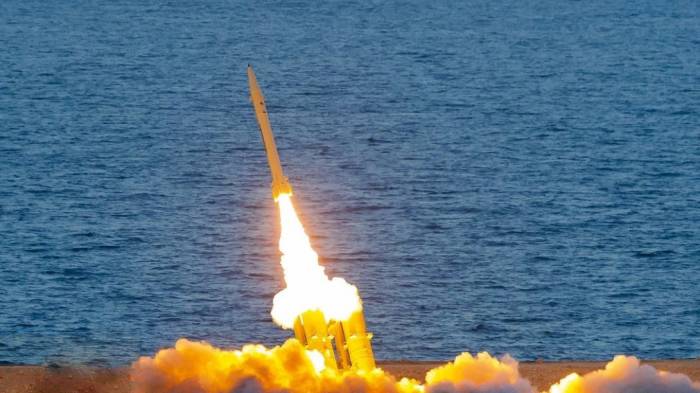
European officials anticipate that Iran will soon deliver ballistic missiles to Russia, according to Bloomberg, citing informed sources. The specific types of missiles, along with the exact timing and scale of these deliveries, have not been disclosed. However, one official suggested that the shipments could begin within a few days.
U.S. officials have chosen not to comment on Bloomberg’s report . Additionally, Iran’s Foreign Ministry and the country’s UN mission have not responded to inquiries for comment.
Since the onset of the full-scale war in Ukraine, Iran has supplied Russia with Shahed kamikaze drones, artillery, and tank shells. Moreover, Tehran has authorized the production of strike UAVs on Russian soil. Earlier this year, Western intelligence indicated that Iran reached an agreement with Russia to supply ballistic missiles. In response, NATO member countries have threatened Iran with expanded sanctions.
In May, Julian Röpcke, a military expert from Bild, revealed that Iran had transferred Qaem-5 bombs to Russia for the first time. These bombs, which can be mounted on strike drones, have a range of up to 40 km. According to Röpcke, this transfer could signal a "new level" of military cooperation between Tehran and Moscow. The Qaem-5 bomb, featuring television guidance and capable of carrying various types of warheads, was first introduced into service in Iran in August 2019.
On August 10, Reuters, citing European intelligence sources, reported that Tehran could soon deliver "hundreds" of Fath-360 ballistic missiles to Moscow, each with a range of up to 120 km, for use in the Ukraine conflict. The report also noted that "dozens of Russian military personnel" have been trained in Iran to use this type of weaponry.
European intelligence also suggests that in December 2023, representatives of the Russian Ministry of Defense signed a contract with Iran for the supply of Ababil ballistic missiles to Russia, with a maximum range of 86 kilometers.
U.S. officials have chosen not to comment on Bloomberg’s report . Additionally, Iran’s Foreign Ministry and the country’s UN mission have not responded to inquiries for comment.
Since the onset of the full-scale war in Ukraine, Iran has supplied Russia with Shahed kamikaze drones, artillery, and tank shells. Moreover, Tehran has authorized the production of strike UAVs on Russian soil. Earlier this year, Western intelligence indicated that Iran reached an agreement with Russia to supply ballistic missiles. In response, NATO member countries have threatened Iran with expanded sanctions.
In May, Julian Röpcke, a military expert from Bild, revealed that Iran had transferred Qaem-5 bombs to Russia for the first time. These bombs, which can be mounted on strike drones, have a range of up to 40 km. According to Röpcke, this transfer could signal a "new level" of military cooperation between Tehran and Moscow. The Qaem-5 bomb, featuring television guidance and capable of carrying various types of warheads, was first introduced into service in Iran in August 2019.
On August 10, Reuters, citing European intelligence sources, reported that Tehran could soon deliver "hundreds" of Fath-360 ballistic missiles to Moscow, each with a range of up to 120 km, for use in the Ukraine conflict. The report also noted that "dozens of Russian military personnel" have been trained in Iran to use this type of weaponry.
European intelligence also suggests that in December 2023, representatives of the Russian Ministry of Defense signed a contract with Iran for the supply of Ababil ballistic missiles to Russia, with a maximum range of 86 kilometers.


Similar news