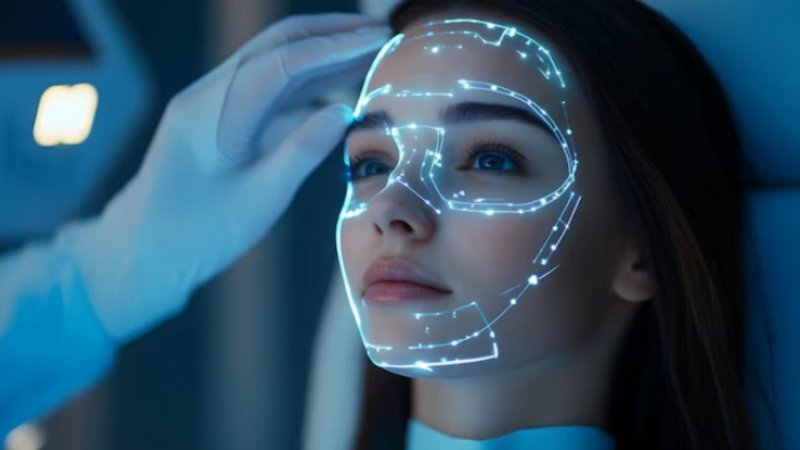
What was once the exclusive domain of trained dermatologists is increasingly being supplemented, and in some cases challenged, by AI powered tools capable of analyzing skin conditions, recommending treatments, and even predicting future issues.
From smartphone apps that scan your face in seconds to advanced diagnostic platforms used in clinics, AI is reshaping how people understand and care for their skin. But can it truly replace dermatologists, or is it simply redefining their role?
This explainer examines the technology, its capabilities, its limitations, and what it means for the future of beauty and healthcare.
What is AI skincare and how does it work?
AI skincare refers to the use of machine learning algorithms and computer vision to analyze skin conditions. Typically, users upload a photo of their face, and the system evaluates various parameters such as wrinkles, pigmentation, acne, pores, and hydration levels.
These systems are trained on large datasets of skin images, allowing them to identify patterns and match them with known dermatological conditions. The result is often a personalized skincare routine, product recommendations, or risk assessments for certain issues.
More advanced systems integrate additional data such as age, environment, lifestyle habits, and even genetic factors to refine their analysis.
Why is AI becoming popular in beauty?
There are several reasons behind the rapid adoption of AI in skincare.
First, accessibility. Not everyone has easy access to a dermatologist, especially in regions where healthcare resources are limited. AI tools offer instant analysis without appointments or travel.
Second, convenience. Users can receive recommendations within seconds using their smartphones, making skincare more immediate and interactive.
Third, cost efficiency. Traditional dermatology consultations can be expensive, while many AI tools are free or relatively low cost.
Finally, personalization. AI promises tailored skincare solutions based on individual data, which appeals to consumers seeking customized experiences.
How accurate are AI skin analysis tools?
Accuracy varies significantly depending on the technology and dataset used.
Some AI systems have demonstrated impressive capabilities in identifying common skin conditions such as acne or hyperpigmentation. In controlled environments, certain algorithms can match or even exceed human performance in image based classification tasks.
However, real world conditions are more complex. Lighting, camera quality, skin tone diversity, and image angles can all affect results. In addition, many tools are not trained on sufficiently diverse datasets, which can lead to biases or inaccuracies.
For serious or rare conditions, AI still lacks the diagnostic depth and contextual understanding of a trained dermatologist.
Can AI diagnose skin diseases?
This is where the distinction between beauty and medical care becomes critical.
AI can assist in identifying patterns that may indicate certain conditions, but most consumer tools are not approved as medical diagnostic devices. They are designed for informational or cosmetic purposes rather than clinical diagnosis.
In medical settings, AI is increasingly used as a support tool for dermatologists, helping to flag potential issues such as skin cancer. However, final diagnosis and treatment decisions remain the responsibility of qualified professionals.
Relying solely on AI for medical diagnosis carries risks, particularly if it leads to delayed treatment or misinterpretation of symptoms.
What are the advantages of AI over dermatologists?
AI offers several clear advantages.
Speed is one of the most significant. Analysis that might take a consultation can be completed in seconds.
Scalability is another factor. AI can serve millions of users simultaneously, something no healthcare system can match.
Consistency also plays a role. AI systems do not experience fatigue or variation in judgment due to external factors.
Data driven insights are another strength. AI can process vast amounts of information and identify trends that might not be immediately visible to humans.
What are the limitations of AI in skincare?
Despite its potential, AI has notable limitations.
It lacks holistic understanding. Dermatologists consider not only visible symptoms but also medical history, lifestyle, and underlying health conditions.
It cannot perform physical examinations. Many diagnoses require tactile assessment or specialized equipment.
It struggles with rare or complex cases. AI is only as good as the data it has been trained on.
Ethical and privacy concerns are also significant. Skin analysis often involves sensitive biometric data, raising questions about data security and consent.
Finally, there is the issue of overreliance. Users may place too much trust in AI recommendations without seeking professional advice when needed.
How are dermatologists responding to AI?
Rather than being replaced, many dermatologists are integrating AI into their practice.
AI can assist with routine assessments, allowing doctors to focus on more complex cases. It can also improve efficiency by automating administrative tasks and preliminary analysis.
In some cases, AI is being used as a second opinion tool, helping to reduce diagnostic errors.
This suggests a future in which AI and dermatologists work together rather than compete directly.
What does this mean for the beauty industry?
The impact on the beauty industry is significant.
Brands are increasingly incorporating AI into their products and services, from virtual consultations to personalized skincare recommendations.
Retail experiences are also evolving, with smart mirrors and in store diagnostics offering real time analysis.
This shift is changing consumer expectations, with greater demand for personalization, transparency, and technology driven solutions.
At the same time, it is blurring the line between cosmetics and healthcare, creating new regulatory and ethical challenges.
Is AI safe to use for skincare advice?
For general skincare guidance, AI can be useful, particularly for routine concerns such as dryness or mild acne.
However, it should not replace professional medical advice for serious conditions. Users should treat AI recommendations as a starting point rather than a definitive solution.
Regulation of AI in healthcare and beauty is still evolving, and standards vary across regions. This makes it important for users to be cautious and informed.
Could AI fully replace dermatologists in the future?
In its current form, AI is unlikely to fully replace dermatologists.
The practice of dermatology involves not only diagnosis but also treatment planning, patient interaction, and clinical judgment. These aspects require human expertise and empathy that AI cannot replicate.
However, AI will continue to expand its role, particularly in early detection, routine care, and consumer skincare.
The most likely scenario is a hybrid model in which AI handles data driven tasks while dermatologists provide oversight and advanced care.
What are the broader implications?
The rise of AI in beauty reflects a larger trend toward digital health and personalized medicine.
It raises important questions about trust, accountability, and the role of technology in healthcare.
It also highlights the need for better regulation, transparency in algorithms, and more inclusive datasets to ensure fairness and accuracy.
As AI continues to evolve, its influence on how people perceive and manage their skin will only grow.
Final analysis
The question of whether AI can replace dermatologists is ultimately the wrong one. The more relevant question is how AI will reshape the relationship between technology, healthcare, and personal care.
AI is already transforming the beauty industry by making skincare more accessible, personalized, and data driven. It offers powerful tools that can enhance understanding and improve outcomes for many users.
At the same time, it has clear limitations that prevent it from replacing human expertise. Dermatologists bring a level of clinical insight, judgment, and care that cannot be replicated by algorithms alone.
The future of beauty is therefore not a choice between AI and dermatologists, but a convergence of both. In this evolving landscape, the most effective approach will combine technological innovation with human expertise, ensuring that progress in beauty does not come at the expense of safety and quality.