Raytheon to produce $3.7 billion in Patriot missiles for Ukraine


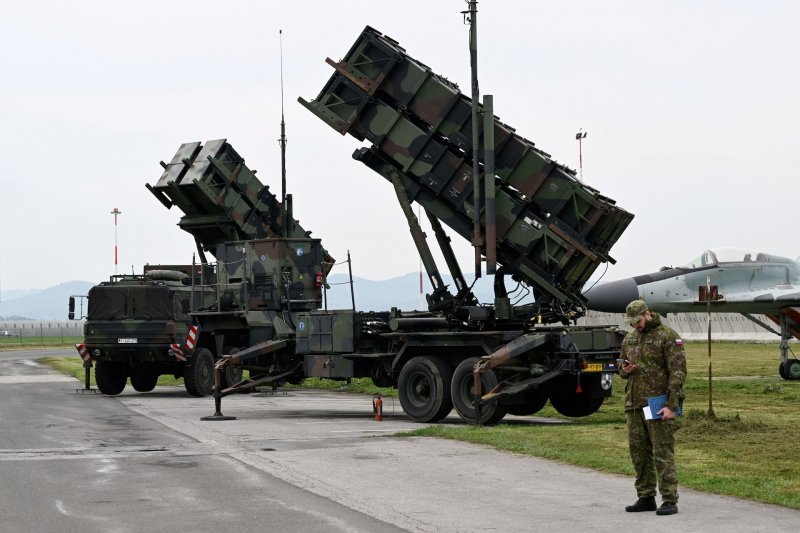
Raytheon has secured a $3.7 billion contract to provide Ukraine with Patriot GEM-T interceptor missiles.
The company reported that a new production facility in Germany is planned as a key element in supporting this agreement, News.Az reports, citing foreign media.
RECOMMENDED STORIES
It is intended to ensure supply chain resilience and help replenish interceptor stocks in Ukraine.
The facility is operated by MBDA Deutschland through the COMLOG joint venture, established by Raytheon and MBDA Deutschland.
“Raytheon is focused on maximizing production capacity and ensuring stable and reliable deliveries of these battle-proven interceptors to the U.S. and allies, such as Ukraine, who rely on Patriot to protect their citizens, infrastructure, and sovereignty,” said Raytheon President Phil Jasper.
The new production facilities became necessary because, over the past 12 months, MBDA has signed contracts to manufacture and supply up to 1,000 Patriot GEM-T missiles as part of the “European Sky Shield” initiative for Germany, the Netherlands, Romania, Spain, and Sweden.
The Patriot GEM-T is an interceptor missile for the Patriot Advanced Capability-2 (PAC-2) system, designed to engage all types of air threats.
The Patriot system serves as the backbone of air defense for 19 countries and continues to demonstrate its effectiveness in Ukraine by shooting down modern missiles.
Source of funding
It was previously reported that Germany will finance the contract between Ukraine and the American company Raytheon for the supply of several hundred missiles for the Patriot air defense system.
The relevant agreement was signed during German-Ukrainian government consultations in Berlin.
Volodymyr Zelensky and Boris Pistorius with military personnel in front of a Patriot system. June 2024. Germany. Photo credits: Office of the President of Ukraine
An agreement was also reached with the German company Diehl Defence to supply additional launchers for the IRIS-T air defense systems.
“This project is also funded by Germany and will significantly improve the protection of critical infrastructure and cities,” the statement reads.
By Ulviyya Salmanli


Similar news