Is abortion now legal nationwide again?


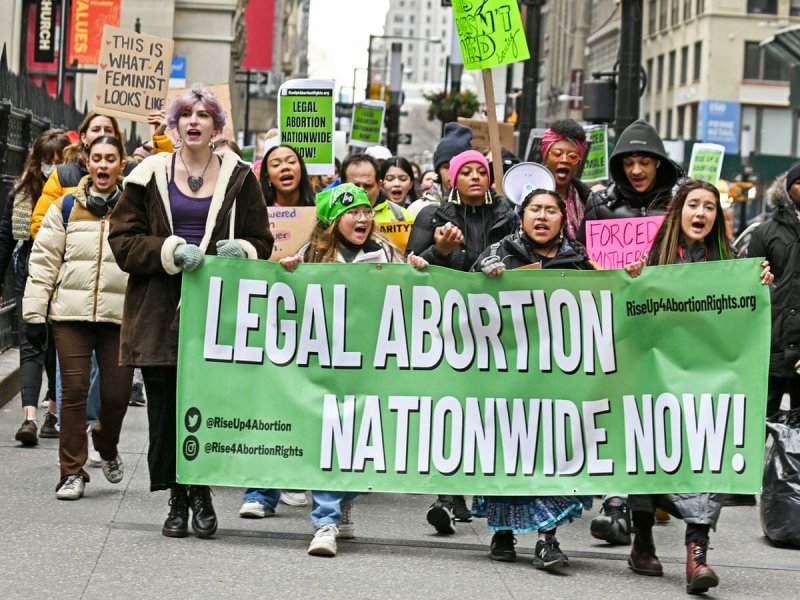
The Supreme Court of the United States has temporarily preserved nationwide access to the abortion pill mifepristone while a major legal battle over the drug continues.
The ruling means women in the United States can continue obtaining Mifepristone through pharmacies, telehealth services, and mail delivery for now, despite a lower court decision that would have sharply restricted access.
RECOMMENDED STORIES
The decision is one of the most significant abortion related developments since the Supreme Court overturned Roe v. Wade in 2022.
Although the ruling does not permanently settle the issue, it temporarily blocks efforts by abortion opponents to reinstate older restrictions requiring women to visit doctors in person before receiving the medication.
The case has become a major legal and political battle because medication abortion now accounts for the majority of abortions in the United States.
The dispute also raises broader questions about federal drug regulation, state abortion bans, telehealth access, and the authority of the U.S. Food and Drug Administration.
What did the Supreme Court decide?
The Supreme Court temporarily blocked lower court restrictions that would have suspended mail delivery and telehealth prescribing of mifepristone.
This means the current rules remain in place while lawsuits continue moving through federal courts.
Women can therefore continue obtaining the medication through pharmacies or by mail without being required to make an in person doctor visit.
The court’s order effectively preserved the status quo rather than issuing a final ruling on the broader legality of the drug’s distribution system.
The decision came after emergency appeals from drug manufacturers seeking intervention.
What is mifepristone?
Mifepristone is one of the most commonly used abortion medications in the United States.
It is typically used together with another drug called misoprostol to terminate pregnancies during the early stages.
The medication was first approved by the U.S. Food and Drug Administration in 2000.
Over time, the FDA gradually loosened several restrictions surrounding the drug, including allowing telehealth prescriptions and mail delivery.
Medication abortion has become increasingly important since the fall of Roe v. Wade because many states imposed strict abortion bans or limitations.
According to recent data, medication abortions account for the majority of abortions in the United States.
Why was the abortion pill challenged in court?
The current case originated from a lawsuit filed by the state of Louisiana against the FDA.
Louisiana argued that federal rules allowing telehealth prescriptions and mail delivery of mifepristone undermine the state’s abortion ban.
The state also questioned the safety of the drug and challenged the FDA’s authority to relax restrictions.
A federal appeals court sided partially with Louisiana and ruled that women should once again be required to see doctors in person to obtain the medication.
That decision would also have suspended mail distribution of the drug nationwide while the case proceeded.
Drug manufacturers then appealed to the Supreme Court seeking emergency intervention.
Why is mail delivery of abortion pills so controversial?
Mail delivery has become one of the most politically sensitive abortion issues in the United States after Roe v. Wade was overturned.
Supporters argue telehealth and mail distribution are essential for women living in rural areas or states with strict abortion restrictions.
They say remote access improves healthcare access, especially where abortion clinics are limited or banned.
Opponents argue mailing abortion pills weakens state abortion laws and raises concerns about medical oversight and safety.
Some anti abortion groups also argue mail distribution violates the 19th century Comstock Act, an old federal law restricting the mailing of materials associated with abortion.
Although the law was largely unenforced for decades, abortion opponents increasingly cite it in modern legal challenges.
Did all Supreme Court justices agree?
No. The ruling was not unanimous.
Justices Clarence Thomas and Samuel Alito dissented.
Alito argued the ruling undermined the Supreme Court’s 2022 Dobbs decision that overturned Roe v. Wade and returned abortion policy authority to individual states.
Thomas argued that those mailing abortion pills may be violating the Comstock Act.
The majority of the court, however, decided to temporarily preserve existing access while litigation continues.
Is abortion now legal nationwide again?
No. The Supreme Court’s ruling does not restore nationwide abortion rights or reverse the Dobbs decision.
The decision only concerns temporary access to mifepristone under current FDA rules.
Individual states still maintain widely different abortion laws.
Some states continue to ban or heavily restrict abortion despite the ruling.
The case specifically concerns how the abortion pill can be prescribed and distributed, not whether abortion itself is constitutionally protected nationwide.
Therefore, abortion access in the United States still depends heavily on state law.
Why is this case so important beyond abortion?
The dispute has implications beyond abortion rights.
Many legal experts say the case could affect the authority of federal agencies like the FDA to regulate medicines.
Pharmaceutical companies warned that limiting FDA authority through court intervention could destabilize the entire drug approval system.
If courts can overturn long standing FDA decisions, drug manufacturers fear increased uncertainty around medication regulation.
The case therefore affects broader questions about science based regulation, judicial authority, and federal oversight of healthcare products.
How has the Trump administration responded?
The administration of Donald Trump has taken a relatively cautious public position during the case.
Reports indicate the administration did not strongly intervene before the Supreme Court despite pressure from anti abortion groups.
This created frustration among some conservative activists who wanted stronger action restricting mifepristone access.
At the same time, the administration faces political pressure because public opinion polls show many Americans support at least some abortion rights.
The issue places the administration in a politically sensitive position between conservative anti abortion groups and broader public opinion.
What happens next?
The legal battle is far from over.
The Supreme Court’s order is temporary and allows current access rules to remain while lower courts continue handling the case.
The lawsuit is expected to continue in the conservative leaning United States Court of Appeals for the Fifth Circuit.
Eventually, the dispute could return to the Supreme Court for a full hearing and final decision.
Until then, access to mifepristone through telehealth and mail delivery is expected to continue nationwide.
However, abortion rights advocates warn that future restrictions remain possible.
Anti abortion groups also continue pressing the FDA to impose tighter controls on the medication.
The issue is therefore likely to remain one of the most significant legal and political battles in the United States over the coming years.
By Faig Mahmudov


Similar news