Ishkhan Verdyan: Armenia–Azerbaijan dialogue enters new phase - INTERVIEW



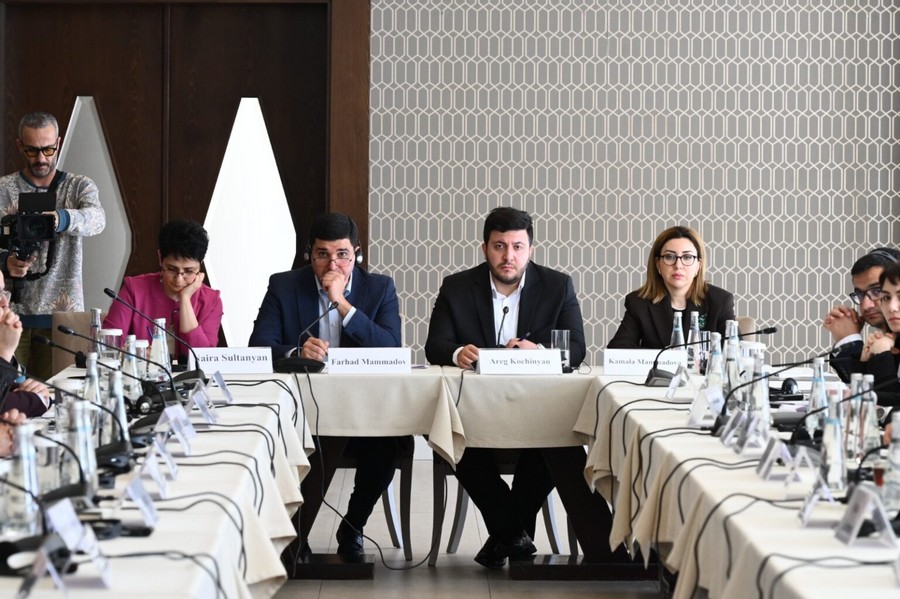
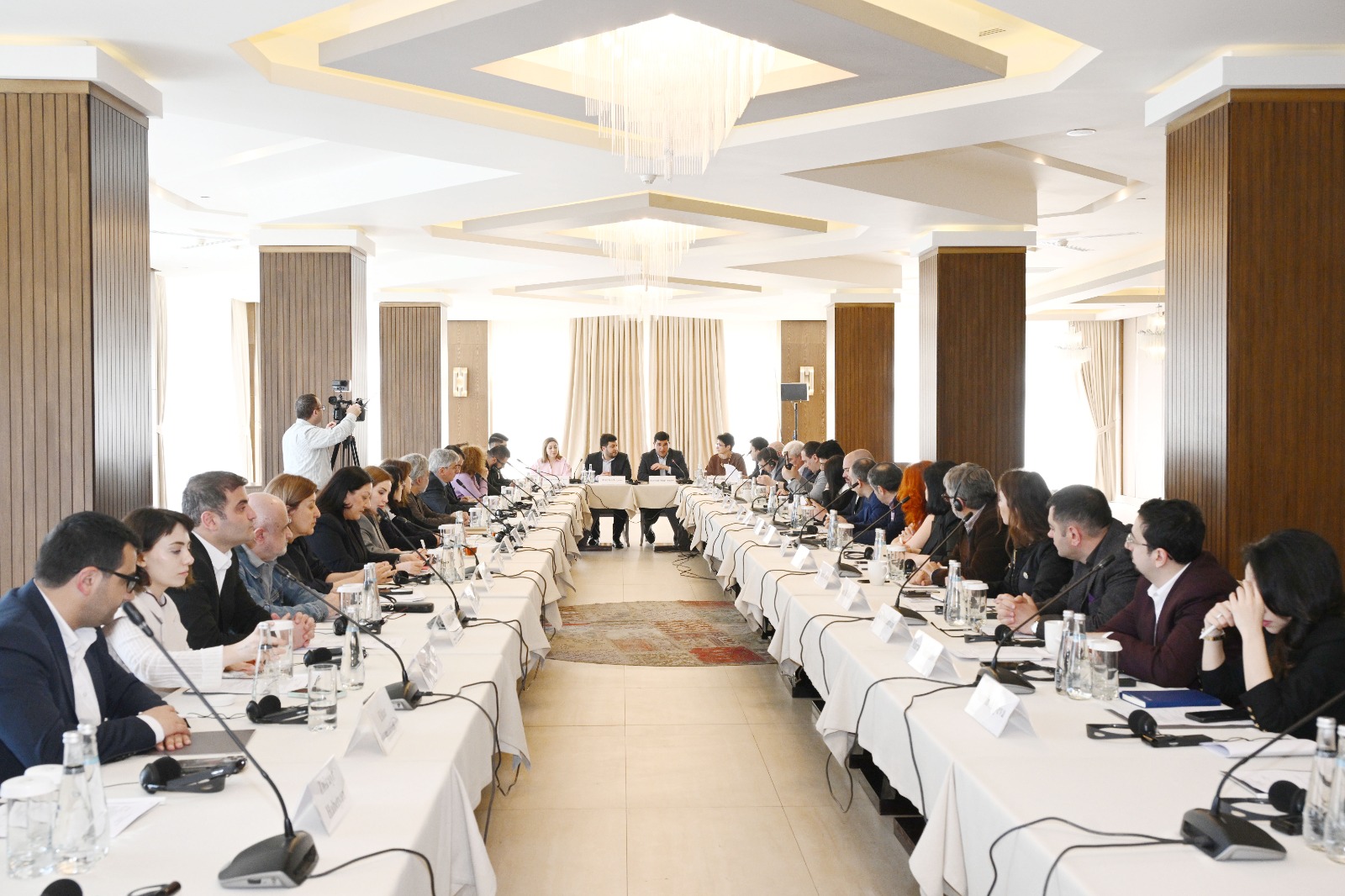
– The meeting of civil society representatives from Armenia and Azerbaijan in Gabala can be considered symbolic – this is how the participants themselves described it. This is no coincidence. It was likely the first time in the history of cooperation within the “Peace Bridge” project that its true purpose was explicitly articulated and directions for its further development were set.
From what took place, one can conclude that a course has been set towards strategic changes across the entire South Caucasus region, including its role on the geopolitical map, with an emphasis on increasing its significance. Judging by everything, more active movement in this direction is now beginning.
Source: aravot
Naturally, all of this is closely linked to the peace agenda between Armenia and Azerbaijan. It is already noticeable that both at the official level and within civil society, this development vector is perceived as acceptable and promising. Moreover, there have been calls to expand this interaction to include business, trade, and people-to-people contacts.
If we refer to the final statement made by Presidential Assistant Hikmet Hajiyev at the end of the meetings, it can be assumed that if the current momentum is maintained and the outlined course is followed, the region may acquire a qualitatively different state in the foreseeable future. This implies a new level of agency and a more stable and independent model of life for the peoples of the South Caucasus.
– How do you assess the results of Armenian Prime Minister Nikol Pashinyan’s visit to Moscow?
– Much has already been said about Nikol Pashinyan’s trip to Moscow and his meeting with Vladimir Putin. It is worth adding that the meeting itself was in many ways unusual. Not only its format, but also its consequences proved to be non-standard, to some extent going beyond the usual logic of Armenian–Russian and regional diplomacy.
Be that as it may, the content of the closed part of the negotiations remains unknown. At the same time, the Armenian side states that the dialogue took place in a positive tone for Armenia and that Nikol Pashinyan managed to convey his position to the Russian leader.
In addition, it has become known that another meeting is already scheduled for 1 June: Nikol Pashinyan will visit Moscow again. It is likely that more definite conclusions can be drawn following these upcoming talks.
– Many had hoped that Strong Armenia, led by Samvel Karapetyan, would unite the opposition field, but in practice it failed to do so. What, in your view, are the reasons for this?
– The Strong Armenia bloc was initially presented as an alternative capable of consolidating opposition forces, primarily those opposing Nikol Pashinyan. Formally, it positioned itself as a powerful political entity capable of challenging the current government.
However, in practice, this has largely turned out to be a PR construct, relying mainly on the media resources still available to the bloc. If we step away from the information noise and assess the real situation within Armenia, including public attitudes towards this political force, it becomes clear that its support base is quite narrow.
To a large extent, the bloc’s supporters consist of groups that are in one way or another involved in the Karabakh agenda and have a direct interest in it. Thus, this is not about a broad base of undecided voters or widespread support among the general population.
Source: trend
At the same time, residents of Yerevan and other cities observe tangible changes taking place in the country as a result of the activities of Nikol Pashinyan’s team. These changes are difficult to ignore and they shape a stable perception of the current political course.
As a result, based on empirical observations, it can be assumed that the majority of votes in elections will be concentrated around the incumbent authorities. Support for the Strong Armenia bloc will remain limited – mainly coming from its core supporters, including groups linked to former elites or certain pro-Russian economic circles.
– In early May, Yerevan will host the European Political Community summit as well as the Armenia–EU summit. What will holding this event bring to Armenia’s current government?
– The upcoming European Union – Armenia summit to be held in Yerevan may primarily carry symbolic significance and serve as a point of electoral consolidation. It appears more as a domestic political event rather than a factor capable of bringing immediate foreign policy changes.
Personally, I do not expect any major shifts in foreign policy from this summit. At the same time, it is not impossible that Armenia could be granted candidate status or be offered the signing of an association agreement with the European Union – such a scenario fits within the logic of current processes.
However, even if such steps are implemented, their effect will most likely be primarily informational and political in nature. Alongside positive perceptions, this could also entail certain negative consequences, given Russia’s well-known stance towards post-Soviet countries deepening their engagement with the European Union.


Similar news