Russian-Armenian dialogue and geopolitics


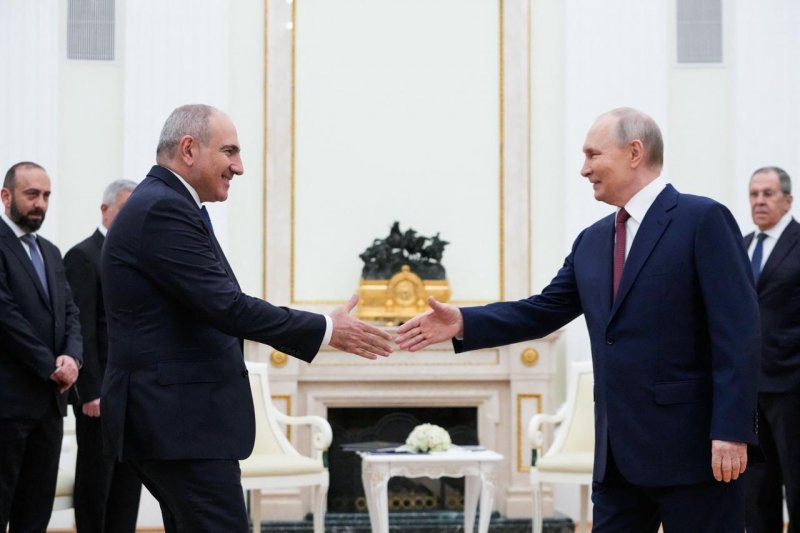
The polemic between Russian President Vladimir Putin and Aremenian Prime Minister Nikol Pashinyan has become a notable episode in the current dynamics of Russian-Armenian relations, but their significance goes far beyond bilateral dialogue. In a broader context, they reflect the increasing complexity of the geopolitical configuration in the South Caucasus, where the interests of Russia, the West, and regional actors intersect.
Against this backdrop, it is important to note that Moscow and Yerevan have built close economic and energy ties over a long period. Russia remains a key partner for Armenia in several areas: natural gas supplies are provided on preferential terms, and trade turnover between the countries has demonstrated steady growth, exceeding $6 billion. The re-export factor also plays a significant role, allowing Armenia to integrate into broader trade and economic chains.
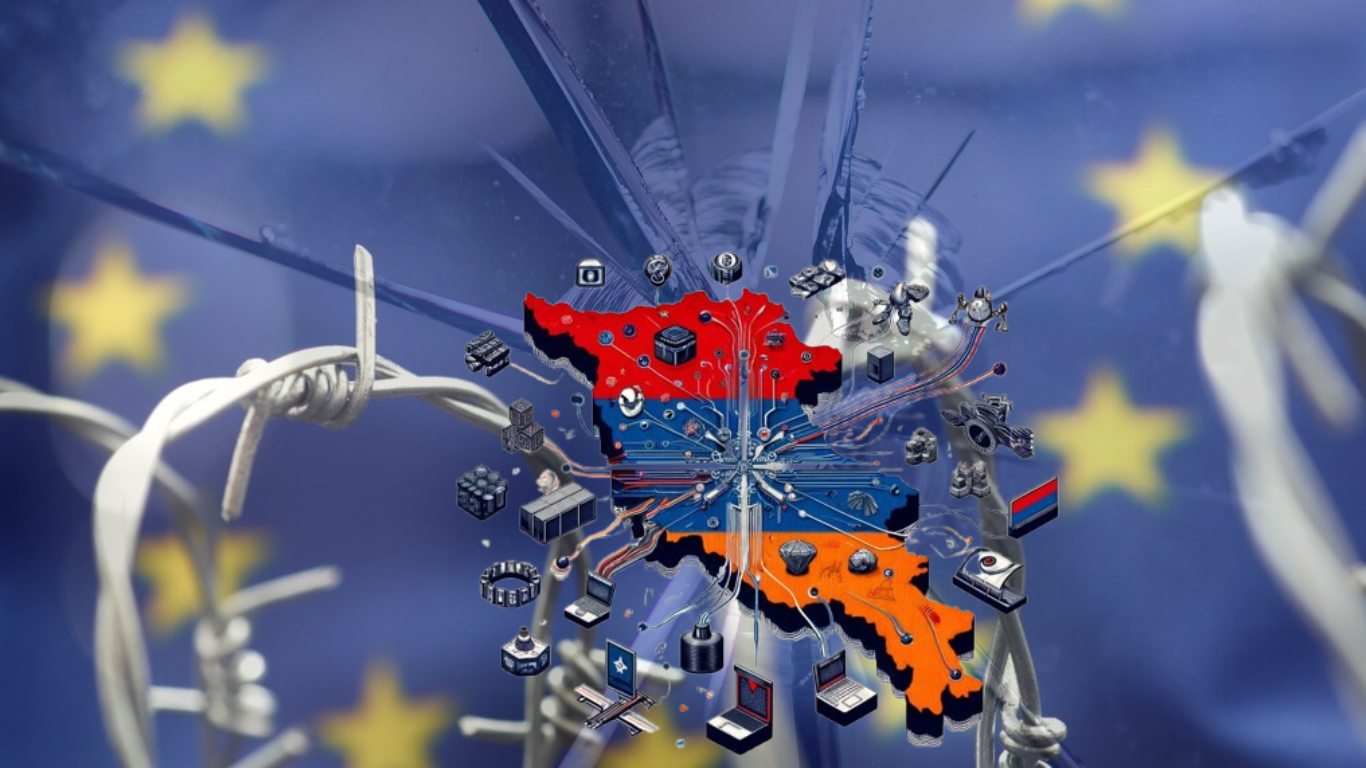
Thanks to Russian re-exports, Armenia demonstrated some of the highest economic growth rates in the world during the first three years of the war in Ukraine. However, last year Yerevan effectively abandoned the re-export of Russian gold and precious stones to the UAE. As a result, Armenian exports to the UAE fell by nearly 70 percent. This represents a major loss, considering that in 2024 imports from Russia more than doubled, while exports to the UAE increased nearly sevenfold. After Western media published investigations into re-export schemes, Yerevan decided to abandon this instrument of economic growth.
Source: AI
In the context of a gradual “divorce” from Russia, Armenia is increasing its trade turnover with the European Union. In 2025, foreign trade turnover with the countries of the Eurasian Economic Union amounted to $8 billion, a decline of 37 percent, while trade with EU countries reached $2.5 billion, an increase of more than 7 percent. In addition, the Armenian authorities have placed on their agenda the issue of the Electric Networks of Armenia, managed by a company owned by Samvel Karapetyan, as well as the Russian concession for Armenian railways. In both areas, Armenia is seeking changes.
At the same time, by visiting Moscow, Pashinyan aims to demonstrate that he does not intend to sever relations. At his meeting with Putin, the Armenian prime minister stated that Yerevan understands that simultaneous membership in the Eurasian Economic Union and the European Union is impossible, but will attempt to balance the two agendas for as long as possible. When this becomes untenable, Armenia will make a decision.
Meanwhile, Moscow appears to want Yerevan to make that choice now. During the meeting, Putin emphasized that dual alignment is impossible not only politically but also economically. He also reminded his counterpart of the significant difference in Russian gas prices for Europe and Armenia. While gas prices in Europe exceed $600 per 1,000 cubic meters, Russia sells gas to Armenia at $177.5 per 1,000 cubic meters, Putin noted.
In 2025, trade turnover between Russia and Armenia amounted to $6.4 billion. For comparison, Russia’s trade turnover with Azerbaijan stands at $4.9 billion. These figures were cited by the Russian president during the meeting with Pashinyan.
Economists do not dispute that the traditional and closely integrated EAEU market is more attractive and important for Armenia. In practice, the EAEU market primarily means the Russian market. This places Armenia before a question of priorities—a difficult choice between economic and political interests. The trend toward diversification in Yerevan’s foreign policy is becoming increasingly visible. Armenia is intensifying contacts with Western countries and institutions, which is perceived as part of a broader strategy of balancing between different centers of power.
This process inevitably raises debates about the future of allied relations with Russia and the limits of maneuver in foreign policy. Pashinyan is acting cautiously, trying not to burn old bridges before new ones are built. Maintaining this balance would be beneficial for Armenia, but it may become disadvantageous for both Russia and the European Union. Judging by the rhetoric at the meeting, Moscow is not prepared to share a former ally on equal terms. This is geopolitics — as the saying goes, nothing personal.
Within the logic of competition between the West and Russia for influence over Armenia, political tensions inside the country are increasing, and foreign policy rhetoric is becoming part of domestic political competition. In this sense, the dialogue in Moscow can be seen not only as an element of interstate relations but also as a factor influencing electoral processes.
In this regard, Putin’s diplomatic remark is noteworthy. He stated that Russia has “many friends in Armenia… and many political forces that are pro-Russian.” He added that Russia would like these forces to have the opportunity to participate in elections, noting that some of them are currently imprisoned despite holding Russian passports..jpg)
Source: aysor.am
Responding to these remarks, Pashinyan replied in an equally diplomatic manner, stating that only citizens holding exclusively Armenian passports can participate in elections. “That is, with all due respect, individuals with Russian passports, according to the Constitution of the Republic of Armenia, cannot be candidates for parliament or for prime minister,” he said.
The upcoming elections in Armenia are already being viewed by external actors as an instrument of geopolitical competition. Moscow is not the only player with interests here. In mid-March, the EU’s foreign policy chief, Kaja Kallas, announced that the European Union, at Armenia’s request, would send a rapid response team to help counter hybrid threats ahead of the elections. There is little doubt that “countering hybrid threats” implies measures aimed at preventing pro-Russian forces from winning.
Despite the broader geopolitical contest and the interests of external actors, Armenia has before it the example of Azerbaijan, which has demonstrated that only a course of independent and balanced foreign policy can bring success. Azerbaijani President Ilham Aliyev has consistently built pragmatic relations with various centers of power, guided by national interests and the pursuit of sustainable development. Such a model is becoming an important element of regional balance amid growing geopolitical turbulence.
Pashinyan values relations with Baku and demonstrates this when possible. This is evident both in the symbolic use of the map of “real Armenia” pinned to his jacket lapel, even at official meetings, and, more importantly, in his clear rejection of the Karabakh movement. He stated this explicitly in Moscow. During his dialogue with the Russian president, the Armenian prime minister emphasized that the established peace positively affects Armenia’s relations with Russia. For example, the opening of direct railway links with Russia “strengthens our traditional economic ties and reinforces our connections within the Eurasian Economic Union.”


Similar news