Israel is going it alone in Lebanon


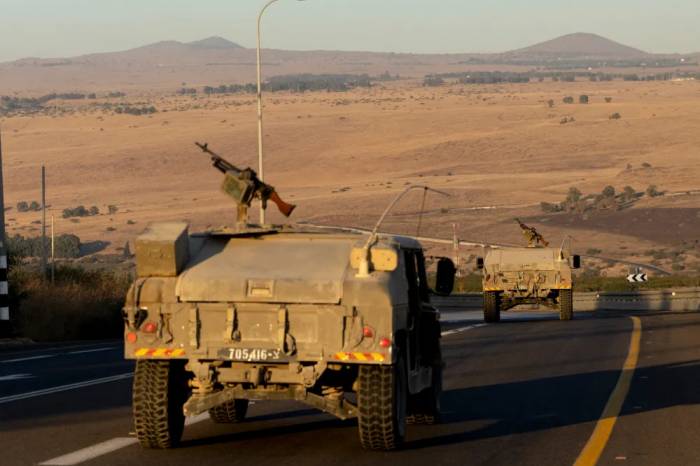
On Wednesday evening, the White House issued a joint statement , endorsed by allies in Europe and Asia as well as Qatar, Saudi Arabia, and the United Arab Emirates, calling for an immediate 21-day cease-fire across the Israel-Lebanon border, seeking to buy time for diplomacy to avert a full-scale war between Israel and Hezbollah, News.Az reports citing Foreign Policy .
“This has been an all-out effort by the administration to reach this moment,” a senior Biden administration official said on a call with reporters after, speaking on condition of anonymity under ground rules set by the White House. “We are grateful to both the Israelis and Lebanese government in working tirelessly to get to this moment.”By the next morning, the deal seemed dead, with Israeli Foreign Minister Israel Katz posting on X, “There will be no cease-fire in the north.”
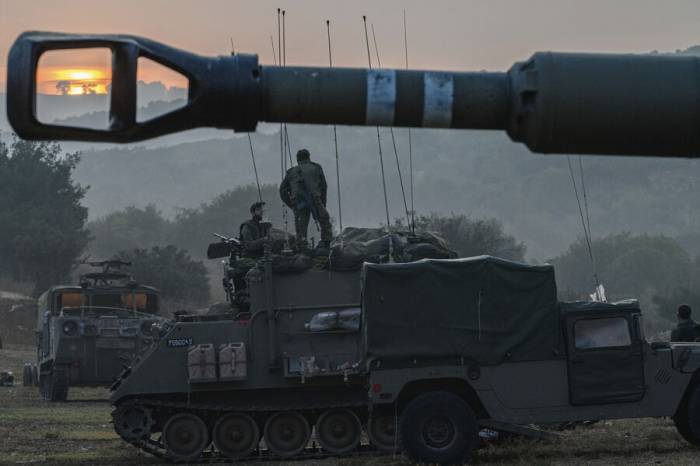
The threat of further war in the Middle East has loomed large over the United Nations General Assembly this week, as Israel dramatically expanded its strikes on Hezbollah targets on Monday, killing some 500 people, including dozens of children, according to the Lebanese health ministry.
When Israel went to war against Hamas in Gaza, it was largely seen by the country’s Western partners as a justified act of self-defense in response to the militant group’s bloody attack on Israel on Oct. 7, 2023.
But although it was Hezbollah that began firing on Israel on Oct. 8, claiming solidarity with Hamas, there is a markedly different tone this time around, even among Israel’s close Western partners as they seek to prevent the country from entering into a war with Hezbollah that has the potential to be catastrophic for both Lebanon and Israel as well as the wider region.
Israel Defense Forces chief Herzi Halevi told troops on Wednesday that Israel plans to “destroy” Hezbollah and “decisively destroy their infrastructure” to enable at least 60,000 Israelis who have fled their homes in the northern border region since Oct. 7 to return. (Over the border, more than 102,000 Lebanese civilians have also fled the area, a count that continues to rise with Israeli airstrikes growing in intensity.)
Applying pressure. Even before Israeli Prime Minister Benjamin Netanyahu arrived in New York on Thursday ahead of his expected address to the U.N. General Assembly on Friday, one thing was already clear from Western officials and U.N. delegates here: If Israel goes into Lebanon, it will be going at it alone, with limited international support.
At a Wednesday night U.N. Security Council meeting convened to discuss escalating tensions between Israel and Hezbollah, there were widespread calls for both parties to immediately cease hostilities.
“The people of Lebanon, as well as the people of Israel and the people of the world, cannot afford Lebanon to become another Gaza,” U.N. Secretary-General António Guterres told the council.
“We are on the brink, the precipice. At a few minutes to midnight,” British Foreign Secretary David Lammy said in a speech.
On Wednesday, the U.S. Defense Department said it was not providing Israel with any support—including intelligence help—in its operations against Hezbollah in Lebanon; however, at a press conference in London on Thursday, U.S. Defense Secretary Lloyd Austin said the U.S. commitment to help Israel defend itself has not changed.
“We’ve been committed from the very beginning to help Israel, provide the things that are necessary for them to be able to protect their sovereign territory, and that hasn’t changed and won’t change in the future,” Austin said.
Israel also said on Thursday that it had secured an $8.7 billion aid package from the United States. The money will be used to “significantly strengthen critical [air defense] systems such as Iron Dome and David’s Sling while supporting the continued development of an advanced high-powered laser defense system currently in its later stages of development,” Israel’s Defense Ministry said in a statement.
But Israel is unlikely to see that kind of support from other Western countries.
Tanja Fajon, Slovenia’s deputy prime minister and foreign minister, said on Thursday that the small European country used the U.N. Security Council meeting to urge member states to “use your leverage, use our international presence on one hand on the Israel government to enhance [the] cease-fire, to withdraw from occupied Palestinian territories, respect our obligations as responsible member states of this organization to follow international law and the U.N. Charter.”
“One could ask the question what the objectives are of what Israel is doing today,” outgoing Belgian Prime Minister Alexander De Croo told SitRep on Tuesday. “If the objective is to increase the security of the inhabitants of Israel, today, actually, you only see the opposite happening.”
The Security Council is set to meet on Friday to discuss the situation in the Middle East, including Lebanon and Gaza—the same day that Netanyahu is set to address the General Assembly.


Similar news