Israel says Iran could recover some enriched uranium After U.S. strikes, but warns of retaliation


A senior Israeli official has warned that Iran may be able to recover enriched uranium from one of the nuclear sites hit by U.S. airstrikes last month, though doing so would be extremely difficult and could trigger renewed Israeli military action.
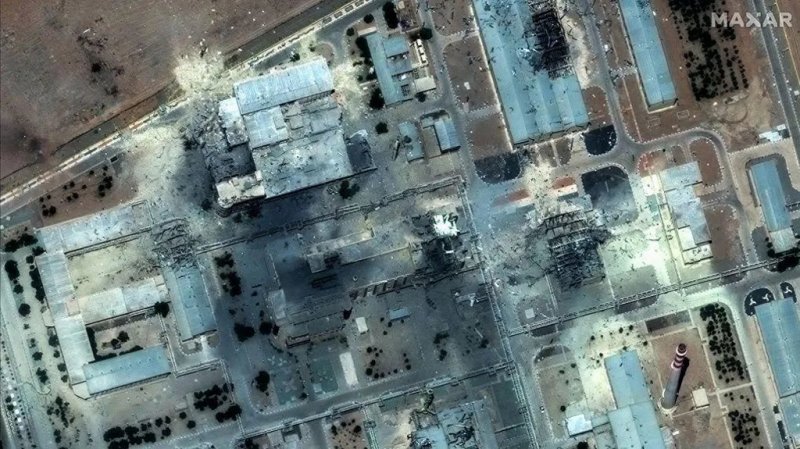
Speaking to U.S. reporters on condition of anonymity, the official said the enriched uranium is believed to be buried beneath the Isfahan nuclear facility — one of three major sites targeted during “Operation Midnight Hammer” on June 22, News.Az reports, citing BBC.
While U.S. President Donald Trump has repeatedly claimed the strikes "obliterated" Iran's nuclear infrastructure, some U.S. intelligence agencies and international bodies have offered more cautious assessments.
“Any Iranian attempt to recover the uranium would likely be detected,” the Israeli official said, adding that Israel assesses Iran’s nuclear program has been set back by two years as a result of the strikes.
The official’s remarks contradict the White House’s more definitive stance. Spokeswoman Anna Kelly reiterated Thursday that the operation “totally obliterated Iran’s nuclear facilities,” crediting Trump’s “decisive leadership” with making the world safer.
A leaked Defense Intelligence Agency (DIA) report concluded that while the sites at Fordo, Natanz, and Isfahan were “heavily damaged,” they were not completely destroyed.
CIA Director John Ratcliffe testified before Congress that the destruction of Iran’s only uranium metal production facility had dealt a significant blow to Tehran’s capacity to produce a nuclear weapon.
Similarly, IAEA Director Rafael Grossi told CBS that the facilities were “destroyed to an important degree,” but emphasized that some structures remain intact.
“Frankly speaking, one cannot claim that everything has disappeared,” Grossi said. “There is still material and infrastructure standing.”
In an interview with U.S. commentator Tucker Carlson, Iranian President Mahmoud Pezeshkian admitted the sites were "severely damaged" and said Iranian authorities currently have no access to assess the full extent of the destruction.
“A full assessment is impossible for now,” Pezeshkian said, declining to comment on whether Iran would attempt to recover any buried nuclear material.
Despite Iran’s insistence that its nuclear program is for peaceful purposes, Western intelligence agencies have long viewed uranium enrichment activity as potentially weapons-related — particularly amid rising geopolitical tensions.
The Israeli official hinted that any move by Iran to salvage uranium from the damaged Isfahan site would be seen as a provocative act, potentially reigniting regional tensions.
“We would act decisively,” the official warned. “We are monitoring the situation closely.”


Similar news