Japan’s deepening political woes cloud budget and interest rate hike timing


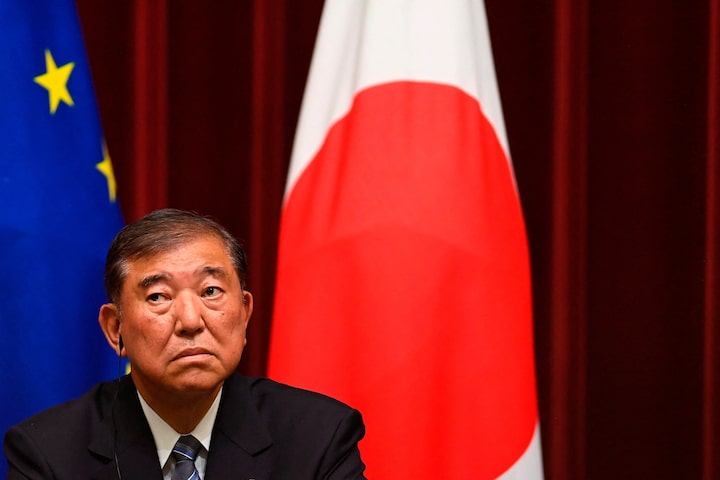
Japan faces mounting political uncertainty as Prime Minister Shigeru Ishiba confronts growing pressure within his ruling Liberal Democratic Party (LDP) to resign, following significant election losses in the upper house last July and the lower house last year. This turmoil threatens to prolong policy paralysis, complicating the drafting of next year’s budget and the Bank of Japan’s (BOJ) plans for future interest rate hikes.
Lawmakers recently agreed to consider holding a rare LDP leadership race even while Ishiba remains party head. Such a contest could occur as soon as September if most party lawmakers and regional heads agree. However, the timing remains uncertain and could be delayed until early next year to avoid disrupting the government’s budget preparations, News.Az reports, citing Reuters.
Ishiba has denied plans to resign, but declining support has sparked inevitable questions about his political future. Some ruling party members insist his resignation is necessary to break the deadlock. The LDP-led coalition has lost control of both parliamentary houses, forcing it to seek opposition support to pass legislation and the budget—something opposition parties have refused unless Ishiba steps down.
Japan’s Ministry of Finance collects spending requests in August and finalizes the draft budget by December for the fiscal year starting in April. Failure to pass the budget on time would force a stop-gap measure, potentially delaying government spending and harming the fragile economy.
LDP heavyweight Ken Saito emphasized the need for a stable coalition under a new leader, stating, “Japan needs a stable coalition government. Otherwise, it’s impossible to pursue consistent policies.”
The political uncertainty also complicates the BOJ’s decision on when to resume interest rate hikes. While most analysts do not expect a rate increase at the September policy meeting, some see chances for hikes later this year or early next year as more economic data, particularly on U.S. tariffs’ impact, becomes available.
Ishiba has supported the BOJ’s gradual withdrawal of massive stimulus, with inflation above the 2% target for over three years. However, his election defeats have emboldened calls for increased government spending and looser monetary policy. Opposition parties urge the BOJ to delay or slow rate hikes to support the economy.
A leadership race could bring candidates with varying views on monetary policy into focus. For example, Sanae Takaichi, a reflationist lawmaker, has previously criticized interest rate hikes as “stupid.” Such political tensions might discourage the BOJ from raising rates soon to avoid attracting unwanted political scrutiny.
BOJ Governor Kazuo Ueda stated the bank would continue “appropriate policies” to sustainably reach the inflation target but acknowledged the unpredictability of the political landscape and suggested a “wait-and-see” approach for now.


Similar news