Ethiopia votes in election expected to cement Abiy Ahmed’s rule


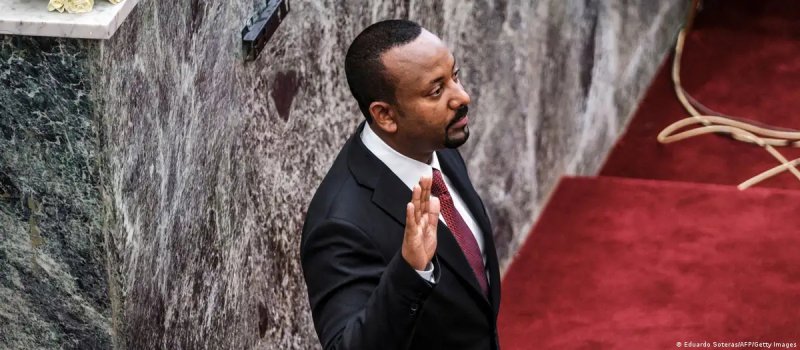
Parliamentary and regional elections are being held in Ethiopia on June 1, in a vote that will determine the new composition of the federal parliament and regional bodies.
Formally, this is one of the largest electoral exercises on the African continent, with more than 50 million citizens registered to vote. Yet the current campaign is taking place in conditions where the election itself goes far beyond a routine political procedure. For Ethiopia, this is not simply a contest between parties and candidates, but a serious test of state stability, public trust in institutions, and the authorities’ ability to prevent the country from sliding into deeper fragmentation.
The ruling Prosperity Party of Prime Minister Abiy Ahmed is widely seen as the clear favorite. It is expected to secure a confident victory and preserve its dominant position in the country’s political system. This is due not only to the scale of the party’s organizational network and the advantages of incumbency, but also to the weakness of the opposition field. Opposition parties remain fragmented, organizationally weakened, and unable to mount a serious nationwide challenge to the government. As a result, the main question of these elections is not who will win, but how convincing and legitimate the result will appear to different parts of Ethiopian society.
For Abiy Ahmed, this vote carries special significance. He came to power in 2018 amid expectations of change. At the time, he was seen as a new-generation leader capable of opening up Ethiopia, easing internal tensions, pursuing reforms, and moving the country away from years of political rigidity. His first steps appeared promising: the release of political prisoners, attempts to expand political space, and a historic rapprochement with Eritrea, for which he received the Nobel Peace Prize. However, the years that followed dramatically changed perceptions of his rule.
Instead of a stable democratic transformation, Ethiopia entered a period of severe internal upheaval. The war in Tigray, conflicts in Oromia and Amhara, interethnic tensions, allegations of pressure on the opposition, and restrictions affecting civil society have significantly reshaped the country’s political landscape. That is why the June 1 elections are taking place in an atmosphere where official rhetoric about development and stability clashes with the reality of regional conflicts, mistrust, and the unresolved consequences of past crises.
RECOMMENDED STORIES
The most sensitive element of these elections remains Tigray. Voting is not being held in the northern region because of continuing instability. For Ethiopia, this sends an extremely important political signal. After the 2020–2022 war, Tigray remains one of the country’s most painful flashpoints. Although large-scale hostilities ended following a peace agreement, the region’s political normalization has not been completed. The exclusion of Tigray from the vote means that a significant part of the country once again remains outside a fully functioning federal political process. This inevitably raises the question: can the vote be considered fully national if one of the key regions is not participating under normal conditions?
The Tigray issue matters not only in terms of vote numbers. It concerns the very principle of political representation. In a country where regional identity plays an enormous role, the absence of full participation by one region can deepen feelings of alienation and distrust toward the central government. For the authorities, this is a serious challenge: even a major victory for the Prosperity Party may appear incomplete if part of society believes that the process took place without properly reflecting the interests of all regions.
The situation in Oromia and Amhara is no less complicated. These regions are critical to Ethiopia’s political stability. Oromia is the country’s largest region and the political base from which Abiy Ahmed himself emerged. Amhara is one of the historic centers of Ethiopian statehood. Yet in recent years, both regions have seen growing conflict, armed activity, and confrontation between local forces and the central government. This creates a double problem for the elections: on the one hand, the authorities want to demonstrate that the state remains in control; on the other, the atmosphere of instability itself undermines confidence in equal voting conditions.
Even if the elections are technically held, major questions remain. How freely can voters cast their ballots in regions where tensions persist? How actively were opposition forces able to campaign? How safe is voter participation? And to what extent will the results be perceived as a reflection of genuine political sentiment rather than the outcome of a restricted political environment? These are the questions that will shape how the elections are viewed after the results are announced.
The ruling Prosperity Party has built its campaign around development, economic growth, food security, infrastructure modernization, and national unity. For the government, this is a logical strategy. Ethiopia remains one of Africa’s largest countries, with a population of more than 120 million, serious economic potential, and an important geopolitical position. The authorities want to show that despite conflicts and crises, the country is moving forward, remains governable, and is capable of implementing large-scale projects.
However, the political reality is more complex. Economic promises cannot always outweigh the consequences of war, internal violence, and a crisis of trust. In countries with deep regional divisions, elections do more than form a parliament. They are supposed to serve as a mechanism for bringing different groups into a shared political space. If part of society believes that its voice is not being heard and that political competition is limited, elections may not strengthen stability but merely temporarily confirm the dominance of those in power.
For the opposition, the current campaign has become yet another test. Formally, Ethiopia has a multiparty system, but the real opportunities available to opposition forces remain limited. Many parties face a shortage of resources, weak organizational networks, internal disagreements, and pressure from the authorities. Under such conditions, the ruling party enjoys a significant advantage even before election day. That is why a Prosperity Party victory may be convincing in numerical terms, while the question of genuine political competition remains open.
The international context is also important. Ethiopia is a key country in the Horn of Africa. Its internal stability affects broader processes in East Africa, security in the Red Sea region, and relations with Sudan, Somalia, Eritrea, and other neighbors. Addis Ababa also plays an important role in African diplomacy, as it hosts the headquarters of the African Union. For this reason, Ethiopia’s elections are being closely watched not only domestically, but also beyond the country’s borders.
For international partners, the central question is whether Ethiopia can move toward a more stable political model after the vote. Western countries, African institutions, and regional actors all have an interest in preventing Ethiopia from returning to large-scale internal conflict. But elections alone are not enough. What is needed is political dialogue, the restoration of trust between the center and the regions, Tigray’s return to the full political process, a reduction of tensions in Oromia and Amhara, and a more open environment for the opposition, the media, and civil society.
For Abiy Ahmed himself, these elections may become both a victory and a warning. On the one hand, the ruling party is likely to receive a renewed mandate and retain control of parliament. This will allow the government to speak of popular support and continue its chosen course. On the other hand, a large victory amid weak opposition, regional instability, and the absence of voting in Tigray does not remove the main questions about the country’s future. Political stability is not measured only by the number of seats in parliament. It depends on whether citizens believe that the state hears them, protects them, and gives them a genuine opportunity to take part in decision-making.
That is why the June 1 elections in Ethiopia should not be viewed as an ordinary vote with a predictable outcome. They reflect a deeper crisis: between the centralization of power and regional demands, between the rhetoric of reform and the reality of conflict, between the aspiration for national unity and the political fault lines that remain. If the authorities use their new mandate for reconciliation and rebuilding trust, the vote could mark the beginning of a more stable phase. If, however, the elections are perceived as a formality held against the backdrop of excluded regions and weak competition, they may only deepen frustration and reinforce existing divisions.
Ethiopia remains a country of enormous potential, but also one facing serious internal risks. The main outcome of these elections will not be limited to the distribution of parliamentary seats. Far more important is whether the state, after June 1, can show that it is ready not only to govern, but also to negotiate; not only to win elections, but also to restore trust; not only to speak about unity, but to create conditions in which all regions and political forces feel they are part of a shared future.


Similar news