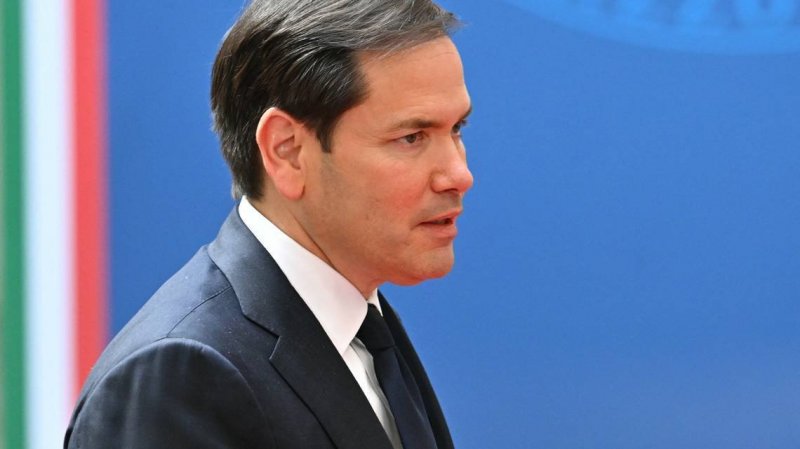
Secretary of State Marco Rubio stated on Sunday that the Trump administration expects to determine "fairly soon" whether Russia is "stringing us along" in the Ukraine peace talks, highlighting the ongoing frustration President Donald Trump has experienced in dealings with Russian President Vladimir Putin, News.Az informs via Miami Herald.
Newsweek reached out to the Russian Ministry of Foreign Affairs by email outside of normal business hours on Sunday.
Why It Matters
Russia and Ukraine have been locked in a war for more than three years after Putin invaded the Eastern European nation in February 2022.
Trump said that he would end the war in Ukraine within 24 hours after returning to office in January, but months later negotiations remain at an impasse. Trump admitted last month that Putin may not want to stop the war and is just "tapping me along," suggesting that the U.S. may need to treat Moscow "differently" in order to bring the conflict to an end.
Ukrainian President Volodymyr Zelensky visited Turkey last week and offered to meet Putin face-to-face for additional talks, but Putin declined to attend. Russia instead sent a lower-level delegation to Istanbul to meet with the Ukrainian leader, but the talks appeared to make little progress.
Trump then announced on Friday that he plans to speak with Putin on Monday in order to stop the "bloodbath" in Ukraine, followed by a call with Zelensky, saying that "a ceasefire will take place, and this very violent war, a war that should have never happened, will end."
What To Know
Rubio addressed the president's concerns during an interview appearance on Sunday with CBS News' Face the Nation host Margaret Brennan, saying that the administration is "trying to find out" if Russia actually intends to find a diplomatic end to the conflict.
"We'll find out pretty soon," Rubio said. "They met last-yesterday or the day before, in Turkey. From that, they agreed they're going to exchange paper on ideas that get to a ceasefire."
"If those papers have ideas on them that are realistic and rational, then I think we know we've made progress," he added. "If those papers, on the other hand, have requirements in them that we know are unrealistic, then we'll have a different assessment." Rubio reiterated the administration's view that the war is "bloody, costly, and destructive," but balanced it against "some element of patience that is required."
"We don't have time to waste, so we don't want to be involved in this process of just endless talks," the secretary of state said.
"There has to be some progress, some movement forward. Ultimately, one of the things that could help break this log jam, perhaps the only thing that can, is a direct conversation between President Trump and Vladimir Putin, and he's already openly expressed a desire and belief that that needs to happen, and hopefully that will be worked out soon as well." The Kremlin indicated on Sunday that Putin will indeed partake in those conversations, but Putin insisted that no deal could happen unless it addresses what Moscow sees as the "causes that caused this crisis."
"This result is the elimination of the causes that caused this crisis, the creation of conditions for long-term, sustainable peace and ensuring the security of the Russian state, ensuring the interests of our people in those territories that we always talk about, where people live who consider Russian their native language and consider Russia their homeland," Putin said, per the RBC news agency.
Rubio reiterated the belief that a deal will happen since everyone "has also expressed a willingness" to talk and that "now it's just a question of bringing everyone together, and figuring out where and when."
The call may occur at the same time that the U.S. Senate introduces sanctions against Russia, with Senator Lindsey Graham, a South Carolina Republican, bringing a "veto-proof" bill with at least 73 co-sponsors to the floor to enact those sanctions, according to Reuters.
Rubio said on Sunday that the Senate is "going to act, ultimately," but indicated that it will not change the administration's approach to the talks.
"I think in the past, we've acted to give us a little time to see if we can make some progress on our talks, but we've also been pretty clear with the Russian side for weeks now, going back six or seven weeks, we've been communicating to the Russian side that this effort was being undertaken, that we anticipated that when all was said and done, it would have close to 80 co-sponsors in the Senate, and I imagine a comparable percentage of support in the House, that that was an effort we couldn't stop and don't control," he added.