Melting glaciers raise global water, disaster risks


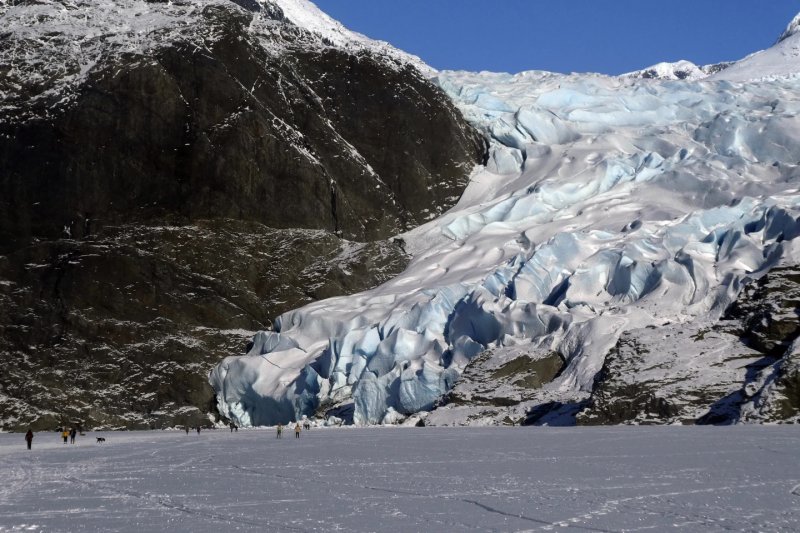
Mountain glaciers are disappearing at an alarming rate due to climate change, scientists warn, putting the water supply of millions at risk and increasing the likelihood of land- and weather-related disasters.
The United Nations has declared 2025 the International Year of Glaciers’ Preservation. This year’s International Mountain Day on Dec. 11 highlights the theme: “Glaciers matter for water, food and livelihoods in mountains and beyond,” News.Az reports, citing foreign media.
According to the latest IPCC Assessment Report, mountain glaciers lost an average of 267 gigatons of ice per year between 2000 and 2020. The World Glacier Monitoring Service’s 2024 report confirmed that 2023 saw the fastest recorded year of glacier loss in history.
Under current IPCC scenarios, the outlook is catastrophic. Even if warming is limited to 1.5°C, half of all glaciers will disappear by the end of the century. At 2°C, 60%–70% will be lost, and at 3°C, nearly all mountain glaciers could vanish.
Professor Orhan Ince of Istanbul Technical University, scientific director of the TerrArctic Mega Grant Project, warned that high-mountain ecosystems are undergoing rapid and irreversible transformation due to global warming, shifting precipitation, and extreme weather.
“The consequences are staggering,” Ince said. “In the Himalayas alone, 1.9 billion people’s water supply is at risk. South America may see 12%–22% higher water stress in agricultural regions. Global hydropower could drop 8%–12% by 2050. In Türkiye, seasonal river flows crucial for drinking water and irrigation may decline 20%–25% by mid-century. These losses are irreversible but can still be slowed.”
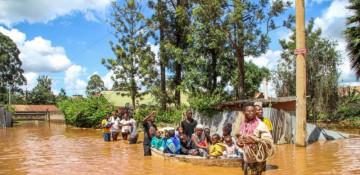
Glaciers are not just shrinking—they are nearing extinction. The European Alps have lost 65% of glacier volume since 1970, Alaska–Yukon over 30%, and parts of the Himalayas more than 40%. Rapid glacier melt also increases hazards such as landslides, flash floods, glacial lake outbursts, disrupts ecosystems, and destabilizes global atmospheric circulation.
In Türkiye, glaciers on Mount Agri (Ararat), the Cilo-Sat range, Kackar Mountains, and Mount Erciyes have shrunk 40%–60% over the past 40 years. Ince noted, “Glaciers on Mount Agri have shrunk by more than half since the 1980s. In the Kackar range, glaciers are retreating 10–20 meters per year.” These changes directly threaten water supplies, agricultural irrigation, hydropower, ecosystems, and increase landslide and flood risks.
Arctic warming, occurring three to four times faster than the global average, is altering precipitation and temperature patterns across mountain belts from the South Caucasus to the Himalayas. Ince warned glacier-fed water loss could force at least 30 million people to abandon their homes between 2030 and 2050.
To slow glacier collapse, Ince called for immediate action: high-resolution monitoring using Lidar, GNSS, Sentinel satellites, and high-altitude drones; national early-warning hydrological models for flash floods and glacial lake outbursts; and drastic global reductions in CO2 and black carbon emissions.
“Without these measures,” he concluded, “today’s extreme glacier loss will become a permanent feature of daily life after 2050.”


Similar news