Millions at risk as UN issues famine warning for 13 hunger hotspots


The United Nations has warned of a sharp deterioration in food security across 13 “hunger hotspots”, where millions of people could face even more severe hunger in the coming months. A new joint report by the Food and Agriculture Organization of the United Nations and the World Food Programme has become one of the most alarming humanitarian warnings of the year, cautioning that conflict, economic shocks, climate-related disasters and declining humanitarian funding are pushing entire regions closer to famine.
According to the UN assessment, the most severe situations are unfolding in Sudan, South Sudan, Yemen, Somalia, northeastern Nigeria and the Gaza Strip. These areas are now at the centre of international humanitarian concern because the risk of famine has either already reached a critical level or could rise sharply without urgent assistance. The report stresses that this is not a short-term food shortage but a systemic crisis in which insecurity, destroyed infrastructure, mass displacement and limited humanitarian access have made normal survival mechanisms almost impossible.
RECOMMENDED STORIES
The UN warns that the period from June to November 2026 could be particularly dangerous. In many countries, it coincides with the so-called lean season, when food stocks run low before the next harvest and food prices rise. When combined with armed conflict, blocked roads, disrupted markets and shrinking international funding, the risk of a humanitarian catastrophe increases dramatically. According to UN agencies, hundreds of millions of people are already facing high levels of acute food insecurity, while the most vulnerable groups — children, older people, pregnant women and displaced families — may face life-threatening consequences.
Mortality statistics make the UN warning even more alarming. According to humanitarian agencies, in Sudan more than 825,000 children under the age of five could face severe acute malnutrition in 2026 if aid is not expanded. Overall, around 19.5 million people in the country are facing acute food insecurity, while about 135,000 are already living in catastrophic hunger conditions. Under the international IPC classification, famine is identified when at least 20% of households face extreme food shortages, around 30% of children suffer from acute malnutrition, and mortality reaches two people per 10,000 population per day. These figures show that the current crisis is not merely a humanitarian problem but a threat of mass death in the most vulnerable regions.
Sudan remains one of the most dramatic examples of how war can turn a food crisis into a national catastrophe. The ongoing conflict has destroyed supply chains, displaced millions of people, disrupted markets and made many areas almost inaccessible to humanitarian organisations. In parts of the country, people have been left without regular access to food, clean water and medical care. The situation is especially severe in Darfur, Kordofan and other areas where fighting prevents aid from reaching communities in sufficient quantities. For many families, the question is no longer what kind of food they can eat, but whether they will find anything to eat at all.
In South Sudan, the food crisis is being worsened by a combination of conflict, climate shocks and the spillover effects of the war in neighbouring Sudan. The country is receiving people fleeing violence across the border while having extremely limited resources of its own. Flooding, damaged infrastructure, a weak economy and disease outbreaks are placing additional pressure on communities. Millions of people depend on humanitarian aid, yet access to remote areas remains difficult and funding for relief operations is insufficient. In such conditions, even a temporary delay in deliveries can lead to rapid deterioration.
Yemen has been among the world's worst humanitarian crises for years. Prolonged conflict, economic collapse, rising prices and the destruction of basic services have left a large share of the population living with chronic food shortages. Even periods of relatively reduced fighting have not brought a full recovery. Millions of Yemenis continue to depend on aid, while children remain especially vulnerable to acute malnutrition. The UN warns that any further reduction in humanitarian programmes could once again push the country towards a deeper emergency.
Somalia is also among the countries facing heightened risk. The country continues to suffer from the consequences of drought, instability and long-running conflict. For rural communities that depend on livestock and seasonal rains, climate shocks have become a matter of survival. The loss of animals, poor harvests, displacement and rising food prices have already forced many families to exhaust their coping mechanisms. When people are forced to leave their homes, they lose not only shelter but also access to land, work, markets and traditional sources of income.
In northeastern Nigeria, the risk of famine is linked mainly to prolonged instability and armed violence. In conflict-affected areas, many communities remain cut off from stable sources of food. Displaced families live in camps or host communities where resources are limited. Disrupted agricultural production, closed markets, the threat of attacks and poor access to basic services have created conditions in which hunger is no longer a temporary problem but a prolonged crisis.
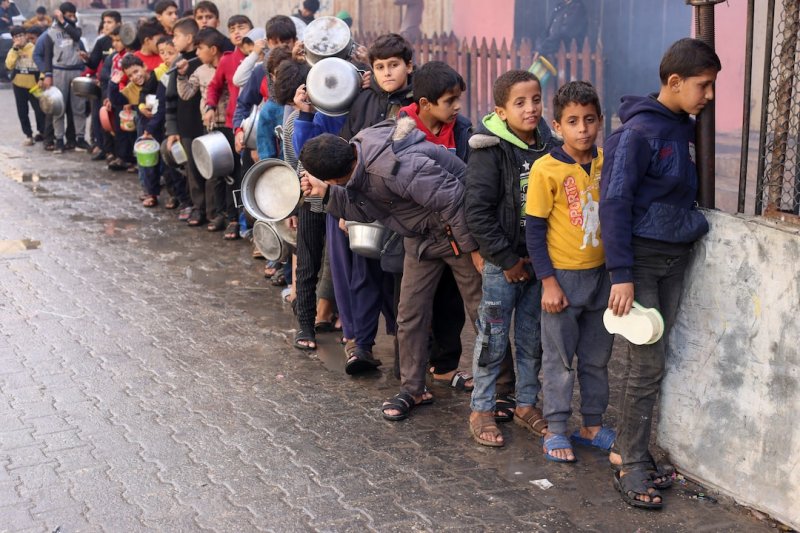
The Gaza Strip occupies a special place in the UN warning. The food crisis there is closely tied to the destruction of infrastructure, restricted humanitarian access, mass displacement and the collapse of basic life-support systems. For Gaza's residents, food shortages are compounded by shortages of clean water, medical services, fuel and safe shelter. Even when humanitarian aid enters the enclave, the volumes are often insufficient to meet the population's needs. The UN has repeatedly stressed that without sustained and safe access for humanitarian organisations, the situation could continue to deteriorate.
According to international agencies, conflict remains the main driver of the current deterioration. Wars and violence deprive people of the ability to grow food, work, move freely, buy basic goods and receive assistance. However, the crisis is also being intensified by other factors, including inflation, currency depreciation, debt burdens, climate events, droughts, floods and cuts to humanitarian funding. As a result, even countries where hunger had previously been contained may now face a new wave of deterioration.
The reduction in international assistance is a particular concern. Humanitarian organisations are being forced to cut food rations, scale back nutrition programmes for children and choose who should receive help first. This means that millions of people may be left without support precisely when they need it most. The UN warns that early action is less costly and saves more lives than responding only after hunger has already reached catastrophic levels.
The UN report is effectively a warning to the international community that food crises can no longer be treated as isolated local tragedies. They are directly linked to global security, migration, state stability and the future of entire regions. If assistance is not increased and humanitarian access is not guaranteed, the 13 hunger hotspots could become a symbol of how the world failed to respond in time to a crisis that had already been clearly predicted.
The most severe situations today are unfolding where war, poverty, climate shocks and restricted humanitarian access overlap. That is why Sudan, South Sudan, Yemen, Somalia, northeastern Nigeria and Gaza are at the centre of the UN's alarming warning. For millions of people, the coming months will be decisive not only for food security, but for survival itself.


Similar news