Monte Carlo Simulation: Principles and Applications


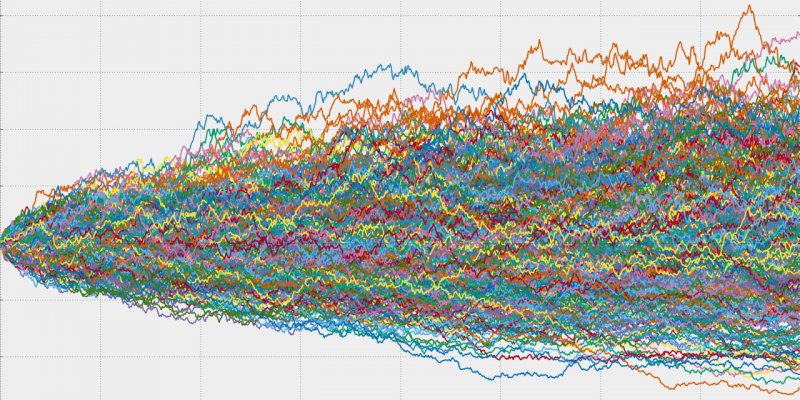
When people hear the name Monte Carlo, most immediately think of the famous casino in Monaco. Interestingly, however, this name is also associated with one of the most powerful methods in science and finance for calculating uncertainty. Monte Carlo Simulation is a statistical method that helps measure probabilities and risks when making decisions. This simulation allows us to test and forecast the future across thousands of scenarios.
For example, imagine you are building an investment portfolio. Market conditions constantly change: stocks lose value, inflation rises and falls, exchange rates fluctuate. In such a situation, what will your return look like? Monte Carlo simulation “tests” this thousands of times and shows you the average return and the range of risk.
The Monte Carlo Method (MCM) was developed during World War II at the Los Alamos National Laboratory in the United States by Stanislaw Ulam and John von Neumann. At that time, the atomic bomb project required the complex modeling of nuclear reactions and particle behavior. Traditional mathematical methods were insufficient for analyzing such multidimensional and highly uncertain processes, so a new approach was created, based on repeated trials using random numbers. The method was named after the famous Monte Carlo casinos in the Principality of Monaco, since, like games of chance, the approach relies on random outcomes. The core principle of MCM is that when exact analytical solutions for complex systems are not possible, the system can instead be modeled repeatedly with numerous random samples. As a result, the system’s behavior is obtained in the form of a probability distribution. This approach makes it possible to calculate the likelihood of different scenarios, average and extreme outcomes, risk levels, and expected values. Thus, MCM has emerged as a unique tool for analyzing mathematical models under uncertainty in a more realistic and practical way.
Uncertainty and risk have become integral parts of today’s economic, financial, and technical systems. Rapidly changing technologies, smart management systems, risks in financial markets, economic crises, wars, international agreements, strategic errors, and other factors have made decision-making mechanisms more complex. However, by using certain statistical methods, we can reduce this complexity in fact, we can forecast the outcomes of future steps. For this reason, MCM is considered one of the most effective methods for identifying inevitable risks and supporting decision-making. The method enables the prediction of system behavior through repeated trials on random samples. It is especially widely applied in measuring portfolio returns and risks in financial markets, forecasting energy prices, and estimating project delays in project management. In this article, you will learn about the theoretical foundations of MCM, its applications, and its advantages and limitations based on real statistical results.
Implementation of MCM
The execution of Monte Carlo Simulation consists of several sequential stages, each playing a crucial role in ensuring the accuracy of the results:
- Problem Definition – The first stage involves clearly formulating the system or issue to be analyzed. The key here is to identify the question being asked and the importance of the outcomes to be obtained.
- Random Number Generation – Random or pseudo-random numbers are generated using computer programs. These numbers, aligned with selected probability distributions, serve as the initial input data for the simulation.
- Repeated Simulation Process – The system’s behavior is modeled for each set of random values. This process can be repeated tens of thousands, even hundreds of thousands of times, to ensure statistical reliability of the results.
- Collection of Results and Statistical Analysis – Simulation outcomes are aggregated and key statistical indicators are calculated: means, standard deviations, variances, probability distributions, as well as best- and worst-case scenarios.
- Final Evaluation and Interpretation – The obtained results are analyzed and used for decision-making. At this stage, risk levels, probabilities, and ranges of potential outcomes are considered.
Application Areas and Real Statistical Results
MCM is not merely a theoretical mathematical model; its strength lies in evaluating risk and uncertainty in real-world problems. Across different fields, this method enables forecasting of possible outcomes and supports decision-making. From financial markets to project management, from the energy sector to healthcare, MCM serves as a reliable tool for more accurate and informed decisions in complex and volatile environments. Below, specific applications and statistical results are presented:
- Finance and Investment Portfolios
MCM is one of the most widely used methods in financial markets. The S&P 500 index recorded an average annual return of about 7.1% from 1970–2023, with the worst year being −37% (2008 financial crisis). Based on 10,000 simulations, the probability of such a portfolio achieving positive returns over 10 years is estimated at 87% (Slickcharts, 2023).
The method allows for assessing portfolio risk, returns, and extreme scenarios. For example, if the average annual return is 7% with a standard deviation of 2%, the worst-case outcome could involve losses up to 4%. This enables investors to make decisions based on informed and scientific grounds.
- Project Management
Globally, around 46% of large projects are completed with delays (PMI, 2021). Monte Carlo simulation helps determine probability distributions for each stage of a project. As a result, the probability of a project being completed on time can be forecasted within the 80–90% range.
MCM assesses the likelihood of delays, budget overruns, and resource shortages, enabling managers to build proactive strategies for mitigating risks.
- Energy Sector
According to the International Energy Agency (IEA), oil prices fluctuated within a 30% range in 2022. Monte Carlo simulation showed a 75% probability that oil prices will range between $70 –$120 per barrel by 2025 (IEA, 2023).
This helps energy companies evaluate market uncertainty, plan reserves for future projects, and make strategic decisions.
- Healthcare and Epidemiological Modeling
During the COVID-19 pandemic, probabilities of infection rates were forecasted using Monte Carlo simulation. This approach helped estimate the speed of transmission, peak levels, and potential infection cases (Zhou et al., 2022).
Epidemiologists used MCM for resource planning, quarantine measures, and optimization of hospital capacity.
Advantages of MCM
The strengths of Monte Carlo Simulation can be summarized as follows, demonstrating why it is so widely applied to complex and uncertain systems:
- Evaluation of Uncertainty – MCM models the behavior of complex systems based on probabilities, producing the most realistic results where analytical solutions are impossible.
- Identification of Best and Worst Scenarios – This method highlights the probabilities of different scenarios, facilitating risk management.
- Wide Range of Applications – It is used in finance, project management, energy markets, epidemiology, manufacturing, and logistics.
- Reliability of Forecasts – Large numbers of simulations increase the statistical reliability of the results.
Hypothetical Simulation Example: Portfolio Returns
Note: The following figures are not real market data but are provided as an illustration of applying the simulation.
Table 1.
|
Year |
Average Return (%) |
Standard Deviation (%) |
Worst Case (%) |
Best Case (%) |
|
2023 |
6.8 |
2.1 |
−4.0 |
12.5 |
|
2024 |
7.2 |
1.9 |
−3.5 |
13.0 |
|
2025 |
7.0 |
2.0 |
−4.1 |
12.8 |
Explanation of the table:
- Average Return – Indicates that if you invest in the portfolio, the expected annual return in 2025 will be around 7%, based on data from 2023 and 2024. For example, in 2024, the projected average return is 7.2%.
- Standard Deviation – Shows how much the portfolio’s returns may deviate from the average during the year. For instance, in 2023, a standard deviation of 2.1% means that returns could vary within ±2.1%. This is a measure of risk.
- Worst Case – Represents the most extreme negative result of the simulation. For example, in 2025, the portfolio could occasionally incur a 4.1% loss.
- Best Case – Represents the most extreme positive result. For example, in 2024, the maximum possible return could reach 13%.
Limitations
Although Monte Carlo Simulation is a powerful and reliable method, its application is accompanied by certain limitations. Like any method, MCM works within specific assumptions and probabilities, and may not fully reflect real-world variability. The main limitations are:
- Computational Demands – High accuracy requires millions of simulations, which demand strong computing resources.
- Dependence on Key Parameters – Results depend directly on the chosen probability distributions and parameters. Incorrect inputs can significantly distort outcomes.
- Complexity with Multiple Variables – Simulations become more complex in multidimensional systems, making interpretation more difficult.
- Real-World Differences – Simulation models cannot always perfectly reflect real-world changes; forecasts are probability-based and not 100% accurate.
Future Perspectives
MCM is already an indispensable tool in modern scientific and economic fields for evaluating risk and uncertainty. However, its application and impact will expand further in the future, particularly through integration with Artificial Intelligence (AI), Big Data, and high-performance computing technologies.
The integration of AI with MCM will provide several key advantages:
- Big Data Analysis – Traditional MCM works with thousands or millions of random samples. Combined with AI and machine learning, simulations can be conducted more quickly and efficiently, with more accurate analysis of complex variable interactions. This ensures more realistic evaluations in finance, energy, and healthcare.
- Real-Time Forecasts – With AI and Big Data integration, MCM results can be updated in real time. For example, portfolio risks and returns can be analyzed alongside real-time market changes, while energy price volatility can be assessed instantly. This enables proactive strategies.
- Automated Decision-Making Systems – The combination of MCM and AI enables automated systems for risk management and decision-making. Organizations can rapidly evaluate complex scenarios and automatically choose optimal solutions. This is especially valuable in fast-paced areas such as energy trading, financial instruments, and project management.
- Optimization of Complex, Multidimensional Models – In the future, MCM integrated with AI will allow for more precise definition of probability distributions in highly complex systems. This will significantly improve decision-making in fields such as nuclear energy, aerospace technology, and epidemiology.
- More Realistic and Adaptive Scenarios – AI enhances MCM by creating adaptive scenarios. Systems can update probability distributions in response to new real-world data, making decisions more flexible and resilient to risk.
Thus, through integration with AI and Big Data, Monte Carlo Simulation will evolve from being merely a mathematical modeling tool into a modern analytical, forecasting, and strategic decision-making platform. This integration will significantly enhance its effectiveness and application across financial markets, project management, the energy sector, healthcare, and epidemiology (Glasserman, 2004).

By Aygul Farzaliyeva, Independent Researcher


Similar news