Musk folds xAI into SpaceX in major AI push


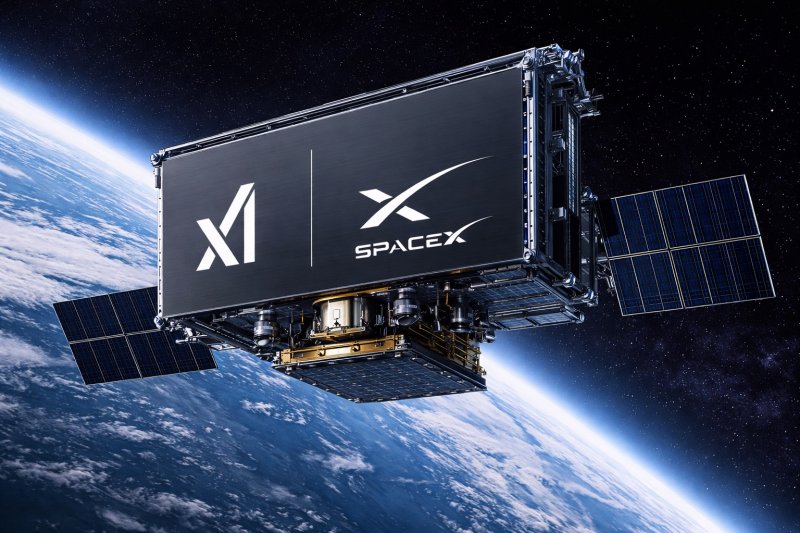
Elon Musk’s aerospace company SpaceX is acquiring his artificial intelligence start-up xAI, as the billionaire continues to consolidate his expanding business empire.
SpaceX confirmed the takeover in a statement posted on its website, publishing a memo from Musk announcing the merger, News.Az reports, citing BBC.
In the note, Musk said the combination would create an “innovation engine” that brings together artificial intelligence, rockets, space-based internet services, and media under a single corporate structure.
RECOMMENDED STORIES
The financial terms of the deal were not disclosed. However, a source familiar with the transaction said xAI was valued at $125 billion (£91 billion), while SpaceX was valued at around $1 trillion, making it the most valuable private company ever.
Last month, Musk’s electric vehicle maker Tesla revealed it had invested $2 billion in xAI. At the time, Musk told Tesla investors that he envisioned xAI acting as an “orchestra conductor” for Tesla factories that increasingly rely on autonomous robots.
Musk also said Tesla would stop producing two vehicle models in favor of manufacturing robots, marking one of the most significant strategic shifts in the company’s history. Tesla proceeded with the xAI investment despite objections from some shareholders, who questioned diverting resources to another Musk-controlled firm. In a shareholder vote last year, abstentions and votes against the proposal outnumbered those in favor.
SpaceX is also reported to be preparing plans for a potential public listing. Emily Zheng, a senior analyst at PitchBook, said the xAI deal has the hallmarks of a company positioning itself for an initial public offering.
“The sheer cost of compute, infrastructure, and energy is why we are seeing many of venture’s most valuable startups like SpaceX prepare to go public this year,” Zheng said. “Consolidating these companies ahead of an IPO allows SpaceX to present a differentiated, capital-efficient growth narrative to public investors.”
In the memo announcing the merger, Musk argued that space could ultimately solve the energy constraints facing AI companies. “In the long term, space-based AI is obviously the only way to scale,” he wrote. He said the immediate focus would be launching AI satellites from Earth, while the broader goal would be to enable space-based data centers.
According to Musk, these capabilities could help fund and support long-term ambitions such as self-sustaining lunar bases, a human civilization on Mars, and eventual expansion beyond the solar system.
Following the merger, Neuralink and The Boring Company appear to be the only smaller Musk ventures not integrated into one of his larger operations.
xAI originally emerged as a unit within X after Musk acquired the platform in 2022, using its access to real-time content as training data for AI models. By spring 2025, xAI had been spun out as an independent company and was valued by investors more highly than X.
The AI firm later acquired X in an all-stock transaction, with Musk saying the deal would “combine the data, models, compute, distribution and talent” of both companies.
xAI’s flagship product, the Grok chatbot, has drawn scrutiny over its image-generation capabilities. In recent weeks, the European Commission and UK media regulator Ofcom launched investigations into X amid concerns that Grok had been used to generate sexualized images. xAI said in January that it had introduced new restrictions limiting image-editing features for Grok users.
By Nijat Babayev


Similar news