NASA unveils major revisions to Artemis lunar mission


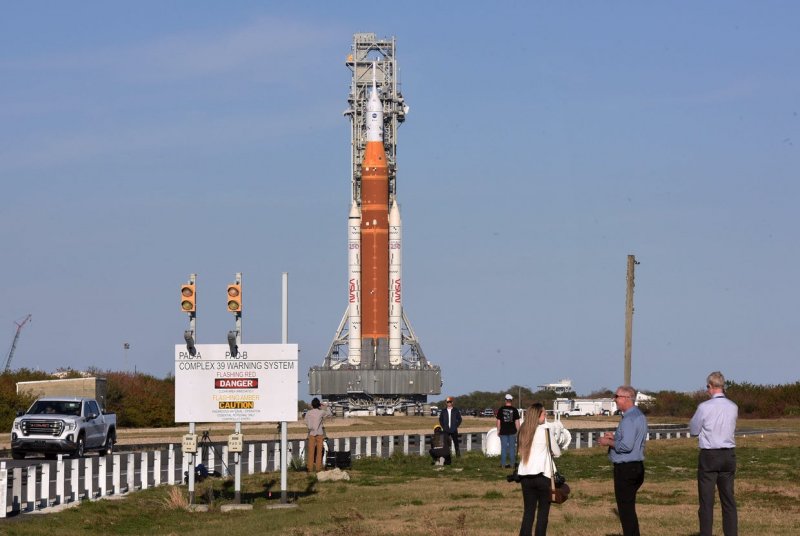
On Friday, new NASA Administrator Jared Isaacman revealed a significant revision of the agency's Artemis moon program, admitting that the goal of landing astronauts on the moon by 2028 was unrealistic without an additional preparatory mission to set the stage.
He said NASA will now add an additional flight in 2027 to carry out tests of new commercial landers in low-Earth orbit, and then launch at least one and possibly two lunar landing missions in 2028, News.Az reports, citing CBS news.
RECOMMENDED STORIES
The goal is to accelerate the pace of launches of the huge Space Launch System rocket while carrying out Artemis flights in evolutionary steps — not attempting missions that rely on too many untested technologies and procedures at once.
"We're going to get there in steps, continue to take down risk as we learn more and we roll that information into subsequent designs," Isaacman told CBS News. "We've got to get back to basics."
Isaacman outlined the plan in an interview with CBS News space contributor Christian Davenport and then again during a news conference Friday.
The decision comes on the heels of a sharply-worded report from NASA's independent Aerospace Safety Advisory Panel that deemed the existing plans too risky.
It also comes as NASA has been struggling to launch the delayed Artemis II mission on a flight to send four astronauts on a trip around the moon.
Launch had been planned for early February, but it was delayed to repair a hydrogen leak and, more recently, to give engineers time to fix a helium pressurization problem in the rocket's upper stage. Launch is now on hold until at least April 1.
The Artemis III mission, which had been expected to land astronauts near the moon's south pole in 2028, now will be redefined and rescheduled — launching in 2027 but not to the moon, Isaacman said. Instead, the yet-to-be-named astronauts will rendezvous and dock in orbit closer to home with one or both of the commercially built lunar landers now under development at Elon Musk's SpaceX and Jeff Bezos' Blue Origin.
The idea is to gain valuable near-term flight experience before attempting a moon landing with astronauts on board. With Artemis III under its belt, NASA hopes to launch two moon landing missions in 2028, Artemis IV and V, using one or both landers, and to continue with one moonshot per year thereafter.
"What helps us get to the moon? Well, for sure, rendezvous and docking with one or ideally both landers, that gives you an opportunity to do some integrated testing of a vehicle that we are going to depend upon the following year to take those astronauts down to the surface of the moon," Isaacman told CBS News.
By Ulviyya Salmanli


Similar news