Oil slips further as Gaza deal calms market tensions


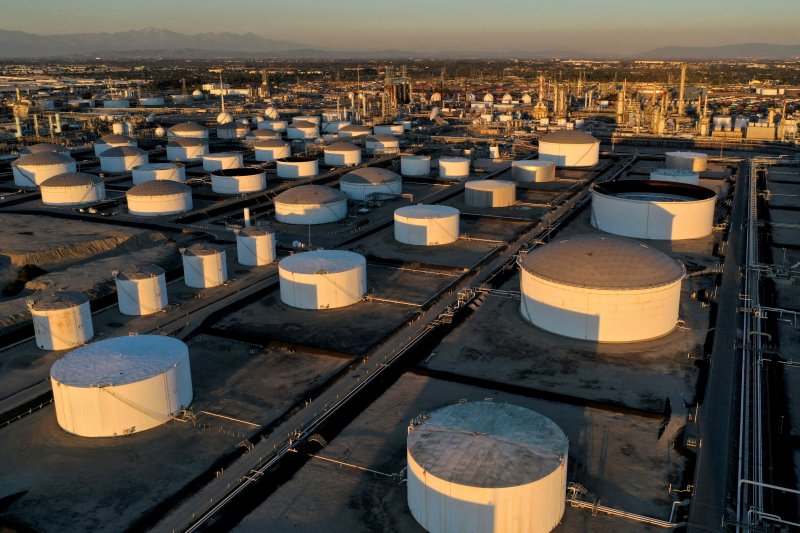
Oil prices edged lower on Friday, extending losses from the previous session as easing geopolitical tensions in the Middle East reduced the market’s risk premium.
Brent crude futures slipped 7 cents to $65.15 a barrel by 03:38 GMT, while U.S. West Texas Intermediate (WTI) crude dropped 2 cents to $61.49, News.Az reports, citing Reuters.
The decline follows a 1.6% fall on Thursday, after Israel and Hamas agreed to the first phase of a plan aimed at ending the war in Gaza.
Israel and the Palestinian militant group Hamas signed a ceasefire agreement on Thursday in the first phase of U.S. President Donald Trump's to end the war in Gaza.
Under the deal, which Israel's government ratified on Friday, fighting will cease, Israel will partially withdraw from Gaza, and Hamas will free all remaining hostages it captured in the attack that precipitated the war, in exchange for hundreds of prisoners held by Israel.
On a weekly basis, both benchmarks were up around 1% after falling steeply last week.
Prices climbed about 1% on Wednesday to a one-week high because of the stalled progress on a Ukraine peace deal, a sign that sanctions against Russia, the world's second-largest oil exporter, could continue.
The Gaza ceasefire deal was a major step towards ending the two-year war that has raised the risk of oil supply disruptions, Daniel Hynes, an analyst at ANZ, said in a note on Friday.
"This (deal) saw the focus move back to the impending oil surplus, as OPEC proceeds with the unwinding of production cuts," Hynes said.
A smaller-than-expected November hike in output agreed by the Organization of the Petroleum Exporting Countries and allies (OPEC+) on Sunday eased some of those oversupply concerns.
"Markets’ expectations for a sharp ramp up in crude supply have not manifested themselves in substantially lower prices," BMI analysts said in a note on Friday.
"The most recent rise in production is lower than previously feared contributing to a slight rise in prices for the week," they said.
Investors are also worried that a prolonged U.S. government shutdown could dampen the American economy and hurt oil demand in the world's largest crude consumer.


Similar news