Political division in Romania: Results of the first round of presidential elections


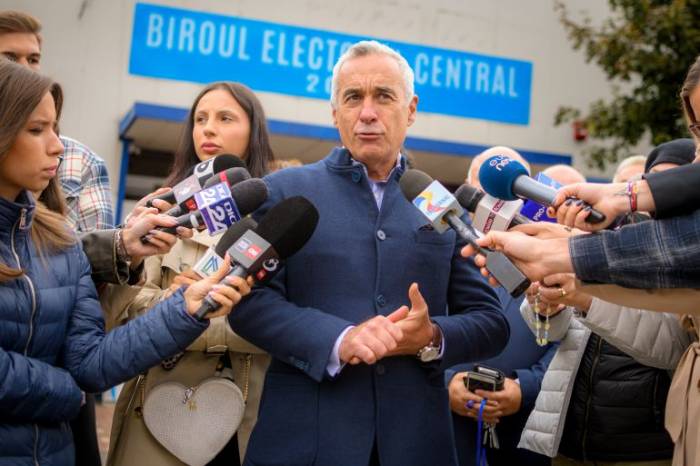
Calin Georgescu speaks to media after registering his bid in the country's presidential elections, in Bucharest, Romania on October 1, 2024. Photo: Alexandru Dobre/AP
Romania has experienced a political earthquake, the consequences of which may affect not only the country's domestic politics but also neighboring states, including Moldova. Călin Georgescu, a candidate advocating for closer ties with Russia, has unexpectedly emerged as the front-runner in the first round of presidential elections, securing 22.3% of the vote.
His closest rival, incumbent Prime Minister Marcel Ciolacu, garnered 19.8% after 97% of the ballots were counted, News.Az reports.The Unexpected Victory: The Georgescu Phenomenon
Georgescu, whose campaign was primarily conducted on social media, has become the breakout candidate of the elections. His platform focuses on traditional values, asserting that Romania's NATO membership does not fully guarantee the country's security. Furthermore, he openly advocates for improving relations with Russia, a stance that directly contrasts with Romania's current pro-European and pro-NATO policies.
For many political analysts, Georgescu's success was unforeseen, as pre-election polls had given him little chance of significant support. However, the results revealed that his rhetoric resonated with a substantial portion of the electorate, weary of the traditional political elite.
Moldovan publicist Dmitry Chubashenko described the election results as a failure for Romania's liberal, pro-NATO, and pro-European political elite. His view reflects the concerns of many experts that Georgescu’s victory could lead to a shift in Romania’s geopolitical course.
Particular unease surrounds the prospect of closer ties with Russia, which could alter the balance of power in the region. For Moldova, situated at a crossroads between East and West, this could pose new challenges, necessitating a reevaluation of its relationship with its neighbor.
The second round of voting is scheduled for December 8. The outcome will be decisive not only for Romania but for the entire region. A victory for Georgescu could mark a turning point for the country, which has steadfastly aligned itself with pro-European and pro-NATO policies.
Nevertheless, Georgescu's opponents, including the incumbent Prime Minister Ciolacu, have already begun intensifying their efforts to consolidate voter support. The second round is expected to test Romania's political system to its limits.
The Romanian elections are already being hailed as historic, as they reflect growing discontent among the electorate. Regardless of the outcome of the second round, one thing is clear: the country's political elite faces a significant challenge, the effects of which will undoubtedly ripple into Moldova.


Similar news