Opposition gains as Netanyahu’s Likud drops in poll


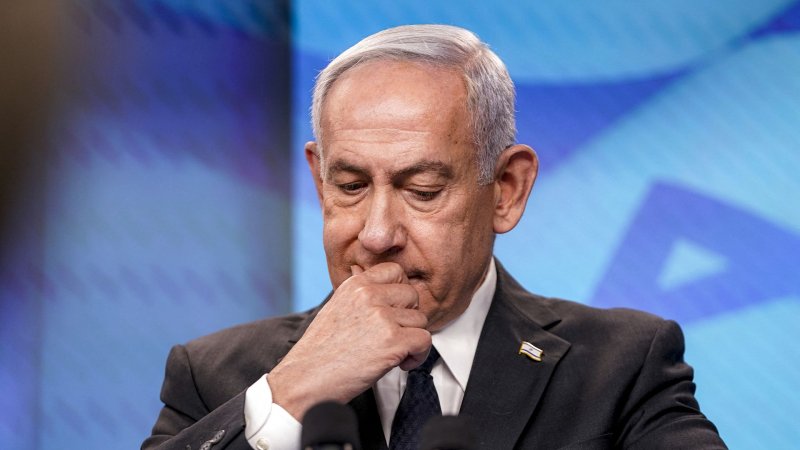
Support for Israeli Prime Minister Benjamin Netanyahu’s Likud has fallen to its lowest level in nearly a year, while two leading rivals have gained ground in the race for premier, according to a new Israeli opinion poll published Friday.
The survey, published by the Israeli daily Maariv, shows Likud losing three seats compared with the previous poll and now projected to win 22 seats in the 120-member Knesset, marking its lowest result since August 2025, when it polled at 21 seats, News.Az reports, citing Anadolu.
The decline comes amid political controversy surrounding a proposed law on military service exemptions for ultra-Orthodox Jews, as well as remarks by US President Donald Trump questioning whether Netanyahu intends to run in the next election.
RECOMMENDED STORIES
In an interview with ABC News on Wednesday, Trump said: “I don’t know, he’s had an amazing career.”
“I don’t know. He’s had an incredible career. Does he want to keep going? Because, you know, he’s a wartime prime minister. We’re going to win the war soon one way or another.”
The current Knesset term expires in October, with elections expected to be held in September or October.
Despite the decline in support for Likud, the poll points to continued political deadlock, with neither Netanyahu’s bloc nor the opposition securing enough seats to form a government.
Parties aligned with Netanyahu would win 50 seats, compared with 60 seats for Jewish opposition parties and 10 seats for Arab parties. A governing coalition requires the backing of at least 61 lawmakers.
Most Jewish opposition parties have stated they would not rely on Arab parties to form a governing coalition.
The survey also indicates rising support for former military chief Gadi Eisenkot, whose opposition Yashar party increased to 20 seats. Meanwhile, former Prime Minister Naftali Bennett’s Together party fell by two seats to 21.
In the race for prime minister, Eisenkot leads Netanyahu with 44% support compared to 40% for the incumbent prime minister. Bennett also leads Netanyahu with 43% support versus 39%.
Eisenkot, who served as Israel’s military chief of staff between February 2015 and January 2019, has emerged as one of the country’s prominent security figures in politics.
He opposes full Israeli sovereignty over the occupied West Bank, arguing it could lead to a binational state, while also rejecting the establishment of a Palestinian state under current conditions.
The survey was conducted by the private Lazar Research Institute and included a sample of 500 Israelis, with a margin of error of 4.4%.
By Nijat Babayev


Similar news