Russia-Ukraine war: What happened in the last 24 hours?


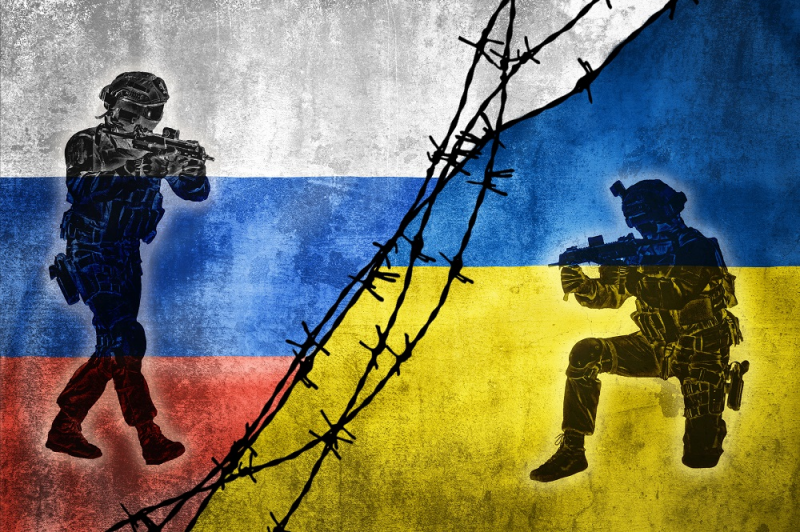
The past 24 hours in the Russia-Ukraine war have delivered a complex mix of military developments, political maneuvers and strategic recalibrations on both sides, News.az reports.
As the conflict nears its fourth year, the tempo of operations remains high, driven by Russia’s attempt to consolidate territorial control and Ukraine’s efforts to slow the advance while preparing for a longer, resource-intensive defense strategy. Below is a comprehensive 1300-word plaintext news explainer summarizing the latest battlefield updates, diplomatic signaling, economic measures and emerging trends shaping the conflict.
Russia intensifies pressure along the eastern front
Russian forces continued pushing on several axes in the east, where Moscow has concentrated manpower, artillery and airpower to achieve incremental territorial gains. The heaviest fighting over the past 24 hours occurred in the Donetsk and Kharkiv regions, with Russian units attempting to advance toward key logistical junctions.
In the Donetsk sector, Ukrainian military reports indicate that Russian troops launched repeated assaults near Avdiivka’s outskirts and pushed westward from positions captured earlier this month. Ukrainian brigades reported heavy shelling and glide-bomb strikes that targeted defensive lines and supply routes. Although the frontline shifted only marginally, local commanders described the pressure as “unrelenting” and warned of continued Russian attempts to exploit tactical weaknesses.
North of this area, near Bakhmut, Russia intensified the use of drones and artillery to disrupt Ukrainian rotations. Ukrainian military spokespeople stated that the number of drone attacks has grown significantly, reflecting Russia’s increasing reliance on inexpensive, expendable unmanned systems designed to exhaust air-defense resources and expose infantry positions.
Kharkiv region sees renewed missile and drone strikes
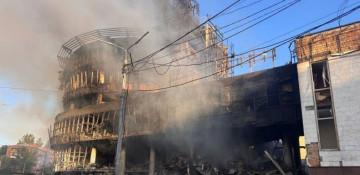
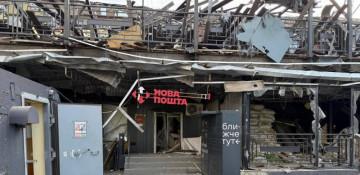
In the Kharkiv region, Russian forces struck several civilian areas using Iskander missiles and Shahed-type drones. Local authorities confirmed casualties and damage to residential buildings, prompting fresh calls for strengthened air defenses around Ukraine’s second-largest city. Ukrainian officials emphasized that these bombardments aim to destabilize the city, force internal displacement and increase the strain on municipal infrastructure as winter temperatures drop.
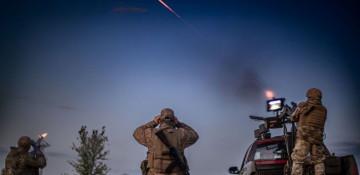
Ukrainian air defenses claimed to have intercepted the majority of overnight drones, but several penetrated defenses and hit energy facilities. Kyiv warned that Russia is preparing another large-scale winter campaign targeting the electrical grid, similar to the assaults carried out in 2022 and 2023 that left millions temporarily without power.
Ukrainian countermeasures and tactical adjustments
Ukraine, facing a shortage of artillery shells and air-defense interceptors, continues to adapt by prioritizing high-value targets. Over the last 24 hours, Ukrainian forces conducted several long-range drone strikes deep inside Russian territory. According to Ukrainian security sources, these strikes hit fuel depots and military installations in the Belgorod and Kursk regions. Russia acknowledged explosions but described them as “minor,” emphasizing that air-defense systems neutralized most incoming drones.
Kyiv’s drone strategy has evolved into one of its most cost-effective tools for reducing Russian logistical capacity. By targeting oil refineries, supply warehouses and transportation nodes, Ukraine seeks to slow Russia’s wartime industrial output and complicate its front-line resupply routes.
A senior Ukrainian defense official reiterated that these attacks were aimed exclusively at military infrastructure, not civilians. He added that they form part of a broader effort to impose “strategic depth pressure” on Russia, forcing Moscow to allocate additional air-defense systems away from the front.
Crimea sees increased Ukrainian activity
Ukrainian forces also expanded operations around Crimea, a region that remains central to Russia’s logistical network in southern Ukraine. Over the past day, explosions were reported near Sevastopol and along the western coast, where Ukraine deployed maritime drones and precision-guided missiles targeting Russian naval assets.
Satellite images reviewed by independent analysts appear to show damage to a Russian landing ship docked in Sevastopol Bay. Russia has not confirmed the extent of the incident, but pro-war Russian military bloggers lamented “persistent vulnerabilities” in the Black Sea Fleet’s defensive posture.
Ukrainian naval drones have dramatically reduced Russia’s operational freedom in the Black Sea over the past year. The latest attacks underscore that Ukraine intends to maintain pressure on Crimea’s military infrastructure, viewed as essential for degrading Russia’s capacity to support operations in Kherson and Zaporizhzhia.
Political and diplomatic developments
While the battlefield remains active, political developments in Kyiv, Moscow and Western capitals over the past 24 hours reflect shifting expectations about the war’s trajectory.
President Volodymyr Zelensky held a late-evening briefing emphasizing the need for continued Western support, particularly air-defense weapons. He stressed that the country’s ability to defend its energy grid depends on timely deliveries of Patriot, NASAMS and IRIS-T systems. Zelensky also reiterated calls for long-range missiles from European partners, arguing that denying Russia safe zones inside its territory is essential to leveling the playing field.
In Moscow, President Vladimir Putin met with senior military leadership to review front-line progress and defense-industry output. Russian state media amplified claims that Russia is producing “record-level” ammunition, drones and armored vehicles. Analysts say Russia’s industrial ramp-up, fueled by a wartime economy and partnerships with Iran and North Korea, is enabling sustained offensive operations that Ukraine struggles to match without stronger Western assistance.
Western debates on aid to Ukraine
In Washington, U.S. lawmakers continued intensive negotiations over a supplemental funding package for Ukraine. The past 24 hours saw renewed public statements from U.S. officials warning that delays could have serious battlefield consequences. American defense officials argued that gaps in air defense could result in higher civilian casualties and reduced industrial output, weakening Ukraine’s long-term resilience.
Europe, meanwhile, is also facing internal challenges. EU diplomats confirmed that discussions on long-term military assistance to Ukraine are ongoing, including joint procurement of ammunition and expanded training programs. Several European capitals signaled support for increasing production of artillery shells, although logistical and budgetary constraints remain significant obstacles.
Russian domestic pressure and wartime rhetoric
Inside Russia, the past 24 hours brought increased messaging from Kremlin-aligned figures urging the public to “prepare for a long war.” Russian commentators emphasized the need for unity and hinted at additional mobilization measures, although no formal announcement was made. Independent Russian media reported continued recruitment drives targeting rural regions and financially vulnerable populations.
Economic updates showed mixed signals. Russia’s ruble gained slightly following new export measures imposed on major energy companies, but economists warned the stability remains artificial and heavily reliant on administrative controls.
Humanitarian situation worsens with winter
On the humanitarian front, winter conditions are deteriorating rapidly. In the last 24 hours, the United Nations reported new waves of civilian displacement from front-line villages in Donetsk and Kherson due to intensified shelling. Aid agencies warned that energy shortages could cripple heating systems in multiple regions if attacks on Ukraine’s grid intensify.
Ukrainian authorities continued distributing portable generators, heating units and emergency shelters. However, supply is insufficient for communities located closest to the front, where evacuation remains dangerous.
Information warfare escalates
Both sides escalated informational campaigns over the past day. Russia amplified claims that Western weapons are being used to strike Russian territory, framing Ukraine as a proxy for NATO. Kyiv countered with messages highlighting Russian strikes on civilian infrastructure and the urgent need for Western support.
Cybersecurity units in Ukraine reported an uptick in Russian cyberattacks targeting government networks and energy-sector databases. Although no major breach was reported, officials warned that Russia’s cyber operations typically intensify ahead of large-scale missile attacks.
Looking ahead
The last 24 hours illustrate a conflict entering a new phase defined by grinding attrition, long-range strikes and escalating strategic messaging. Russia is attempting to maintain momentum along the eastern front while preparing winter strikes on critical infrastructure. Ukraine is focusing on defensive resilience, deep-strike disruption and diplomatic efforts to secure sustained Western support.
Both sides understand that winter will shape the tempo of the conflict: Russia seeks to exploit Ukrainian vulnerabilities, while Ukraine aims to neutralize Russia’s advantage by targeting logistics and extending the war’s strategic depth.
As the situation develops, the next 24 hours will likely bring further attempts by Russia to press forward near Avdiivka and Bakhmut, renewed Ukrainian drone strikes behind Russian lines and intensified diplomatic activity as Kyiv pushes its partners for accelerated military assistance.
The war remains fluid, unpredictable and deeply intertwined with geopolitical calculations far beyond the battlefield.


Similar news