Serbian PM Duro Macut reaffirms EU path and military neutrality at Antalya Diplomacy Forum


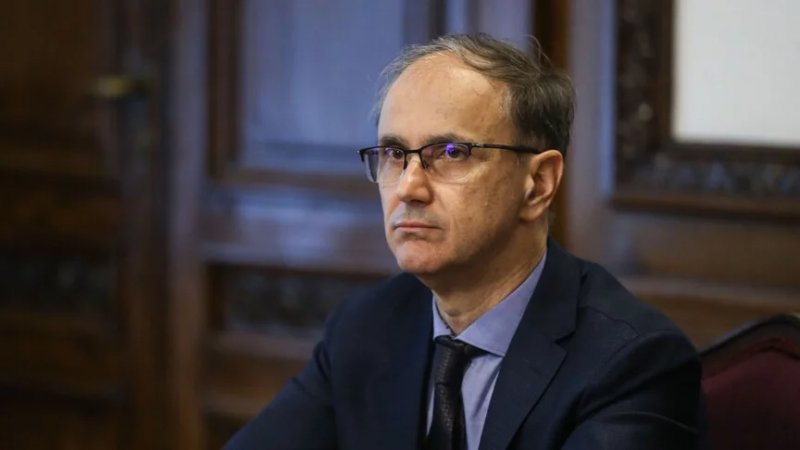
Serbian Prime Minister Duro Macut on Friday said that Serbia’s future lies within the EU while maintaining a policy of military neutrality and strong adherence to international law.
Speaking at a panel titled “The Role of Regional Ownership in a Transforming World” at the Antalya Diplomacy Forum 2026, Macut emphasized the importance of regional cooperation and locally driven initiatives in addressing global challenges, News.Az reports, citing AA.
“The future of our country is within the European Union,” he said, adding that Serbia remains committed to following international law in what he described as an increasingly turbulent global environment.
RECOMMENDED STORIES
Serbia has been an official candidate for EU membership since 2012 and formally opened accession negotiations in 2014. While progress has been made in several chapters, talks have slowed in recent years due to concerns over Belgrade’s alignment with EU foreign policy, particularly regarding sanctions on Russia.
Macut underlined that neutrality continues to be a cornerstone of Serbia’s national strategy, shaped by the region’s complex historical experience.
EU officials continue to stress that normalization of relations with Kosovo remains a key condition for Serbia’s accession.
“We come from a region that has faced many turbulences throughout history,” he said, noting that Serbia is “persistently on the side of neutrality.”
He stressed that regional ownership is becoming increasingly important amid rising global tensions and conflicts, particularly in Southeast Europe and the Mediterranean.
According to Macut, stronger regional cooperation, based on respect for international norms and the UN Charter, is essential for maintaining stability and ensuring that countries can act independently on the global stage.
“Without international law, we cannot freely exchange our ideas or position ourselves as independent countries,” he said.
Macut also pointed to the strategic position of Southeast Europe, describing it as a space influenced by both the EU and key regional actors, including Türkiye, which he called an important partner.
He said that navigating these relationships presents both opportunities and challenges for countries in the region, underscoring the need for balanced and pragmatic policies.
The Serbian premier added that regional integration efforts should be guided by clear rules and long-term strategies, while also responding to emerging global risks and conflicts.
The Antalya Diplomacy Forum, hosted by Türkiye, brings together heads of state, ministers and policymakers from around the world to discuss geopolitical, economic and security challenges in an increasingly uncertain international landscape.
By Leyla Şirinova


Similar news