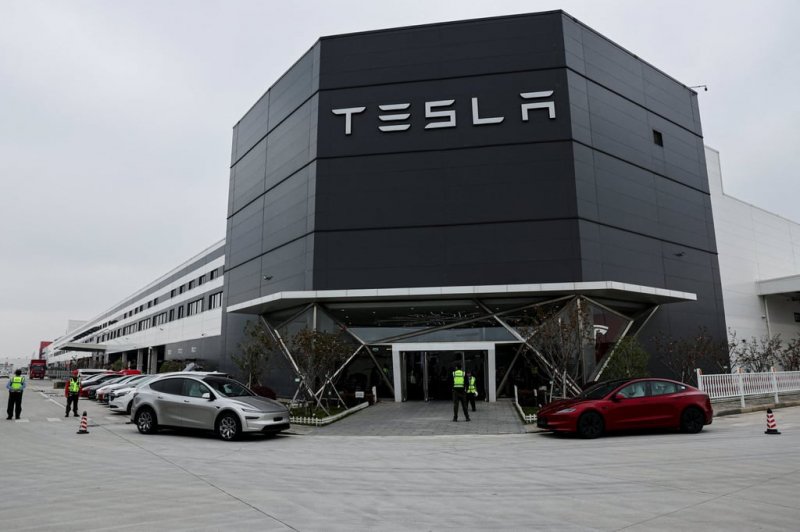
Allan Wang Hao said during a media briefing on Tuesday that the Shanghai Gigafactory could act as a “golden key” for mass production of robots designed to resemble and move like humans, News.Az reports, citing SCMP.
“Like other Tesla factories, Giga Shanghai can shoulder important responsibilities in manufacturing all new products, including robots, to make our contributions to the company,” he said. “We are highly confident in welcoming the arrival of a new era of robots.”
This marks the first time a Tesla executive has publicly referred to the potential use of the Shanghai facility for humanoid robot production, a strategic direction increasingly emphasized by Musk as part of the company’s shift toward artificial intelligence and robotics.
Musk has previously argued that Tesla’s strength in AI and autonomous driving justifies its high market valuation. In January, the company announced it was transitioning into a “physical AI” firm from a hardware-focused business model following weaker earnings and deliveries in the previous year.
At that time, Musk also said Tesla would halt production of its Model S and Model X vehicles and repurpose the Fremont, California, factory to produce humanoid robots. However, Tesla has not yet begun commercial sales of its humanoid robot, Optimus.
Wang did not clarify whether Tesla would assemble robots at its existing Shanghai facilities or build a new dedicated plant for the project.
Humanoid robots powered by AI are expected to be used across multiple sectors, including manufacturing, logistics, hospitality, and elderly care. The field has become a key area of competition between the United States and China amid broader technological rivalry.
Analysts say China holds advantages in supply chains and large-scale manufacturing, particularly in producing cost-efficient and high-quality components. Musk himself has previously praised Chinese robotics companies on social media, suggesting they could dominate the global robotics industry alongside Tesla.
In 2025, Tesla’s Shanghai Gigafactory produced around 851,000 vehicles for both domestic and export markets, accounting for 52% of Tesla’s global output, which fell 8.6% to 1.63 million units overall.
Deliveries from the plant, which produces Model 3 and Model Y vehicles, rose 46.2% from February to 85,670 units last month, covering both domestic sales and exports. In the first quarter of 2026, the factory delivered 213,398 vehicles, up 23.5% year-on-year, representing 59.6% of Tesla’s global deliveries during the period.
Tesla also began producing Megapack large-scale batteries at its Shanghai Megafactory in February last year, with an annual target of 10,000 units. Each Megapack can store enough electricity to power 3,600 homes for one hour, giving the facility a total planned annual energy storage capacity of 40 gigawatt-hours.