Siarhei Bohdan: Azerbaijan drives South Caucasus peace process amid Eastern Europe contrast – INTERVIEW


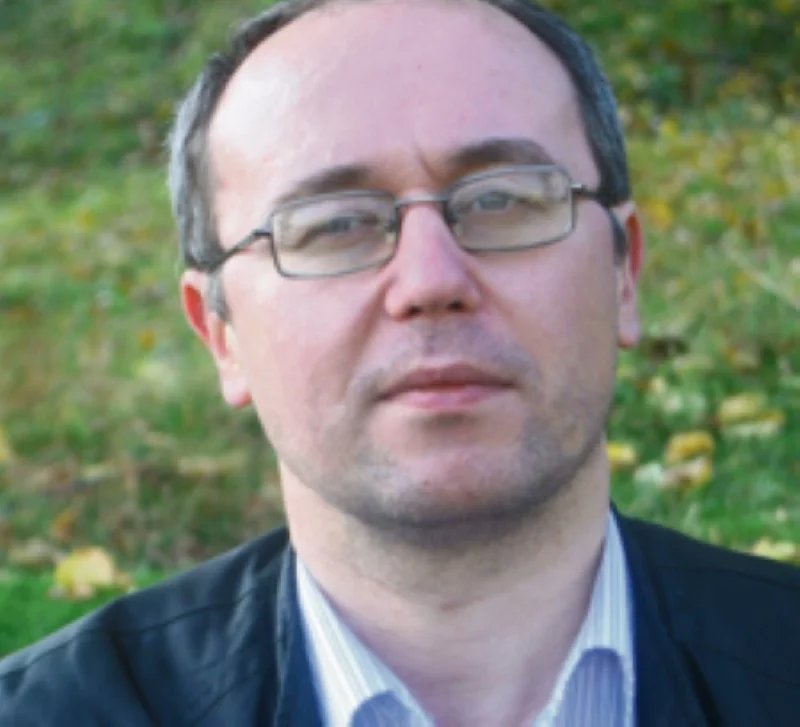
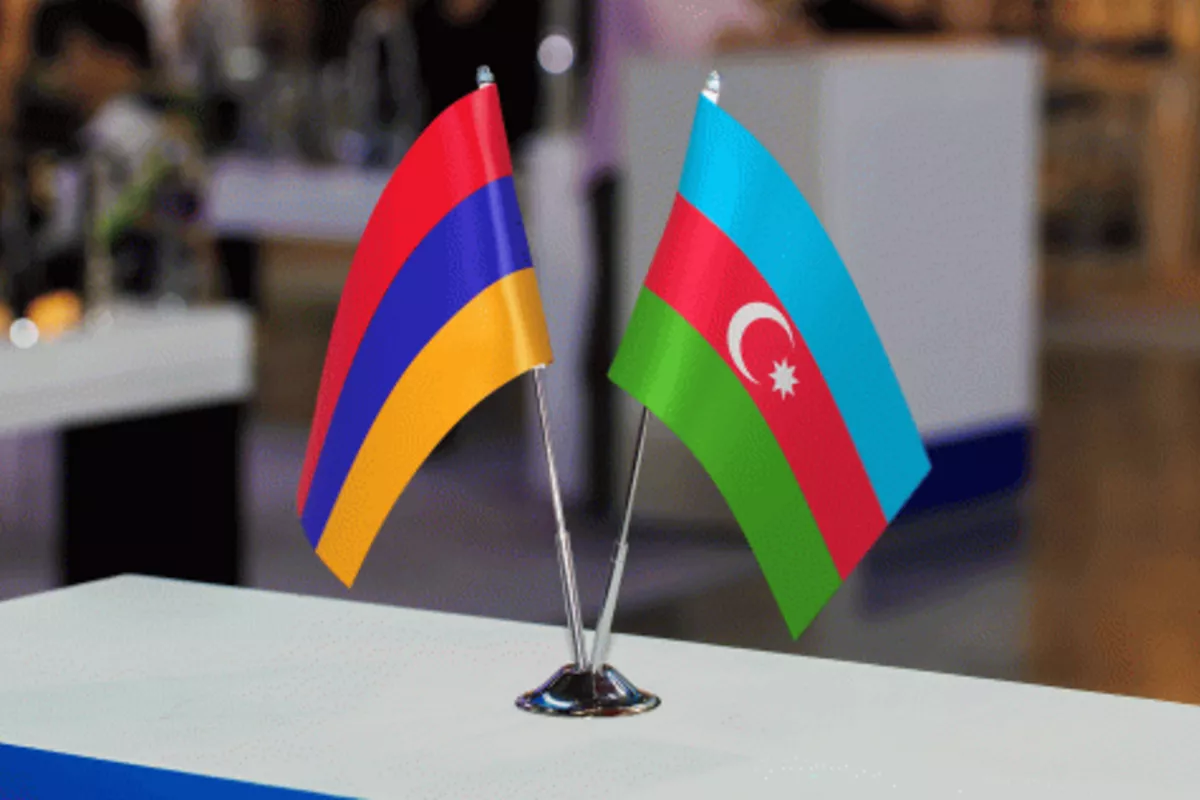
Azerbaijan’s leadership has played a key role in advancing regional normalisation with Armenia despite external resistance, promoting peace, transport connectivity, and post-conflict reconstruction, while Armenia’s political future and constitutional reforms remain central to long-term stability in the South Caucasus.
Source: APA
If all of this is taken into consideration, the achievements in the normalisation process appear impressive. In the South Caucasus, people are discussing peace, demining, road construction, and the reopening of railway connections, even if only on a limited scale for now. In Eastern Europe, however, the situation is exactly the opposite, and the outlook there remains bleak. Unfortunately, there is not a single serious force working in the opposite direction. The last attempts to stop escalation were made by the Belarusian government, but its strategic capabilities have now been reduced to a minimum.
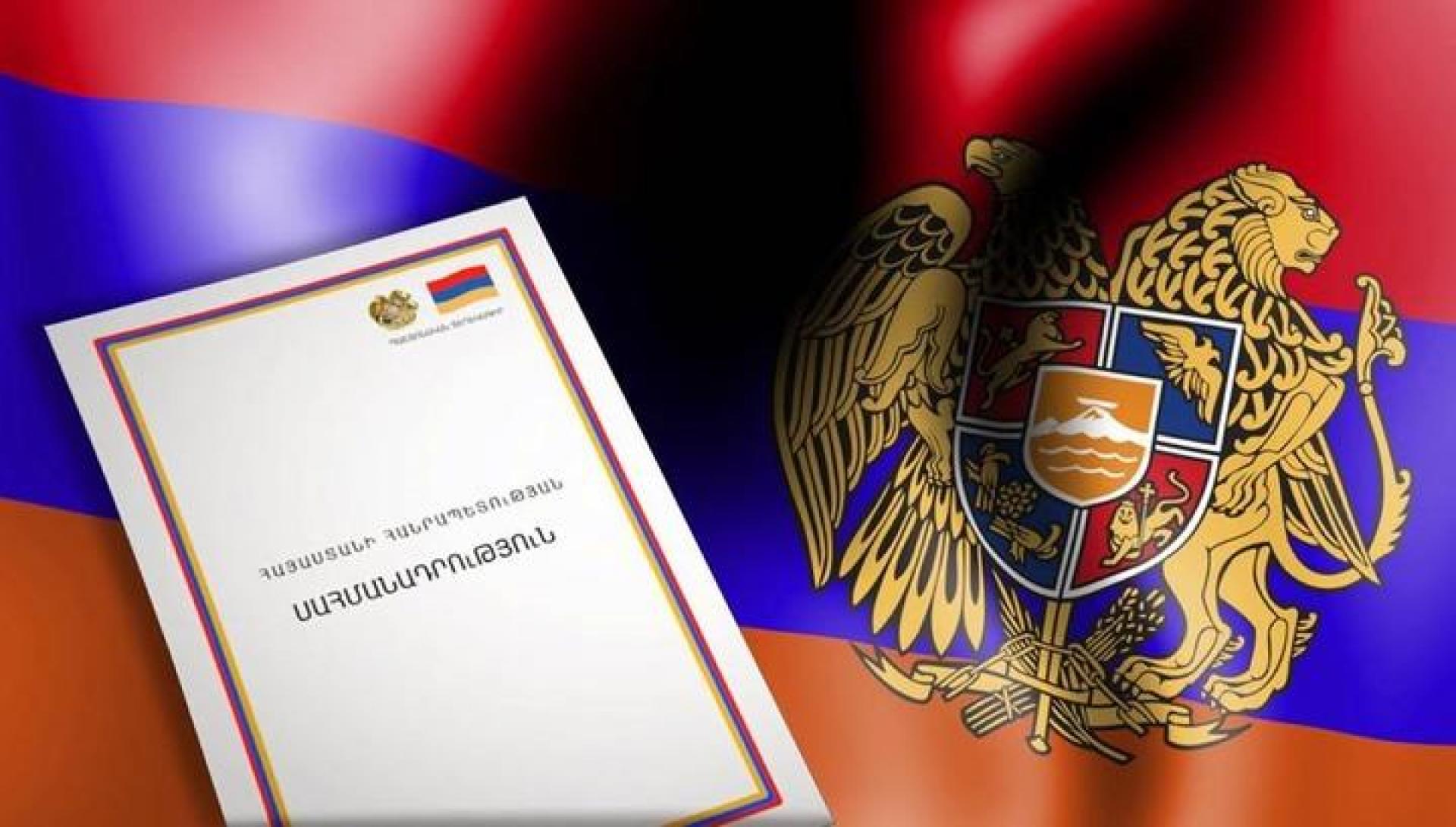
That is precisely the key difference. In Eastern Europe, there are no forces moving away from war, while in the South Caucasus there are. This is primarily Azerbaijan, whose leadership therefore insists on creating firm prerequisites and frameworks for lasting peace, including revising the fundamental documents underlying Armenian statehood, rather than settling for superficial normalisation.
– What are your forecasts regarding the upcoming parliamentary elections in Armenia?
– Armenian Prime Minister Nikol Pashinyan openly says that his goal is to keep the opposition out of parliament. He stated this during summits with European liberal leaders, which suggests he has been given broad latitude to achieve this outcome by one means or another. Most likely, however, extreme measures will not be necessary, because he is likely to achieve this result anyway.
The current Armenian opposition has already exhausted all of its options, eventually even bringing the church into play, and all of these cards proved ineffective. As a result, the current Armenian leadership has effectively taken away from the pro-Russian opposition even a substantial piece of property that its sponsors acquired during the post-Soviet looting of public assets. I am referring to the energy networks. It turned out that this opposition could not even assist its key allies at the critical moment when they were losing property that rightfully belongs to the people.

Source: trendsresearch
Pashinyan is also likely to achieve the desired election result because he is driven by immense ambition. This result is needed primarily to accelerate Armenia’s pivot toward the European Union as quickly as possible. For Pashinyan, this is both the main objective and a springboard for further ambitions. He is seeking to become part of the European liberal establishment. However, the much more important question is what the realisation of such ambitions means for neighbouring countries and peoples. What would such a separate and radical European integration path for Armenia mean for neighbouring states, given the still unresolved relations with Türkiye and Azerbaijan, especially considering that normalisation will require many years?
Moreover, everyone has already seen what Armenia’s separate integration with Russia after 1991 cost the region, when Armenian nationalists exploited Kremlin ambitions and corruption within the Russian military establishment for decades in order to seize and occupy territories, sever centuries-old ties, and fragment the region between the Black Sea and the Caspian Sea. Therefore, other countries in the region have every right to closely examine current trends and raise questions about how Armenia’s European integration will be carried out, especially given the experience of Eastern Europe and the uncertain prospects for this integration itself amid troubling trends within Europe.
– Will the Armenian authorities revise the constitution after the elections?
– Everything is moving toward constitutional changes, but it is important to understand that for Pashinyan and his allies this primarily means dismantling the structures built during the Perestroika era by his ideological opponents — old-school figures initially connected to the Kremlin under Mikhail Gorbachev and later linked to the corrupt Russian authorities after 1991. Soros-affiliated NGO activists are by no means opposed to stripping the Gorbachev-era Komsomol figures of their status as architects of Armenian statehood.
The Armenian prime minister speaks about opposition pro-Russian “parties of war”, and to some extent he is correct. However, the actions of his own party also point to the possibility of reviving revanchism in another form, namely a liberal one. Everyone remembers not only his theatrical gestures in Azerbaijani territories occupied before 2020, but also how Yerevan delayed matters even after 2020, while after 2023 no one rushed to finally put an end to the project of territorial expansion. This was despite the fact that it had already become clear that everything had been lost, and opponents of Pashinyan had begun to rally around the project, which from the beginning had served as a centre of corrupt and mafia-like activity.
Source: alphanews
In recent years, the course pursued by the Armenian leadership has not been as straightforward a path toward peace and normalisation as it may seem. It can be argued that Yerevan effectively abandoned the idea of concluding peace on a bilateral basis and instead attempted to internationalise the process by involving French President Emmanuel Macron and other European liberal politicians.
The Azerbaijani leadership neutralised these attempts through partnership with the United States on a key issue, namely the restoration of transport communications and the optimisation of links between different regions of Azerbaijan. Now, these summits with the European Union are once again adding ambiguity to the position of the Armenian leadership. Nevertheless, it should be understood that the Azerbaijani army and diplomacy have already created a regional configuration that such intrigues have failed to undermine, although attempts continue.
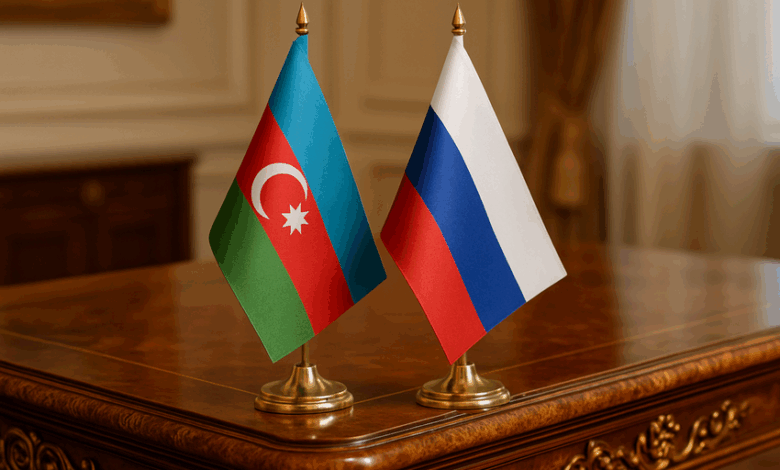
– What can you say about the current level of Russian-Azerbaijani relations?
– From the Azerbaijani side, this is a policy built on the principle of responsibility, first and foremost towards its own people, without seeking to please external actors or ideologies. It is a delicately balanced policy with prospects for the further development of relations. On the Russian side, Russian foreign policy has effectively been buried in Eastern Ukraine since 2014. For a great country, this is a tragedy. At the same time, the situation of the European Union is increasingly beginning to resemble the Russian one. Historically, Russia and Europe, in their different forms, have often risen and fallen together. Objectively, they have always remained close despite everything.
– Recently, the “Time Will Tell” programme on Russian state-owned Channel One displayed a distorted map of Azerbaijan featuring the nonexistent and fabricated term “Nagorno-Karabakh”. How would you comment on this?
– Russia is a great country with enormous potential, but its public institutions connected to public opinion and foreign policy formation, including the media, academic institutes, universities, and think tanks, are in a terrible state. This particularly concerns expertise and strategies relating to neighbouring countries. Incidents like this stem from that reality and may also be linked to activists from revanchist circles within the Armenian diaspora.
Source: Trend
In general, the narratives promoted by Armenian nationalists are widespread within the Russian establishment, and for Russian liberals unconditional support for the Armenian position has become an absolute imperative. Azerbaijan’s response could involve more sophisticated engagement with Russian organisations, without limiting itself merely to presenting its own perspective on these issues, which in Russia may at times not be accepted because of excessive directness.
It is equally important to encourage a critical approach within relevant Russian structures and organisations — from the media to universities and think tanks — towards the historical, geographical, strategic, and political concepts promoted by Armenian nationalists.
It is also important to flexibly encourage the development of multiple narratives and concepts on these issues that provide alternatives to those advanced by Armenian nationalists, rather than reducing everything to a single rigid canonical interpretation.
This can be done, especially considering the current condition of the relevant Russian institutions. And it should be done, because Russia is not going anywhere. History has long demonstrated the resilience of the country in roughly its current configuration. Russia remains a global player, even if it is deeply trapped in the Eastern European quagmire and a fratricidal war.


Similar news