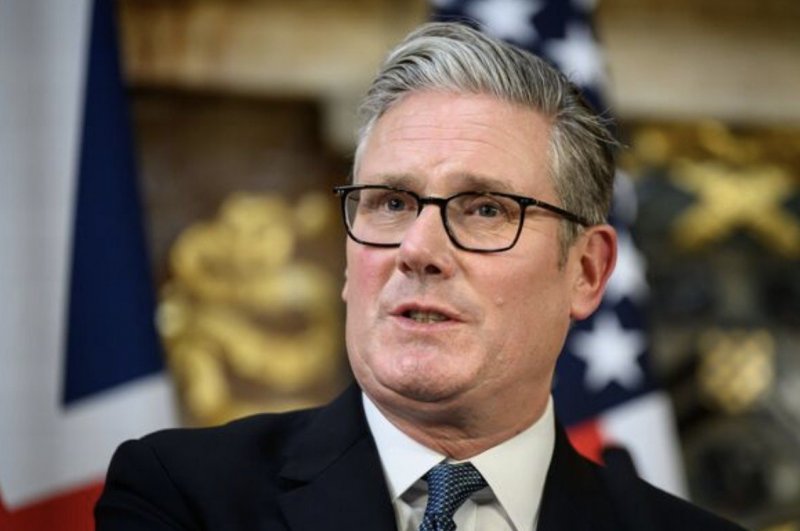
“With India set to be the third-biggest economy in the world by 2028, and trade with them about to become quicker and cheaper, the opportunities waiting to be seized are unparalleled,” Starmer said.
India and the UK, the world’s fifth- and sixth-largest economies, have bilateral trade worth about $54.8 billion. Investments between the two countries support more than 600,000 jobs.
Starmer, who is leading a 125-member delegation including business leaders such as British Airways chief executive Sean Doyle, called the deal the “biggest” India had ever signed.
“I’ve asked the team to implement it as quickly as humanly possible... but I think it’s already changing the mood music, frankly,” he told the delegation. “I think the opportunities are already opening up, the contact has already increased, trade with India went up hugely in the last 12 months, and climbing.”
Under the new agreement, India will reduce tariffs on British goods such as whisky, cosmetics and medical devices, while the UK will cut duties on clothing, footwear and food products including frozen prawns from India.
As part of his visit, Starmer announced that three new Bollywood films will be shot in the UK from next year while visiting Yash Raj Film Studios.
“Bollywood is back in Britain, and it’s bringing jobs, investment and opportunity, all while showcasing the UK as a world-class destination for global filmmaking,” he said.
He also visited a Premier League community programme where he met young Indian footballers and coaches. The Premier League contributes around $13 billion to the UK economy and supports more than 100,000 jobs.
More football fans in India (71 million) now watch the Premier League than the total population of the UK. “I’m hugely proud of our national sport — it brings communities together and changes lives,” Starmer said.
However, Starmer ruled out expanding visa access for Indian professionals. “That isn’t part of the plan,” he told reporters en route to Mumbai. “We’re here now to take advantage of the free trade agreement that we’ve already struck. We’ve got to implement it.”