Tesla showcases Cybercab robotaxi at Miami F1 event


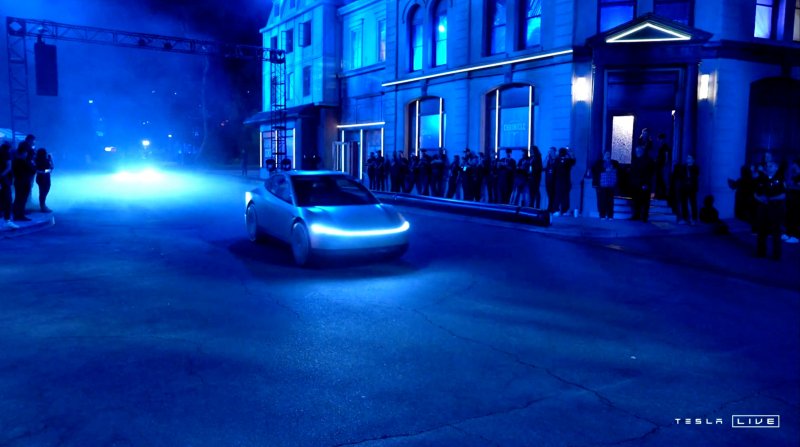
Tesla has taken a high profile step in promoting its autonomous mobility ambitions, unveiling its Cybercab robotaxi concept at the Formula 1 Miami Grand Prix fan festival in early May 2026.
The company staged an “Autonomy Pop Up” at Lummus Park in Miami Beach between April 29 and May 3, positioning the futuristic vehicle at the center of a public facing campaign tied to one of the world’s most watched motorsport events.
RECOMMENDED STORIES
At the event, a Tesla Cybertruck transported the Cybercab inside a transparent glass display marked “Future is Autonomous,” drawing significant attention from crowds along the beachfront.
Strategic push into robotaxi markets
The Miami showcase was not merely promotional. The city is among Tesla’s targeted locations for robotaxi expansion in the first half of 2026, signaling that the activation was designed to build awareness ahead of a potential service rollout.
Tesla has already launched limited robotaxi operations in Austin, Texas, and has indicated plans to expand to additional US cities, including Miami, as it scales its autonomous ride hailing platform.
The Cybercab is central to that strategy. Unlike existing Tesla vehicles equipped with driver assistance systems, the Cybercab is purpose built for full autonomy, featuring no steering wheel or pedals and designed to operate entirely without human input.
From concept to production
Tesla’s push comes as the Cybercab transitions from concept to production phase. The company began manufacturing the vehicle in early 2026 at its Gigafactory in Texas, marking a significant milestone in its shift toward artificial intelligence and robotics driven mobility.
The two passenger electric vehicle is expected to form the backbone of Tesla’s future robotaxi fleet, with ambitions to scale production and deploy services across multiple urban markets.
Industry observers view the Cybercab as a bold attempt to redefine urban transportation by eliminating traditional driving controls and relying entirely on advanced AI systems.
Autonomy ambitions and challenges
Despite the high profile showcase, Tesla’s autonomous ambitions remain under scrutiny. Current Tesla systems, including its Full Self Driving software, are still classified as driver assistance technologies requiring human supervision.
The rollout of fully autonomous vehicles like the Cybercab will depend heavily on regulatory approval, safety validation, and real world performance. Early robotaxi deployments have already drawn attention from regulators and safety experts, highlighting the complexity of scaling such technology.
Nevertheless, Tesla continues to position autonomy as a core pillar of its long term strategy, with CEO Elon Musk emphasizing the company’s transition beyond traditional electric vehicles toward AI driven transportation solutions.
Marketing meets momentum
The Miami F1 appearance underscores Tesla’s evolving approach to public engagement combining entertainment, technology, and strategic market signaling.
By placing the Cybercab at a globally recognized event, Tesla not only showcased its vision of driverless mobility but also reinforced its intent to bring robotaxi services to major cities in the near future.
As production ramps up and expansion plans unfold, the Cybercab is emerging as a key test of whether Tesla can translate its autonomy ambitions into a commercially viable and widely adopted reality.
By Faig Mahmudov


Similar news