The cosmic luxury: Neil deGrasse Tyson on why death gives life meaning


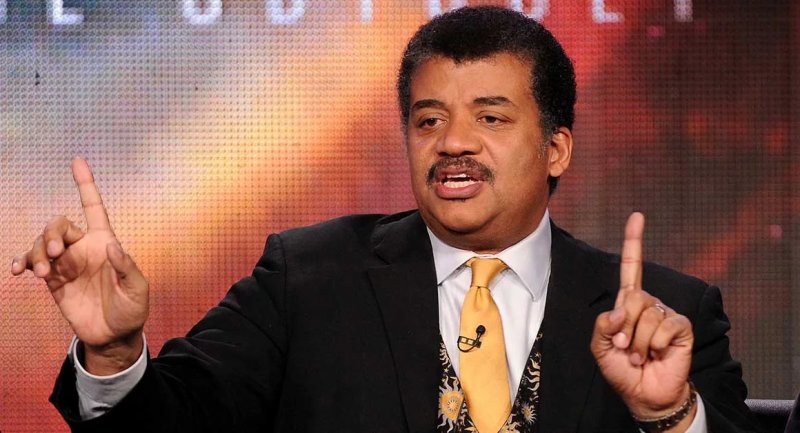
One of America's most popular scientists has revealed what happens after we die - and why it led him to choose a burial over being cremated.
Neil deGrasse Tyson has proposed a fascinating and deeply scientific perspective on mortality, suggesting that death should be viewed as a biological and cosmic luxury rather than a tragedy, News.Az reports, citing Daily Mail.
By looking at the sheer mathematical odds of existence, Tyson argues that the number of potential people who could have been born based on genetic combinations is so vast that those of us who actually exist are the ultimate winners of a universal lottery. From this viewpoint, the fact that we get to live at all is so rare that dying is simply the natural conclusion to a spectacular privilege.
RECOMMENDED STORIES
Central to his theory is the law of conservation of energy, which states that energy cannot be created or destroyed, only transformed. Tyson reminds us that every atom in our bodies was originally forged in the hearts of dying stars billions of years ago. When we die, we are not truly disappearing; instead, we are returning those borrowed atoms to the universe so they can be recycled into new forms of life and matter. This process ensures a constant flow of cosmic building blocks, connecting every living thing to the ancient history of the galaxy.
Tyson also believes that the finite nature of life is exactly what gives it meaning and urgency. He argues that if humans were immortal, there would be no motivation to achieve anything, create art, or seek out deep personal connections because there would always be an infinite amount of time to do it later. The "deadline" of death acts as a psychological catalyst that drives human ambition, creativity, and love, making the limited time we have far more valuable than an eternity of stagnation.
By shifting our focus from the fear of the unknown to the reality of our scientific connection to the universe, Tyson encourages a sense of cosmic humility. He suggests that we should find comfort in knowing that our physical remains will eventually nourish the earth and perhaps one day contribute to the birth of a new star or planet. In his view, death is the price we pay for the incredible opportunity to have witnessed the universe, a transaction that he believes is well worth the cost.
By Leyla Şirinova


Similar news