The invisible journey: caribou's great migration through their own eyes - VIDEO


Spring in Fairbanks, Alaska, is a season of profound contradiction. Even after the coldest winter on record—a brutal "marathon of sub-zero endurance" featuring 31 days at or below -40°C—the landscape eventually yields to an insistent, inevitable thaw.
While the rivers downtown still appear frozen to the naked eye, the ice has turned, becoming a deceptive surface that can no longer be trusted, News.Az reports, citing last Word on Nothing.
Yet, as students on the University of Alaska campus begin to jog in shorts under a mild sun, a much grander and more ancient momentum is building hundreds of miles to the north.
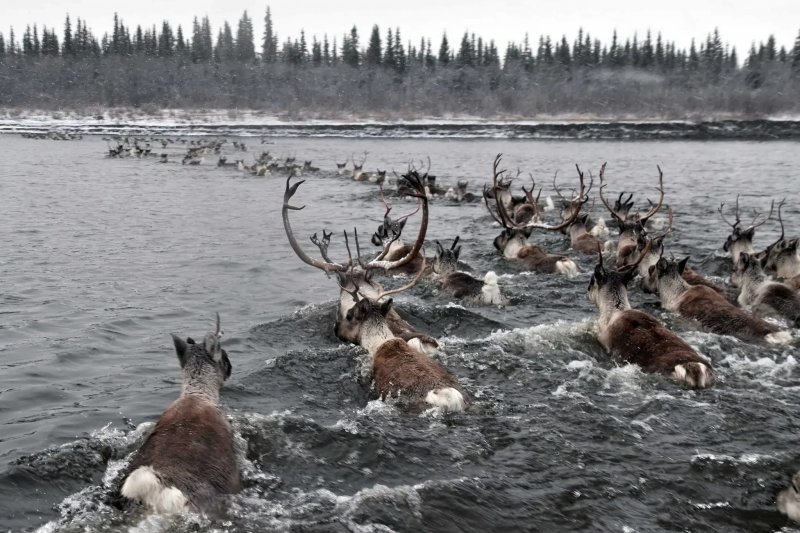
Above the Arctic Circle, the great caribou herds are beginning their annual trek toward the North Slope. This mass migration is a continental phenomenon involving roughly two million animals across twelve major herds.
RECOMMENDED STORIES
By May, the movement shifts from a simple walk to a visceral compulsion—a physical need to move northward that culminates in a synchronized rush toward specific calving grounds. This cycle has remained as predictable as the seasons for over a million years, yet much of "caribouness" remains a mystery to the human observers who study them from afar.
For decades, scientists have tracked these movements using GPS collars, watching pixelated avatars sprint across digital maps like a high-stakes "Tour de France" of the animal kingdom. While these maps provide data on mountain ranges crossed and rivers forded, they often lack the rhythmic, intimate reality of the animals' daily lives. Most human interactions with caribou are fleeting—a "doorbell camera" glimpse of a journey that spans thousands of miles. To truly understand the migration, researchers have recently turned to collar cameras: battery-powered devices that record brief, regular segments of life from the caribou’s own perspective.
The footage captured by these cameras offers a window into a world far removed from human sight. From a scientific perspective, the "boring" segments are often the most valuable, revealing precise diets of specific lichens and plants, as well as the nuances of how mothers interact with their calves. However, the cameras also capture the raw, life-and-death drama of the tundra. In one recorded sequence, a female caribou faces a wolf and loses, only for a bear to arrive moments later to chase the wolf away from the kill.
One of the most striking compilations comes from the Fortymile herd, which ranges between Alaska and Canada. The footage is beautiful and slightly surreal, often featuring the animal's own lower jaw in the frame as it grazes or moves. It captures the relentless assault of mosquitoes, the effort of tramping up a river, and the tender moments of a mother nudging a newborn calf. There is a sense of "Slow TV" in these recordings—a mundane yet hypnotic quality that allows a viewer to surrender to the visual current of the journey.
Watching these videos provides a unique form of comfort, rooted in the steady, ancient comings and goings of the natural world. It bridges the gap between the digital dots on a scientist's map and the physical reality of hooves clicking over the tundra. As the spring sun continues to melt the ice in Fairbanks, these "caribou cams" remind us that despite our technological gaze, there is still something wondrous and fiercely independent about the way these herds navigate the top of the world, driven by a homing instinct that is as old as the earth itself.
WildlifeTech
By Leyla Şirinova


Similar news