From Apollo to Artemis: How the Earth transformed in fifty-eight years


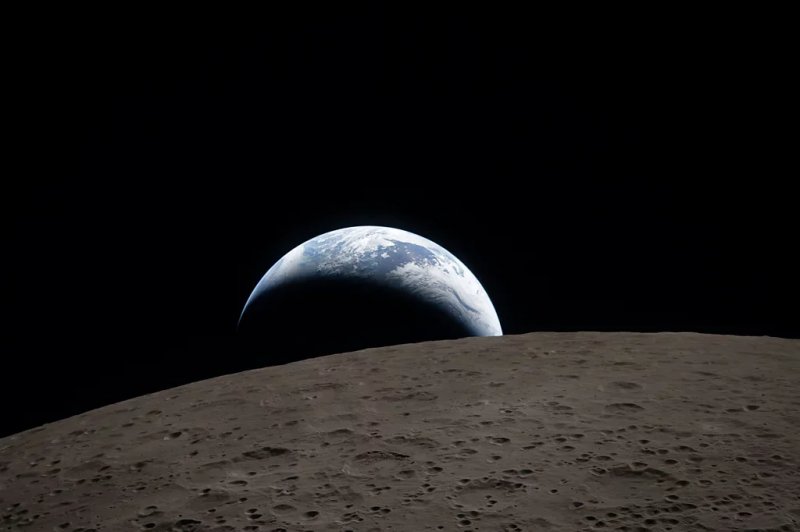
The span of time between the Apollo missions of the 1960s and the modern Artemis program represents more than just a leap in space technology; it serves as a stark timeline of how radically our home planet has changed.
When the Apollo 8 astronauts captured the iconic "Earthrise" photo in 1968, they saw a vibrant, seemingly indestructible blue marble, News.Az reports, citing BBC.
Today, as NASA prepares to return humans to the lunar surface, the Earth viewed from orbit tells a much more complex and fragile story, shaped by nearly six decades of unprecedented human impact and environmental shifts.
RECOMMENDED STORIES
One of the most visible changes from space is the dramatic retreat of the planet's white caps. During the Apollo era, the Arctic and Antarctic ice sheets were significantly more robust. Satellite data and astronaut observations now reveal a landscape where sea ice has thinned and glaciers have receded at an accelerating pace. This loss of reflectivity, or albedo, means the Earth now absorbs more solar heat than it did in 1972, the year of the last Apollo moonwalk. The deep blues of the ocean have expanded as the blinding whites of the poles have shrunk, a visual testament to a warming climate that was only a theoretical concern during the original Space Race.
The nighttime appearance of the planet has also undergone a total metamorphosis. In the mid-20th century, vast swathes of the globe remained in darkness, but today, the Earth's night side is webbed with brilliant veins of artificial light. The explosion of urbanization and the expansion of electrical grids mean that the "dark side" of the Earth is now glowing with a luminosity that would have been unrecognizable to the Apollo crews. While this represents massive economic development and human progress, it also highlights the sheer scale of the global footprint, as megacities now house billions more people than they did in the 1960s.
Furthermore, the very atmosphere that protects life has changed its composition. Since the last human stood on the Moon, the concentration of carbon dioxide in the atmosphere has risen by approximately 30%. While this change isn't visible to the naked eye like a forest fire or a shrinking lake, its effects are seen in the increased frequency and intensity of storms and wildfires, which are now clearly visible from the International Space Station. The "thin blue line" of the atmosphere remains, but it is now a more heavily burdened shield, filtering a different chemical reality than it did during the height of the Cold War.
As the Artemis generation looks back at Earth from the lunar South Pole, they will see a planet that is more interconnected yet more vulnerable. The transition from Apollo to Artemis highlights a shift in perspective: while the 1960s were about the triumph of reaching another world, the 2020s are about using that vantage point to better understand and preserve our own. The Earth of 2026 is a more crowded, warmer, and brighter world, making the mission to explore the stars inseparable from the mission to protect the only home we have ever known.
By Leyla Şirinova


Similar news