The unsettling science of boiling lobsters: Painkiller response suggests shared capacity for suffering


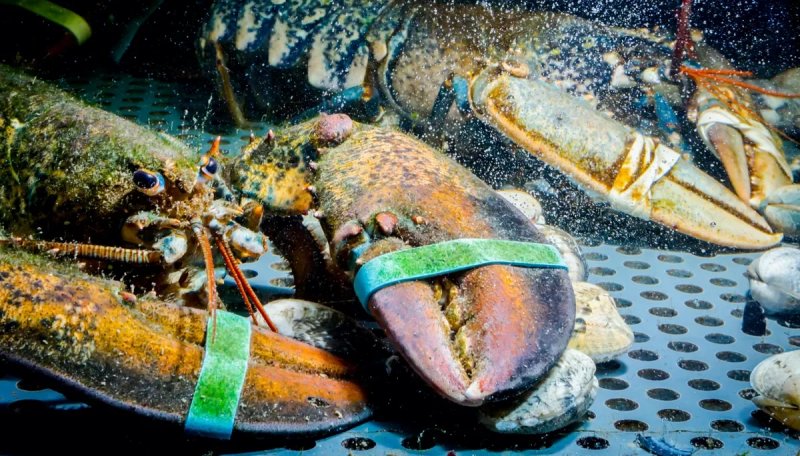
Does a lobster feel pain – or even anguish and terror – when it's faced with a boiling pot of water in a busy kitchen? It's a question that has long plagued philosophers and biologists, as well as seafood purveyors wrestling with the ethics behind their menu choices.
In a new study, scientists have delved further into this debate by testing how crustaceans respond to painkillers. The researchers came to the worrying conclusion that lobsters react to aspirin and anesthetics in a very similar way to humans. As such, perhaps the crustaceans' experience of pain is not so alien from ours either, News.Az reports, citing IFL Science.
Scientists at the University of Gothenburg collected a bunch of Norway lobster (Nephrops norvegicus) from a market in their local city. After bringing them back to the lab, they set about zapping them with electric shocks in a water tank.
The lobsters were clearly distressed, rapidly flicking their tails as if they were desperately trying to escape. Analysis of their tissues also showed the lobsters had experienced elevated levels of hemolymph lactate and downregulated gene expression – two biological indicators of stress.
RECOMMENDED STORIES
In the next stage of the experiment, the researcher gave them two different painkillers, aspirin and lidocaine, before the zapping commenced. Both drugs appeared to produce a pain-relieving effect, significantly reducing the lobsters' distress responses. Lidocaine proved most effective, producing no side effects. Aspirin also worked, though the lobsters did still groom their legs and claws, which is a sign of stress.
At first glance, these results seem obvious: painkillers reduce pain in animals. However, the significance runs deeper. The fact that drugs developed for humans work on lobsters suggests that the frantic thrashing of a boiled crustacean is not a rudimentary reflex, like a literal knee-jerk reaction, but something perhaps very much like genuine pain and suffering. If that's accurate, the researchers say, it suggests we should rethink the way we treat lobsters and other crustaceans in the agri-food industry.
“The fact that painkillers developed for humans also work on Norway lobsters shows how similar we function. That's why it's important to care about how we treat and kill crustaceans, just as we do with chickens and cows,” Lynne Sneddon, study author and Professor of Zoophysiology at the University of Gothenburg, said in a statement.
“Our results emphasise the importance of ethical responsibility for the welfare of crustaceans not only in the food industry. There are campaigns to include these crustaceans in the science laws where we must reduce pain in laboratory animals. This study can help inform how to make experiments gentler for the animal with the use of pain-relieving drugs. We need to do further experiments to find out the most humane way to treat and kill crustaceans if we still want them as food in the future,” added Sneddon.
The research arrives amid a broader reckoning with our tendency to misread (or simply ignore) animal consciousness. Humans have a bad habit of placing more value on animals that we see ourselves reflected in. For instance, the idea of boiling a chimpanzee or dolphin would be unthinkable for most people, yet the feeling would be somewhat muted with a lizard or a frog. The same act performed on a lobster or another sea-dwelling invertebrate, like a prawn or clam, would carry even less ethical weight, if any at all.But a growing body of research is showing that our understanding of animal cognition and consciousness is far less straightforward than once assumed. With a doughnut-shaped brain encircling its esophagus and a complex network of “mini-brains” extending through its arms, the octopus possess a nervous system that bears little resemblance to humans', yet there is plenty of evidence that they are vibrantly intelligent creatures. Even sea urchins, far from being a simplistic sea-thing, have a surprisingly complex “all-body brain” that challenges our assumptions about nervous systems and the nature of intelligence.
To put it another way, human-centric ideas of brain structure and biology may not be the right lens through which to understand intelligence, sentience, and suffering. The lobster, which finds itself in countless boiling pots and restaurant tanks around the world, is the perfect example of that predicament.
By Leyla Şirinova


Similar news