Why are the EU and South Korea locking arms on Global security?


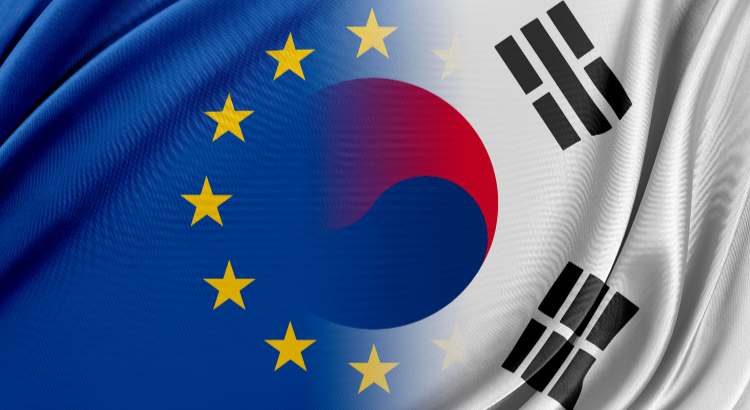
The European Union and South Korea are deepening their security cooperation at a time of growing geopolitical uncertainty, rising military tensions, and increasing concerns over the stability of the international order.
What was once primarily an economic relationship has evolved into a broader strategic partnership encompassing defense, cybersecurity, emerging technologies, supply chain resilience, maritime security, and responses to global conflicts News.Az reports.
RECOMMENDED STORIES
The strengthening relationship reflects a shared assessment that security challenges are no longer confined to individual regions. From Russia's war in Ukraine to tensions on the Korean Peninsula, cyberattacks, disinformation campaigns, and growing competition among major powers, both Brussels and Seoul increasingly view global security as interconnected.
As a result, the EU and South Korea are building closer ties in ways that would have been difficult to imagine only a decade ago.
What is happening between the EU and South Korea?
The European Union and South Korea have significantly expanded political and security cooperation in recent years. High-level meetings between European and South Korean leaders have increasingly focused on strategic issues rather than purely economic matters.
The two sides have strengthened dialogue on defense policy, intelligence sharing, cybersecurity, maritime security, sanctions enforcement, and emerging technologies. They have also increased coordination on international crises and global governance issues.
While South Korea is not a member of NATO and is geographically distant from Europe, policymakers in both regions increasingly believe that developments in one part of the world can have direct consequences elsewhere.
This changing perception has transformed the relationship from a traditional partnership into a more strategic alignment.
Why are the EU and South Korea becoming closer now?
Several major geopolitical developments have accelerated cooperation.
Russia's invasion of Ukraine fundamentally altered security thinking across Europe and Asia. European leaders increasingly argue that authoritarian powers are challenging international norms in multiple regions simultaneously.
At the same time, South Korea faces growing security concerns stemming from North Korea's missile and nuclear programs, military cooperation between Pyongyang and Moscow, and broader regional tensions in East Asia.
Both Brussels and Seoul have concluded that security challenges can no longer be viewed through a strictly regional lens. Events in Europe affect Asia, while developments in Asia can have consequences for European interests.
This shared understanding has created a strong foundation for deeper cooperation.
What role does Russia's war in Ukraine play?
The war in Ukraine has become one of the strongest drivers of EU-South Korea security cooperation.
South Korea has emerged as an important partner in supporting Ukraine indirectly through humanitarian assistance, economic aid, sanctions coordination, and defense-industrial cooperation with European countries.
European officials have also expressed concern about reports of increasing military cooperation between Russia and North Korea. Such cooperation raises fears that technology transfers, weapons exchanges, or military assistance could strengthen North Korea's capabilities.
For South Korea, developments in Ukraine are closely linked to its own security environment. For Europe, support from democratic partners such as South Korea helps reinforce international efforts to uphold international law and territorial integrity.
The conflict has therefore created shared strategic interests that extend beyond geography.
How does North Korea influence this partnership?
North Korea remains one of the most important factors shaping South Korea's security policy.
Pyongyang's continued missile tests, nuclear development programs, and military activities pose a direct threat to South Korea. European leaders increasingly recognize that instability on the Korean Peninsula could have global consequences, including economic disruptions and wider security risks.
The EU has consistently supported efforts to prevent nuclear proliferation and has maintained sanctions against North Korea.
As North Korea expands its military capabilities and strengthens ties with Russia, European policymakers have become more interested in developments in Northeast Asia.
This has created additional opportunities for cooperation between Brussels and Seoul.
Is China also part of the equation?
Yes, although the partnership is not explicitly directed against China.
Both the EU and South Korea maintain significant economic relationships with China and seek to avoid direct confrontation. However, concerns have grown regarding strategic dependence, supply chain vulnerabilities, economic coercion, and regional security issues.
European policymakers have increasingly discussed reducing critical dependencies in sectors such as semiconductors, batteries, rare earth materials, and advanced technologies.
South Korea faces similar challenges because of its deep economic links with China while also relying heavily on security partnerships with Western countries.
As a result, both sides are exploring ways to strengthen resilience without completely decoupling from China.
What security areas are the EU and South Korea focusing on?
The partnership extends far beyond traditional military cooperation.
Cybersecurity has become a major area of collaboration as both sides face growing threats from state-sponsored hackers, ransomware attacks, and cyber espionage.
Another key area is maritime security. Both regions depend heavily on secure shipping routes and stable global trade networks. Protecting freedom of navigation and maintaining open sea lanes are shared priorities.
Emerging technologies such as artificial intelligence, quantum computing, semiconductors, and advanced communications systems are also increasingly viewed as security issues.
Additionally, the two sides cooperate on countering disinformation campaigns, protecting critical infrastructure, and strengthening supply chain security.
This broad approach reflects the changing nature of modern security challenges.
Why are semiconductors important to this relationship?
Semiconductors have become one of the most strategically important technologies in the world economy.
South Korea is home to some of the world's largest semiconductor manufacturers and plays a critical role in global technology supply chains. Europe, meanwhile, is seeking to reduce vulnerabilities and secure access to advanced chips needed for industries ranging from defense to artificial intelligence.
Recent disruptions in global supply chains highlighted how dependent many economies are on a small number of suppliers.
As a result, Brussels and Seoul have increased cooperation on technology security, industrial resilience, research collaboration, and semiconductor production.
The issue is no longer viewed solely as an economic matter but as a central component of national security.
How does NATO fit into the picture?
Although South Korea is not a NATO member, relations between Seoul and the alliance have strengthened considerably.
South Korean leaders have participated in NATO summits, while NATO has expanded engagement with Indo-Pacific partners including South Korea, Japan, Australia, and New Zealand.
The EU and NATO increasingly share assessments regarding global security challenges, particularly concerning Russia, cyber threats, and strategic competition.
As cooperation between NATO and Indo-Pacific partners grows, South Korea's strategic relevance to European security discussions has increased significantly.
This development has further encouraged closer EU-South Korea cooperation.
Does this mean the EU is becoming more involved in Asia?
In many respects, yes.
European policymakers increasingly argue that Europe cannot ignore developments in the Indo-Pacific region because many of the world's most important economic and security challenges originate there.
Trade routes, technological competition, maritime disputes, supply chains, and regional conflicts all have direct implications for European interests.
As a result, the EU has adopted a more active Indo-Pacific strategy aimed at strengthening partnerships with countries such as South Korea, Japan, India, and Australia.
This does not mean Europe is abandoning its focus on its own neighborhood. Rather, it reflects recognition that European security and Asian security are increasingly interconnected.
What does South Korea gain from closer ties with the EU?
South Korea gains several important advantages.
First, stronger relations with Europe diversify Seoul's international partnerships beyond its traditional alliance with the United States.
Second, cooperation with the EU enhances South Korea's global diplomatic influence and provides additional support for addressing challenges related to North Korea.
Third, closer ties open opportunities for collaboration in advanced technologies, defense industries, research, cybersecurity, and energy security.
Finally, engagement with Europe helps reinforce a rules-based international order that South Korea views as essential to its long-term prosperity and security.
For Seoul, the relationship is therefore both strategic and practical.
What does the EU gain from closer ties with South Korea?
For the European Union, South Korea represents one of the world's leading technological powers, a major democratic partner, and an increasingly important security actor.
Closer cooperation provides Europe with access to advanced technological expertise, stronger supply chain partnerships, and greater coordination on international security challenges.
South Korea's experience dealing with cyber threats, missile defense issues, and regional security tensions also offers valuable insights for European policymakers.
Moreover, partnerships with countries like South Korea help Europe strengthen its global influence and build coalitions capable of addressing increasingly complex international challenges.
Could this partnership become a formal military alliance?
At present, that appears unlikely.
The EU and South Korea are not moving toward a NATO-style mutual defense arrangement. Geographic realities, existing alliance structures, and political considerations make such a development improbable.
Instead, the relationship is likely to focus on practical cooperation, strategic coordination, technology partnerships, defense-industrial collaboration, and shared responses to global security challenges.
This flexible approach allows both sides to strengthen cooperation without creating new formal military commitments.
What are the broader implications?
The growing partnership between the EU and South Korea reflects a larger transformation in international security.
Traditional distinctions between European security and Asian security are becoming less relevant. Economic interdependence, technological competition, cyber threats, and geopolitical rivalries increasingly connect events across continents.
As a result, countries and organizations are building networks of partnerships that extend beyond their immediate regions.
The EU-South Korea relationship is part of this broader trend toward greater cooperation among democratic and technologically advanced nations facing common challenges.
The Bottom Line
The European Union and South Korea are strengthening their security partnership because both increasingly view today's challenges as global rather than regional. Russia's war in Ukraine, North Korea's military activities, cybersecurity threats, supply chain vulnerabilities, technological competition, and concerns about the future international order have created powerful incentives for closer cooperation.
While the relationship is unlikely to become a formal military alliance, it is rapidly evolving into a comprehensive strategic partnership that spans defense, technology, trade, and diplomacy. As global security challenges continue to cross borders, the ties between Brussels and Seoul are likely to become even more important in the years ahead.
By Faig Mahmudov


Similar news