Will Sweden-provided Gripen fighters give Ukraine an edge against Russia?


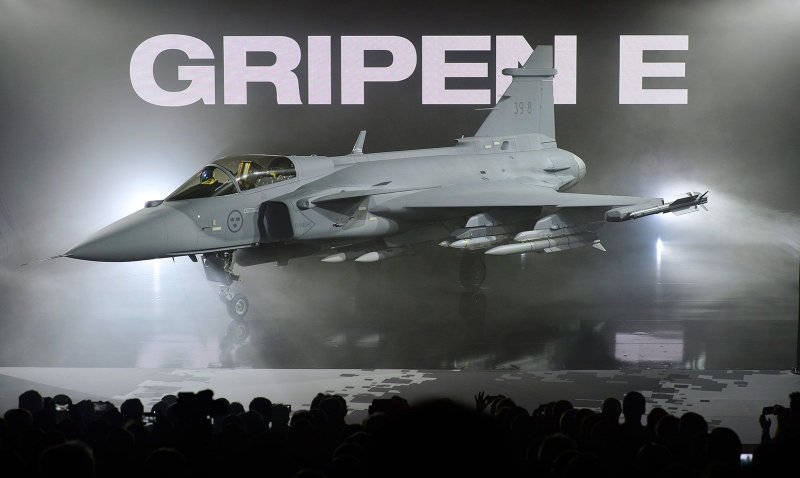
Sweden has announced one of its most significant military support packages for Ukraine since the start of Russia's full-scale invasion.
The package includes plans to donate up to 16 Saab JAS 39 Gripen fighter jets and support Ukraine's acquisition of up to 20 newer Gripen aircraft, marking a major step in strengthening Kyiv's air force, News.Az reports.
RECOMMENDED STORIES
The decision is viewed as a potentially transformative development for Ukraine's air defense capabilities. While Western countries have already supplied F-16 fighter jets and advanced air defense systems, the arrival of Swedish Gripens could provide Ukraine with a new capability specifically designed for operations in challenging wartime conditions.
The move also highlights Sweden's growing role as a leading military supporter of Ukraine and signals long-term defense cooperation between the two countries.
What exactly did Sweden announce?
Sweden announced that it intends to donate up to 16 Gripen C/D fighter aircraft from its existing air force inventory while also enabling Ukraine to acquire up to 20 more advanced Gripen E/F aircraft.
The package goes beyond the aircraft themselves. It includes advanced air-to-air missiles, pilot training, maintenance support, ammunition, electronic warfare systems, and additional military assistance designed to strengthen Ukraine's overall air defense network.
Swedish officials described the package as one of the largest military support commitments Stockholm has made since Russia launched its invasion of Ukraine in February 2022.
The announcement reflects months of negotiations between Kyiv and Stockholm aimed at building a long-term partnership focused on strengthening Ukraine's ability to defend its airspace.
What is the Gripen fighter jet?
The Saab JAS 39 Gripen is Sweden's domestically developed multirole fighter aircraft. It was designed to perform air defense, ground attack, and reconnaissance missions while operating in difficult and dispersed battlefield environments.
Unlike some larger Western fighters, the Gripen was specifically built to function from short runways, highways, and improvised airfields. This concept was developed during the Cold War when Sweden anticipated that traditional military bases could be targeted during a conflict.
The aircraft combines advanced radar systems, electronic warfare capabilities, and modern missile technology while maintaining relatively low operating costs compared to many other Western fighter jets.
Military analysts often describe the Gripen as one of the most practical and adaptable combat aircraft available today, particularly for countries facing threats from larger adversaries.
Why does Ukraine want Gripen jets?
Ukraine's interest in the Gripen stems largely from the unique demands of the war with Russia.
Since the beginning of the conflict, Ukrainian aircraft have faced constant threats from Russian missiles, drones, and air defense systems. This has forced Ukrainian pilots to operate from dispersed locations and use unconventional tactics to avoid detection and destruction.
The Gripen was specifically designed for this type of environment. Its ability to operate from highways and temporary airstrips aligns closely with Ukraine's current strategy of dispersing aircraft across multiple locations.
Another advantage is the aircraft's maintenance requirements. The Gripen can be serviced quickly by relatively small crews, allowing aircraft to return to combat missions faster than many larger fighter platforms.
For Ukraine, which must preserve every available military asset, these characteristics make the Gripen particularly attractive.
How many aircraft will Ukraine receive?
Under the current plan, Sweden intends to donate up to 16 Gripen C/D aircraft from its existing fleet.
In addition, Ukraine plans to purchase an initial batch of up to 20 newer Gripen E/F fighters. These aircraft represent the latest generation of the Gripen family and offer improved radar systems, greater range, enhanced electronic warfare capabilities, and increased weapons capacity.
If the agreement proceeds successfully, officials have indicated that future acquisitions could expand significantly beyond the initial order.
This means the current announcement may represent only the first phase of a much larger modernization effort for the Ukrainian Air Force.
What weapons will the Gripens carry?
One of the most important aspects of the package is not just the aircraft but also the weapons that come with them.
The donation is expected to include advanced Western air-to-air missiles capable of engaging enemy aircraft at both short and long ranges. Among the systems mentioned are IRIS-T missiles, AMRAAM missiles, and Meteor missiles.
The Meteor missile is particularly significant because it is considered one of the most advanced air-to-air weapons currently in service. It provides long-range engagement capability and could allow Ukrainian pilots to challenge Russian aircraft from greater distances than before.
Combined with the Gripen's sophisticated radar systems, these weapons could substantially improve Ukraine's ability to defend its skies and intercept incoming threats.
How will these jets help Ukraine on the battlefield?
The Gripens are expected to perform several critical missions.
First, they can strengthen air defense by intercepting Russian aircraft, cruise missiles, and drones. Protecting Ukrainian cities and infrastructure remains one of Kyiv's highest priorities as Russia continues to conduct long-range strikes.
Second, the aircraft can support ground operations by attacking military targets behind enemy lines. Their advanced sensors and precision-guided weapons allow them to strike targets with greater accuracy.
Third, the Gripens can help establish greater control over contested airspace. Although they are unlikely to completely eliminate Russia's air advantage, they can make it more difficult and costly for Russian forces to operate near the front lines.
Finally, the aircraft can enhance Ukraine's ability to gather intelligence and monitor battlefield developments.
How do Gripens compare to the F-16s already supplied to Ukraine?
Both aircraft are highly capable, but they were designed with different philosophies.
The F-16 is one of the most successful fighter aircraft ever produced and has been used by dozens of countries around the world. It offers excellent combat performance and benefits from a vast support network and extensive operational experience.
The Gripen, however, was designed specifically for countries that may need to fight while operating from dispersed locations with limited infrastructure.
Many experts believe the two aircraft could complement each other rather than compete. F-16s can provide proven combat capabilities and integration with NATO systems, while Gripens offer flexibility, rapid deployment, and lower operational costs.
Together, they could create a more diverse and resilient Ukrainian air force.
When will the aircraft arrive?
The timeline depends on several factors, including training, logistics, and final agreements between the two governments.
Swedish officials have suggested that training for Ukrainian pilots and maintenance personnel could begin quickly. The first donated Gripen C/D aircraft could potentially enter Ukrainian service within the next year.
The newer Gripen E/F aircraft will take longer because they must be manufactured and delivered. Initial deliveries are expected later in the decade.
As with most military procurement programs, exact timelines may change depending on production schedules and battlefield developments.
Why is Sweden taking this step now?
Sweden's decision reflects both strategic and political considerations.
Since Russia's invasion of Ukraine, Sweden has dramatically increased its support for Kyiv while also strengthening its own defense posture. The country recently joined NATO, ending decades of military non-alignment and reshaping its security policy.
Swedish leaders argue that supporting Ukraine is directly linked to European security. Their position is that helping Ukraine resist Russian aggression contributes to stability across the continent and reduces future security risks for Europe.
The fighter jet package therefore represents not only military assistance but also a broader statement about Sweden's commitment to European security.
Could this change the course of the war?
No single weapons system is likely to determine the outcome of the conflict on its own.
However, modern fighter aircraft can significantly improve Ukraine's military capabilities when combined with air defense systems, intelligence support, long-range weapons, and ground forces.
The Gripens could make Russian air operations more difficult, improve Ukraine's defensive capabilities, and provide greater flexibility for future military operations.
The psychological impact should not be underestimated either. The delivery of advanced Western aircraft demonstrates continuing international support for Ukraine and sends a message that Kyiv's partners remain committed to strengthening its military capabilities.
While the jets alone will not guarantee victory, they could become an important component of Ukraine's broader defense strategy.
How might Russia respond?
Russia has consistently criticized Western military aid to Ukraine and is likely to condemn the Gripen transfer as an escalation.
Russian officials have previously argued that advanced Western weapons increase tensions and prolong the conflict. Similar criticism followed the delivery of HIMARS rocket systems, Patriot air defense systems, tanks, and F-16 fighter jets.
Military analysts expect Russia to attempt to adapt its tactics in response to the arrival of Gripens. This could include increased efforts to target airfields, training facilities, logistics hubs, and maintenance infrastructure associated with the aircraft.
At the same time, the introduction of new capabilities forces Russia to devote additional resources to countering them, potentially creating new challenges for Moscow's military planners.
What does this mean for the future of the Ukrainian Air Force?
The Gripen deal represents more than a short-term military aid package. It signals the beginning of a long-term transformation of Ukraine's air force.
Before the war, Ukraine relied primarily on Soviet-era aircraft such as the MiG-29 and Su-27. While these aircraft have performed remarkably well under difficult conditions, replacing aging Soviet systems has become a strategic priority.
The introduction of Western fighter jets creates opportunities for modernization, improved interoperability with NATO partners, and access to advanced technologies.
Over time, Ukraine could transition toward a predominantly Western-equipped air force capable of operating alongside NATO standards and procedures.
The Bottom Line
Sweden's decision to provide Gripen fighter jets and support Ukraine's acquisition of additional aircraft marks one of the most significant developments in Kyiv's air force modernization effort. The package includes not only fighter jets but also advanced missiles, training, maintenance support, and electronic warfare capabilities.
For Ukraine, the Gripen offers a combination of flexibility, survivability, and combat effectiveness that is particularly suited to the realities of the war with Russia. For Sweden, the move demonstrates an increasingly active role in European security and a long-term commitment to supporting Kyiv.
Although the aircraft alone will not determine the outcome of the conflict, they have the potential to strengthen Ukraine's defenses, complicate Russian military operations, and help shape the future of the Ukrainian Air Force for years to come.
By Faig Mahmudov


Similar news