What Is Behind the Violent Clashes Between Haredi Protesters and Police in Jerusalem?


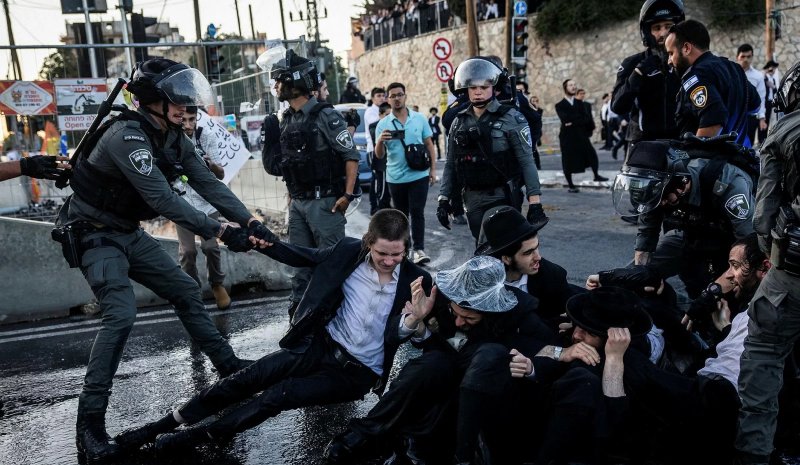
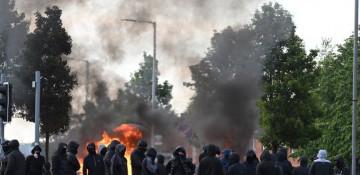
< strong> Violent clashes have broken out in Jerusalem after protests by members of Israel's ultra-Orthodox, or Haredi, community escalated into confrontations with police. Demonstrators blocked roads, burned objects in the streets, and clashed with security forces, leading to arrests and injuries.
The unrest highlights one of the most sensitive and divisive issues in Israeli society: military conscription for ultra-Orthodox Jews, News.Az reports.
RECOMMENDED STORIES
For decades, the question of whether Haredi men should serve in the military has generated political crises, legal battles, and deep social tensions. Recent efforts to increase enlistment have intensified the debate, triggering large-scale demonstrations across the country.
The latest violence comes at a time when Israel is facing ongoing security challenges and military commitments, making the issue even more politically charged.
What happened in Jerusalem?
The protests began as demonstrations against attempts to increase military service among ultra-Orthodox Jewish men. Large groups of protesters gathered in several areas of Jerusalem, including major roads and intersections, disrupting traffic and public transportation.
As the demonstrations grew, some protesters reportedly blocked highways, threw objects, and set fires in the streets. Police moved in to disperse crowds, leading to confrontations that quickly turned violent.
Videos circulating on social media showed scenes of chaos, with protesters chanting slogans, security forces attempting to clear roadblocks, and clashes taking place in several neighborhoods.
Authorities arrested a number of participants accused of disturbing public order and attacking police officers. Security forces also used crowd-control measures to disperse demonstrators and reopen blocked roads.
The unrest caused significant disruptions throughout the city and attracted national attention.
Who are the ultra-Orthodox protesters?
The protesters belong primarily to Israel's ultra-Orthodox Jewish community, commonly known as the Haredim.
The Haredi community is one of the fastest-growing segments of Israeli society and is characterized by strict adherence to religious traditions and extensive religious study. Many ultra-Orthodox men devote much of their lives to studying religious texts in seminaries known as yeshivas.
Historically, large numbers of Haredi men have been exempt from compulsory military service, a policy dating back to Israel's early years. What began as an exemption for a relatively small group eventually expanded as the ultra-Orthodox population grew.
Many within the community view religious study as a vital contribution to the nation and believe that military service could threaten their religious way of life.
This perspective has made conscription one of the most contentious issues between the Haredi community and the broader Israeli public.
Why are ultra-Orthodox Jews protesting?
The demonstrations are primarily driven by opposition to efforts aimed at increasing military service among ultra-Orthodox men.
Many protesters believe compulsory enlistment violates their religious freedoms and threatens the autonomy of their communities. They argue that yeshiva students should continue to receive exemptions that allow them to pursue religious education full-time.
Some religious leaders have described mandatory military service as incompatible with their way of life, citing concerns about secular influences, mixed-gender environments, and disruptions to religious study.
For many demonstrators, the issue is not simply about military service but about preserving a distinct religious identity and protecting traditions they consider fundamental to their community.
As government pressure to increase enlistment grows, opposition among some ultra-Orthodox groups has become increasingly intense.
Why is military service such a controversial issue in Israel?
Military service occupies a unique place in Israeli society.
Most Jewish citizens are required to serve in the Israel Defense Forces after reaching adulthood. Military service is widely viewed as both a civic duty and an important part of national identity.
As a result, many Israelis believe that exemptions granted to large segments of the ultra-Orthodox population create an unfair burden on those who do serve.
Critics argue that as Israel faces growing security threats, all sectors of society should contribute equally to national defense. They point to the increasing number of reservists and active-duty soldiers who have been called upon during periods of conflict.
Supporters of the exemptions counter that religious study contributes to the nation's spiritual strength and that forcing Haredi men into military service would violate long-standing agreements and religious principles.
This disagreement has fueled years of political and social conflict.
What is the legal dispute over military exemptions?
The issue has been the subject of repeated legal challenges and court rulings.
Israel's judiciary has increasingly questioned whether blanket exemptions for large numbers of yeshiva students are consistent with principles of equality. Courts have ruled that governments must develop arrangements that address disparities in military obligations.
As a result, lawmakers have repeatedly attempted to create new frameworks governing enlistment and exemptions. However, these efforts often collapse because of fierce disagreements among political parties.
The legal pressure to reform the system has intensified in recent years, contributing to growing tensions between the government and sections of the ultra-Orthodox community.
Many protesters see recent developments as evidence that their traditional exemptions are under threat.
Why has the issue become more urgent now?
The debate has become more intense because Israel is facing significant security challenges that require substantial military manpower.
Ongoing military operations, regional instability, and increased security demands have heightened public scrutiny of exemptions from military service. Many Israelis argue that wartime conditions make equal participation in national defense more important than ever.
At the same time, demographic trends have increased pressure on policymakers. The ultra-Orthodox population has grown significantly, meaning the number of military-age men eligible for exemptions is far larger than in previous decades.
As a result, what was once considered a limited exception has become a major national policy issue with broad implications for the military, the economy, and Israeli society.
How did the protests become violent?
While many demonstrations were initially peaceful, tensions escalated as crowds grew and police attempted to enforce public order.
Road blockades, confrontations at checkpoints, and efforts to disperse protesters created flashpoints throughout Jerusalem. Some demonstrators reportedly resisted police instructions, while authorities accused certain individuals of throwing objects and damaging property.
Police responded by deploying additional personnel and using crowd-control measures to clear roads and restore traffic flow.
As emotions intensified, isolated incidents quickly spread into wider clashes involving larger groups of protesters and security forces.
Violence during ultra-Orthodox demonstrations is not unprecedented, but the scale of recent confrontations has raised concerns among officials and community leaders alike.
How has the Israeli government responded?
Government officials have emphasized the need to maintain public order while continuing discussions on military service reforms.
Authorities argue that road blockages, attacks on police officers, and violent disturbances cannot be tolerated regardless of the political issue being protested.
At the same time, many policymakers recognize the sensitivity of the issue and acknowledge that any long-term solution will require dialogue with religious leaders and community representatives.
Political leaders remain divided on how aggressively to pursue reforms, reflecting broader disagreements within Israel's governing coalition and opposition parties.
The government's challenge is balancing security needs, legal obligations, and social cohesion.
How do other Israelis view the protests?
Public opinion is deeply divided.
Many Israelis support efforts to increase ultra-Orthodox enlistment and view the protests as resistance to a necessary reform. They argue that equal responsibility should accompany equal citizenship and that military service should be shared more broadly across society.
Others believe the issue requires compromise and caution, warning that aggressive reforms could deepen divisions and undermine national unity.
Some Israelis sympathize with the concerns of religious communities while still supporting gradual changes to the current system.
The debate reflects broader questions about religion, identity, citizenship, and the future character of the Israeli state.
Could the unrest spread beyond Jerusalem?
It is possible.
Previous disputes over military exemptions have sparked demonstrations in multiple Israeli cities, and ultra-Orthodox groups have shown an ability to mobilize large numbers of supporters.
If new legislation, court decisions, or enforcement measures are introduced, additional protests could occur elsewhere in the country.
The likelihood of further unrest will depend largely on government actions, court rulings, and the willingness of political and religious leaders to seek compromise.
Security officials are closely monitoring developments to prevent additional violence and disruptions.
What are the broader implications?
The clashes highlight one of Israel's most enduring internal challenges.
The country is attempting to balance competing priorities: maintaining military readiness, ensuring equality before the law, protecting religious freedoms, and preserving social cohesion.
The debate also raises important questions about how a rapidly changing society adapts long-standing arrangements created under very different demographic and political circumstances.
As Israel's population continues to evolve, pressure to revisit the relationship between religious communities and state institutions is likely to increase.
The outcome of this debate could have lasting effects on Israeli politics, military policy, and social stability.
The Bottom Line
The violent protests in Jerusalem are about far more than a single demonstration. They reflect a deep and long-running dispute over military service, religious identity, and the responsibilities of citizenship in Israel. As legal, political, and demographic pressures continue to mount, the question of ultra-Orthodox enlistment has become one of the country's most sensitive issues.
While authorities seek to restore order and prevent further violence, the underlying tensions remain unresolved. Unless a broadly acceptable compromise can be found, clashes over military conscription and religious exemptions are likely to remain a recurring source of controversy in Israeli society.
By Faig Mahmudov


Similar news