Trump’s tariff surge hits major US trading partners, sparks global recalibration


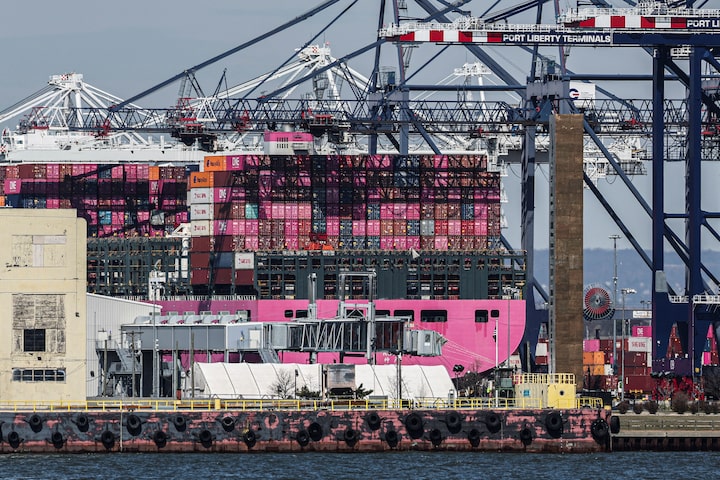
President Donald Trump’s sweeping new tariff regime officially took effect Thursday, launching a high-stakes test of his administration’s economic strategy to narrow trade deficits while managing the risks of global supply chain disruption, inflation, and backlash from key partners.
At 12:01 a.m. EDT, U.S. Customs and Border Protection began collecting the higher import duties, which range from 10% to 50% on dozens of countries. The move followed weeks of uncertainty and last-minute negotiations, as governments scrambled to secure exemptions or reduced rates, News.Az reports, citing Reuters.
While goods already en route to the U.S. before the deadline can still enter under previous rates until October 5, many nations now face sharply increased duties. Brazil was hit with a 50% tariff, Switzerland 39%, Canada 35%, and India 25%. Just a day earlier, Trump announced another 25% duty on Indian imports, citing its continued purchases of Russian oil.
Despite the sweeping nature of the tariffs, eight major U.S. trading partners—collectively responsible for about 40% of American trade—managed to secure framework agreements that reduced their base rates. The European Union, Japan, and South Korea saw tariffs lowered to 15%. The UK locked in a 10% rate, while Vietnam, Indonesia, Pakistan, and the Philippines were granted 19%–20% tariffs.
Trump hailed the decision as a major win for the U.S. economy. “Billions of dollars will flow into the United States,” he wrote on Truth Social, adding that only “a radical left court” could undermine the country’s momentum.
Meanwhile, U.S. companies are bracing for the fallout. The new duties are expected to lead to some supply chain restructuring and gradual price hikes. “There’ll be a new equilibrium,” said William Reinsch, a senior fellow at the Center for Strategic and International Studies. “Prices here will go up, but it’ll take a while for that to show up in a major way.”
Countries like Canada and India, facing some of the steepest tariffs, are expected to remain under pressure to renegotiate or seek ways to mitigate the economic impact. The Trump administration has also introduced a 40% penalty for goods found to be re-exported from third countries in an attempt to bypass tariffs, though it has offered few details on how it plans to enforce this provision.
The July 31 executive order expanded tariffs above 10% to 67 trading partners, adding to a layered system that already includes national security-based tariffs on sectors like semiconductors, pharmaceuticals, autos, metals, and lumber. Duties on microchips could rise to 100%, Trump warned.
China, which is on a separate tariff track, could face further increases on August 12 unless Trump extends a temporary truce reached in Sweden last week. Beijing's oil trade with Moscow is also under scrutiny and could trigger further sanctions.
Though the financial markets showed only mild reactions—with Asian stocks holding steady and the U.S. dollar slightly down—analysts caution that the broader economic effects are still unfolding. The U.S. Treasury projects annual tariff revenues could surpass $300 billion, driven largely by the import taxes paid by American firms and consumers.
The Atlantic Institute estimates that the average U.S. tariff rate has now surged to around 20%, the highest in over a century. Data from the Commerce Department suggests that inflationary effects are already surfacing, with June seeing price hikes in home furnishings, vehicles, and recreational goods.
Meanwhile, major global companies like Caterpillar, Marriott, Molson Coors, and Yum Brands are beginning to report the toll of these measures. According to Reuters' global tariff tracker, the combined impact on corporate earnings could reach $15 billion in 2025.


Similar news