Turkmenistan’s “Gates of Hell” fires slowly dim but methane concerns remain


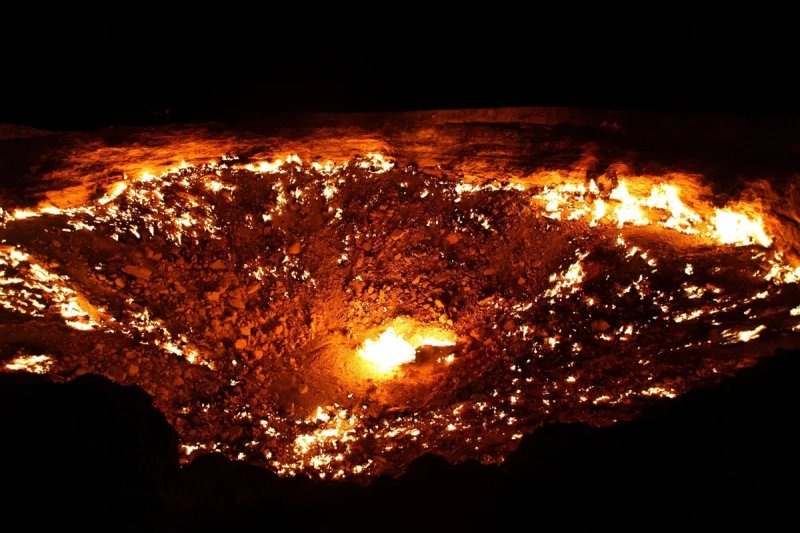
The decades-long flames at Darvaza gas crater in the Karakum Desert, known as the “Gates of Hell,” are reportedly weakening after burning continuously since the 1970s.
The crater was formed in 1971 when Soviet drillers accidentally hit a large natural gas pocket and ignited it to prevent toxic gas release, but the fire has continued for more than 50 years, News.Az reports, citing IFL Science.
Turkmen officials say the fire has recently become significantly weaker, with reduced emissions possibly linked to gas extraction from nearby wells, although independent monitoring suggests the decline may have begun earlier.
RECOMMENDED STORIES
Despite the weakening flames, the crater still releases large amounts of methane, a powerful greenhouse gas. While burning methane reduces its impact by converting it into carbon dioxide, scientists note that if the fire were fully extinguished, unburned methane could be released directly into the atmosphere, potentially increasing climate impact.
By Leyla Şirinova


Similar news