US pushes to revoke citizenship of former American ambassador turned Cuban spy


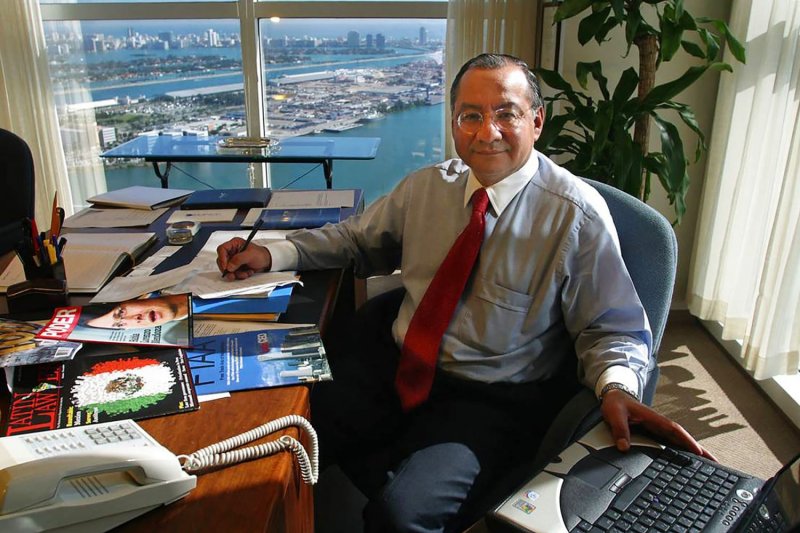
Victor Manuel Rocha, the imprisoned former U.S. ambassador convicted of spying for Cuba, is facing efforts by U.S. federal prosecutors to revoke his American citizenship, according to a court filing.
Federal prosecutors in Miami argue that Rocha obtained U.S. citizenship under false pretenses during his 1977–1978 naturalization process by denying Communist affiliations and criminal conduct, while allegedly already serving Cuban intelligence interests, News.Az reports, citing Anadolu.
Rocha, who was born in Colombia, was charged in December 2023 with conspiring to act as a foreign agent and defrauding the United States. He pleaded guilty in 2024 to acting as an illegal foreign agent and fraud, with a judge stating that he had “betrayed the United States” for more than five decades.
According to the filing, Rocha admitted in his plea agreement that he began working covertly for Cuban intelligence in 1973, years before becoming a U.S. citizen, and later used his diplomatic positions to advance Havana’s interests.
RECOMMENDED STORIES
U.S. Attorney Jason A. Reding Quinones said in a Friday statement that Rocha “was not a low-level operative,” but a former U.S. ambassador and senior official who secretly served Cuba for decades.
He added that Rocha obtained citizenship “through lies, concealment, and betrayal,” and argued that someone who secretly serves Cuba “should not keep the privilege of United States citizenship, even while in prison.”
Rocha is currently serving a 15-year sentence in a federal prison in Florida.
Authorities allege he was recruited in Chile in 1973 to spy for Cuba. He later earned graduate degrees from Harvard University and Georgetown University, which prosecutors say helped support his covert activities.
He joined the U.S. State Department in 1981, serving in Honduras and later as a political officer at the U.S. Embassy in the Dominican Republic from 1982 to 1985.
According to prosecutors, Rocha was recorded in meetings with an undercover FBI agent in 2022 and 2023, during which he discussed his work as a Cuban intelligence asset, referred to the United States as “the enemy,” and used “we” when speaking about Cuba. He also reportedly praised Fidel Castro, referring to him as “comandante,” and described Cuban intelligence contacts as his “compañeros.”
By Nijat Babayev


Similar news