Edgar Morin, prominent French intellectual, dies aged 104


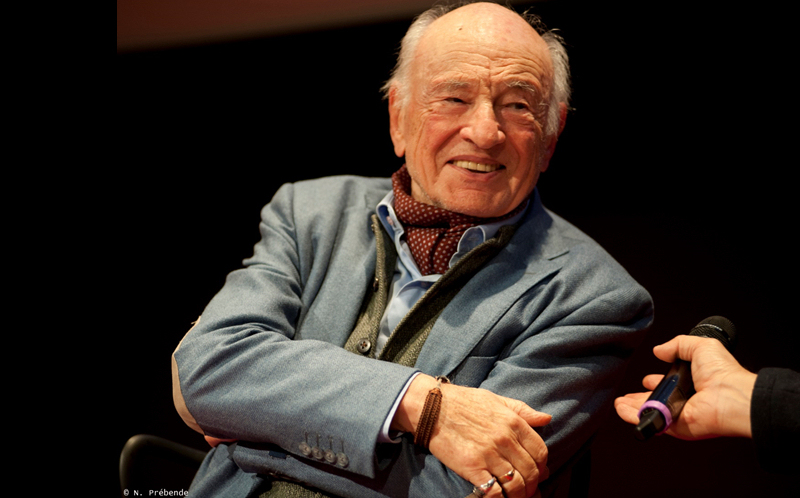
Edgar Morin, widely regarded as France’s leading intellectual figure and a member of the World War II Resistance, has died at the age of 104, his wife said on Saturday, News.Az reports, citing France 24.
Morin devoted his life to promoting critical thinking and fighting intolerance, becoming one of the most influential public thinkers in France over the course of his long career. He was often referred to as France’s “grandfather” of intellectual life due to his impact on philosophy, sociology, and political thought.
His wife confirmed his death, marking the end of a life spanning more than a century, during which he remained active in public debate and continued advocating for intellectual openness and humanist values.
RECOMMENDED STORIES
Morin was born Edgar Nahoum on July 8, 1921 in Paris to Jewish parents who had immigrated from Greece. He always resisted being defined by his Jewishness, stressing that he was also "French, Mediterranean and a citizen of the world".
When he was 10, his mother, whom he adored, died -- an event that his family tried to hide from her only child for weeks and which he described decades later as his "personal Hiroshima".
He took refuge in his studies and later in left-wing activism, joining the Communist Party.
After initially espousing pacifist resistance to the Nazis -- one of two major errors of judgement that he later conceded, along with his initial post-war support for Soviet leader Joseph Stalin -- he joined the Resistance under the pseudonym Edgar Morin.
With degrees in history, geography and law, he led the French military government's propaganda efforts in post-war Germany and later worked as a journalist before joining France's national research institute CNRS.
Ever the free thinker, he fell foul of his Communist comrades for writing in a newspaper seen as pro-American.
Morin was thrown out of the party, an event that instilled in him a deep wariness of indoctrination, which he set out in a book, "Autocritique", emphasising the need for people to constantly question their views.
But he remained a highly influential voice on the left.
His insights into issues ranging from the antisemitism that fuelled wild rumours of Jewish clothes shop customers being abducted in Orleans in the 1960s -- Morin wrote a book on the hysteria -- to globalisation, touched a wide audience.
From the 1970s on, he began warning of the environmental dangers of untrammelled economic growth -- one of several themes on which he proved remarkably prescient.
He was also sharply critical of Israel's treatment of Palestinians, declaring in a 2002 article that "The Jews of Israel, descendants of an apartheid named the ghetto, ghettoise the Palestinians" and that "the Jews who were humiliated, scorned and persecuted humiliate, scorn and persecute the Palestinians".
He was convicted of antisemitism over the article but cleared by France's highest appeal court in an affair that saw him accused by Jewish extremists of being a "self-hating Jew" but won him widespread sympathy among fellow academics.
In a sign of the universal regard for him, when he turned 100 in 2021, Morin was invited to dinner by President Emmanuel Macron.
A prolific writer -- he penned dozens of books, his last published in 2025 -- his warnings about the climate emergency, unbridled capitalism and rising nationalism grew more urgent in his later years.
In an interview with French radio in 2021 he lamented the "absence of awareness that we are marching towards the abyss" but said he was "not fatalistic".
Quoting the German poet and philosopher Friedrich Hoelderlin, he said: "Wherein lies the danger also grows the saving power."
By Nijat Babayev


Similar news