US worries about Iranian retaliation after IDF's message to Tehran


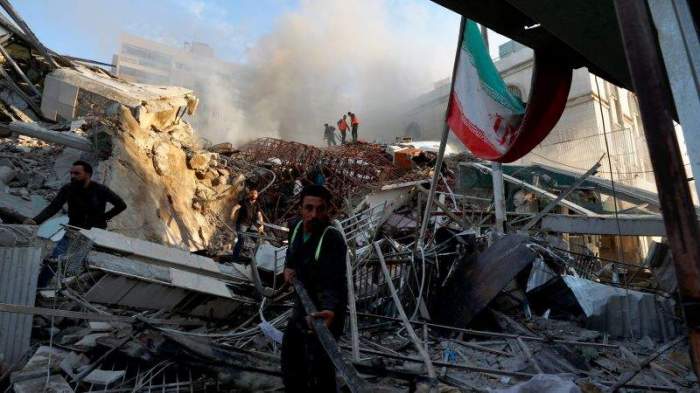
The Biden administration is concerned Iran may plan an attack following the assassination of Hezbollah leader Hassan Nasrallah and is coordinating with Israel for defense, according to a U.S. official. Details on the potential Iranian attack or U.S. measures were not disclosed, but both nations are ready to counter it.
At the same time, the IDF published footage from the refueling planes that were on their way to attack Yemen on Sunday. With that, the IDF sent a message to Iran, saying that "the refueling planes of the Air Force operate in the war in all sectors and allow the fighter planes flexibility in attacks and activity in any airspace, at any distance."The assassination of the Hezbollah leader is considered the most severe blow that Israel has dealt not only to the Lebanese terrorist organization but also to Iran's host of proxies. On Sunday, international media outlets reported difference of opinions in Iran regarding the Iranian response to Israel's recent transgression. The radical fundamentalists are calling for an immediate response to deter Israel while the moderate camp, including Iranian President Massoud Pezeshkian who calls to avoid falling into Israel's trap.
According to the report in the New York Times, which is based on four Iranian sources, the assassination of Nasrallah, the long-time ally of Supreme Leader Ali Khamenei, was received in Tehran with shock and great concern among the regime's top brass. Iranian officials even wondered if Israel's next target was Iran's Supreme Leader, prompting the regime to move him to a safe location.
While deliberating whether or not to attack Israel and possibly start an all-out war, an IRGC source commented anonymously. "All of the forces in the resistance stand by Hezbollah," he said. "It will be Hezbollah, at the helm of the resistance forces, that will determine the fate of the region."
Although Iran's Foreign Ministry spokesperson has said that Iran "will not leave any of the criminal acts of the Zionist regime" unanswered, international estimates suggest Iran will not join the fray and directly attack Israel. According to them, Iran will focus on rebuilding Hezbollah in Lebanon and keeping its network of proxy organizations in operation for as long as possible, hinting at an expected increase in movement in Iraq and Syria with convoys and transfers to Hezbollah in Lebanon.
Due to Hezbollah's part in the Syrian Civil War, the terrorist organization controls several tunnels near the border that connects the two countries. Since Israel's strike, many Hezbollah field commanders have fled to Syria with their families.
According to the source, amid the security escalation, Iran may try to transfer thousands of combatants to the border areas of Lebanon and Syria. In the last two months, thousands of operatives left Iraq for Syria, which implies that Tehran was preparing to strengthen its forces in the region.


Similar news