Vulcan Centaur launches GSSAP satellites for US Space Force - VIDEO


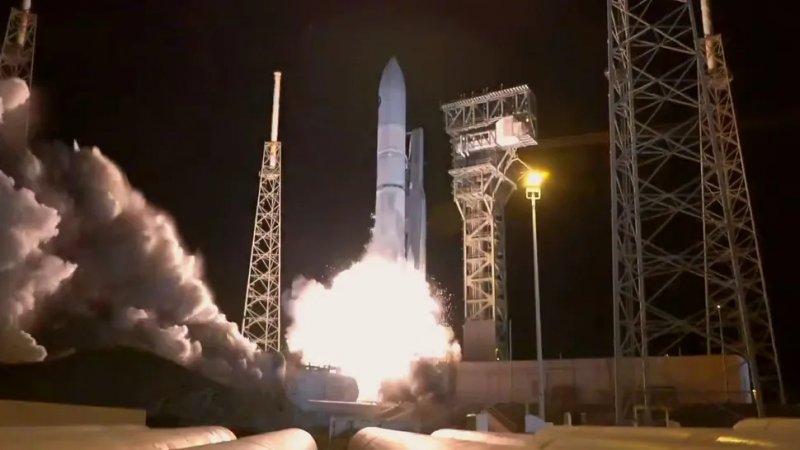
A Vulcan Centaur rocket successfully launched a pair of space surveillance satellites for the United States Space Force early Thursday morning.
The rocket lifted off at 4:22 a.m. EST (0922 GMT) from Cape Canaveral Space Force Station in Florida, beginning the USSF-87 mission, News.Az reports, citing Space.com.
The flight carried two spacecraft for the Geosynchronous Space Situational Awareness Program (GSSAP), a U.S. military reconnaissance system designed to monitor activity in high Earth orbit.
RECOMMENDED STORIES
The two new satellites join six previously launched GSSAP spacecraft, deployed in missions in July 2014, August 2016 and January 2022. Built by Northrop Grumman, the satellites operate in geostationary orbit (GEO), approximately 22,236 miles (35,785 kilometers) above Earth.
At that altitude, satellites orbit at the same speed as Earth’s rotation, allowing them to remain fixed over a specific region. GEO is widely used for communications, weather monitoring and reconnaissance missions.
According to Space Force officials, GSSAP functions as a dedicated sensor within the Space Surveillance Network, providing what they describe as “neighborhood watch” capabilities in GEO. The system enhances safety by tracking satellite positions and warning operators if objects approach too closely or pose collision risks in the increasingly crowded orbital zone.
The USSF-87 mission also carried research and development payloads aimed at improving the precision of orbital maneuvers and strengthening the resilience of U.S. assets operating in GEO.
USSF-87 marks the fourth mission for the 202-foot-tall Vulcan Centaur, developed by United Launch Alliance as a replacement for its Atlas V rocket.
Vulcan made its debut in January 2024, launching Astrobotic’s Peregrine lunar lander. Although the rocket performed successfully, the spacecraft later suffered an anomaly and failed to reach the moon. Subsequent missions in October 2024 and August 2025 demonstrated the vehicle’s capabilities, with the latter flight delivering an experimental navigation satellite to GEO in its first national security mission.
The August 2025 launch used the VC4S configuration — a variant equipped with four solid rocket boosters. The same configuration was used for USSF-87. The Vulcan can be fitted with up to six boosters depending on mission requirements.
Following successful flights and resolution of earlier issues, the U.S. Space Force certified Vulcan Centaur for national security launches. It joins SpaceX as one of two providers authorized to launch U.S. military and intelligence satellites.
According to United Launch Alliance, Vulcan Centaur has already been assigned more than two dozen national security missions. The rocket is capable of launching from both Cape Canaveral in Florida and Vandenberg Space Force Base in California.
By Nijat Babayev


Similar news