What happened in the US-Iran war overnight? Everything you need to know


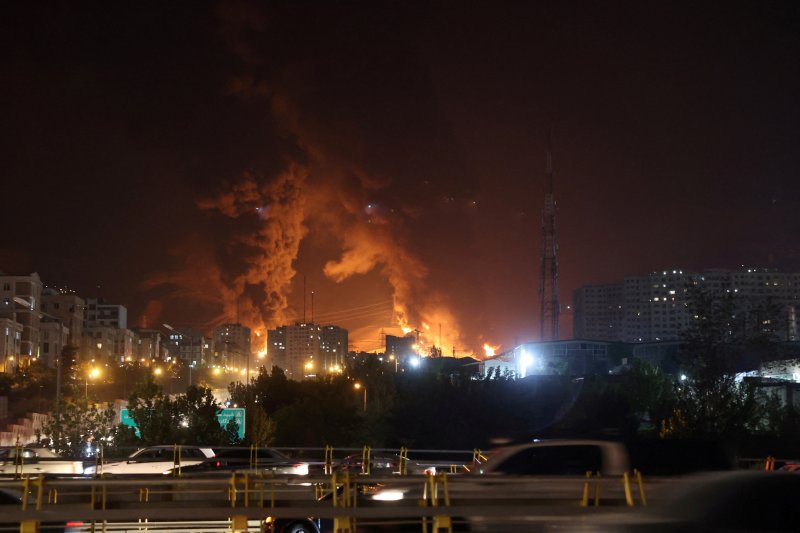
The latest military confrontation between the United States and Iran unfolded during the night of June 10 and the early hours of June 11, marking one of the most dangerous escalations between the two countries since the outbreak of the current regional conflict.
The crisis began when U.S. Defense Secretary Pete Hegseth announced that American forces would strike Iranian military targets. Speaking from U.S. Central Command, Hegseth said the United States would hit Iran "hard" and target facilities that could threaten American forces and freedom of navigation in the Gulf.
RECOMMENDED STORIES
Shortly afterward, U.S. Central Command confirmed that military operations had begun. Washington described the attacks as "self-defense strikes" and said they were intended to neutralize Iranian military capabilities that posed a direct threat to U.S. personnel and international commercial shipping.
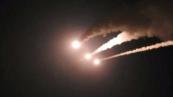
The strikes triggered an immediate response from Iran, leading to several hours of military activity across the Gulf region, missile alerts, reported naval clashes, and competing claims over control of the Strait of Hormuz.
Which Iranian locations were reportedly targeted?
As the U.S. operation unfolded, Iranian media reported explosions and military activity in several locations across southern Iran and along the Persian Gulf coast.
Iranian news agencies reported explosions in Sirik and Minab, while air-defense systems were activated in western Tehran. Reports also emerged of explosions and projectile impacts in Qeshm and Hengam islands, two strategically important islands near the Strait of Hormuz.
Additional explosions were reported near Bandar Abbas, one of Iran's most important naval and military hubs. Iranian media also reported blasts in the port city of Kangan.
Several reports suggested that some of the attacks targeted military infrastructure, air-defense systems, communications networks, and surveillance facilities. However, Iranian authorities did not immediately provide a detailed assessment of the damage.
The widespread nature of the reported strikes indicated that the operation extended beyond a single target and was designed to affect multiple elements of Iran's military command-and-control network.
Why did the United States launch the strikes?
According to U.S. Central Command, the strikes were aimed at Iranian military surveillance capabilities, communications systems, and air-defense sites.
American officials argued that these facilities posed a threat to U.S. military forces operating in the region as well as international commercial shipping passing through Gulf waters.
Washington described the attacks as defensive measures rather than the beginning of a broader military campaign. U.S. military statements emphasized that the objective was to reduce threats against American personnel and protect freedom of navigation in one of the world's most important maritime corridors.
The Biden administration's successor under President Donald Trump has repeatedly warned that any attack on U.S. forces or attempts to disrupt international shipping would trigger a military response. The June 10-11 strikes represented the most significant implementation of that policy in recent weeks.
How did Iran react to the attacks?
Iran responded with a combination of military action, warnings, and political messaging.
Before the strikes began, Iranian military sources warned through state-affiliated media that any American attack would be met with a heavy response. Officials stated that Iran's armed forces were fully prepared and that new U.S. interests would become targets if Washington launched military operations.
After the American attacks started, Iranian media reported clashes between Iranian and U.S. forces at sea in the Gulf. Tehran also increased military activity around key strategic locations, particularly near the Strait of Hormuz.
Iranian officials portrayed the U.S. operation as an act of aggression and vowed that the country would defend its sovereignty and national interests.
The Iranian response appeared designed to demonstrate that Tehran retained the capability to retaliate despite being under direct military pressure.
What happened in the Strait of Hormuz?
One of the most dramatic developments occurred when Iran's top military command announced a complete closure of the Strait of Hormuz.
Iran declared that all vessels, including oil tankers and commercial ships, would be prohibited from passing through the strategic waterway. Officials warned that any vessel attempting to transit the strait could be targeted.
The announcement immediately raised concerns about global energy markets because approximately one-fifth of the world's seaborne oil trade normally passes through the strait.
Shortly after the closure announcement, Iranian media reported that two vessels described as "violating ships" had been struck while attempting to navigate the waterway.
However, the United States disputed Iran's claims. U.S. Central Command stated that the Strait of Hormuz had not been closed and remained open to maritime traffic. American officials also denied reports that U.S. naval vessels had been hit.
The conflicting statements created uncertainty about the actual security situation in the Gulf and raised fears of a wider maritime confrontation.
What happened in Bahrain?
Another major escalation occurred when Iranian state media reported that Iran had targeted the headquarters of the U.S. Fifth Fleet in Bahrain.
The reports emerged shortly after American strikes against Iran were confirmed.
Not long afterward, Bahrain's Interior Ministry announced that warning sirens were sounding in the country. The activation of the warning system heightened concerns that the conflict could expand beyond direct U.S.-Iran exchanges and involve additional countries hosting American military facilities.
The U.S. Fifth Fleet, headquartered in Bahrain, is one of Washington's most important military assets in the Middle East and oversees naval operations across the Persian Gulf, Red Sea, Arabian Sea, and surrounding waters.
At the time of reporting, neither side had provided detailed information regarding potential damage or casualties associated with the reported attack.
What did Donald Trump say?
During the crisis, President Donald Trump made several notable statements regarding the ongoing military confrontation.
In an interview with Fox News, Trump said he had spoken directly with Iranian officials and claimed that they had asked him to stop the U.S. bombing campaign.
Trump also stated that American fighter aircraft were operating over Iranian territory and suggested that the current phase of military operations could end shortly.
However, he stressed that the option for additional military action remained available if necessary.
His comments appeared aimed at signaling both military strength and openness to de-escalation, suggesting that Washington wanted to maintain pressure on Tehran while avoiding a broader regional war.
How did Iran respond to Trump's claims?
Iranian state media quickly rejected Trump's assertions regarding direct communication between Washington and Tehran.
A senior Iranian official cited by state media denied that any such contact had taken place and accused Trump of making false statements.
According to the official, the claims were intended to create the impression that Iran was seeking a way out of the confrontation.
The contradictory narratives highlighted the information war accompanying the military conflict. While Washington portrayed itself as being in a position of strength, Tehran sought to demonstrate that it was not negotiating under pressure and remained committed to resisting what it described as American aggression.
How did markets react?
Financial markets reacted negatively as news of the military escalation spread.
Investors became increasingly concerned that a wider conflict could disrupt oil supplies, international trade routes, and economic stability throughout the Middle East.
Major U.S. stock indexes recorded significant losses. The S&P 500 fell more than 1.6%, while the Nasdaq dropped nearly 2%. The Dow Jones Industrial Average also declined sharply.
Market participants were particularly focused on developments in the Strait of Hormuz. Any prolonged disruption to shipping in the area could have significant consequences for global energy markets and inflation.
The market reaction reflected growing concerns that the confrontation between Washington and Tehran could evolve into a broader regional crisis.
What happens next?
As of the morning of June 11, the situation remained highly volatile.
Both countries continued to issue warnings while keeping military forces on high alert. The United States maintained that its actions were defensive, while Iran insisted that it would continue responding to any attack on its territory or interests.
The key questions facing policymakers and military planners are whether the current exchange will remain limited or develop into a broader regional conflict involving Gulf states, maritime shipping routes, and other armed actors aligned with either side.
With military operations still ongoing and both sides claiming success, the risk of further escalation remains significant. Diplomatic efforts, if they occur, will likely focus on preventing additional attacks and avoiding a conflict that could destabilize the entire Middle East.
By Faig Mahmudov


Similar news