What has Amnesty International accused Israel of?


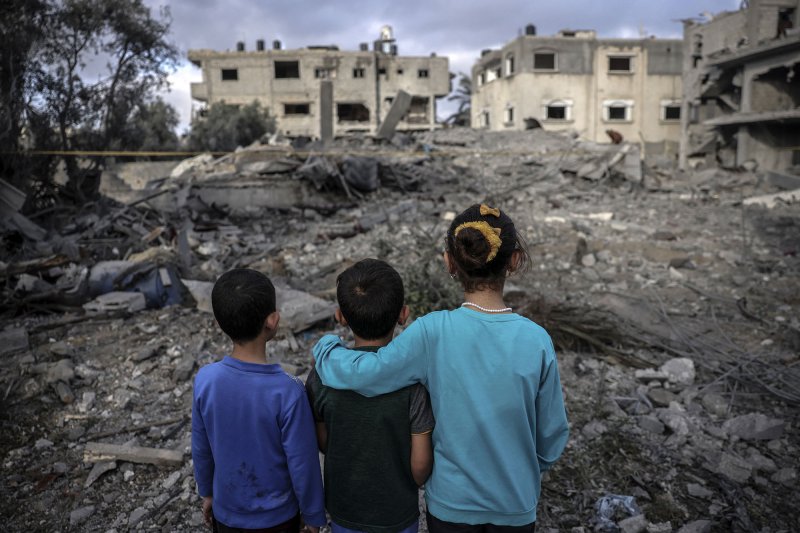
Amnesty International has accused Israel of carrying out what it describes as an "ethnic cleansing" campaign against Palestinian Bedouin communities in the occupied West Bank.
The allegation is among the most serious accusations that can be levelled against a state under international law and has reignited debate over Israeli settlement expansion, forced displacement, land rights and the future of Palestinian communities living in Area C of the West Bank, News.Az reports.
RECOMMENDED STORIES
Israel rejects accusations of ethnic cleansing and argues that its policies are based on legal, security and planning considerations. The dispute reflects broader disagreements over the Israeli-Palestinian conflict, international law and competing claims to land.
Here is a detailed look at the controversy.
What has Amnesty International accused Israel of?
Amnesty International alleges that Israeli authorities are systematically forcing Palestinian Bedouin communities from their ancestral lands in the occupied West Bank through a combination of home demolitions, restrictions on construction, denial of basic services, settlement expansion and settler violence.
According to the organization, these measures are creating conditions that leave many families with little choice but to abandon their homes and move elsewhere.
Amnesty argues that the displacement is not occurring through a single military operation but through a prolonged process designed to make life increasingly difficult for Bedouin communities.
The organization claims that the cumulative effect of these policies amounts to a campaign of forced transfer that could constitute ethnic cleansing under international law.
The accusation is particularly significant because ethnic cleansing is widely understood as the deliberate removal of an ethnic or national group from a specific territory through coercive means.
What is ethnic cleansing?
The term "ethnic cleansing" emerged during the conflicts in the former Yugoslavia in the 1990s and generally refers to efforts to remove a particular ethnic, religious or national group from a territory.
Although ethnic cleansing is not formally defined as a separate crime under international law, many actions associated with it—including forced displacement, persecution and unlawful transfer of populations—can constitute war crimes or crimes against humanity.
The United Nations has described ethnic cleansing as rendering an area ethnically homogeneous through force or intimidation.
Human rights organizations use the term when they believe authorities are deliberately seeking to alter the demographic composition of a region.
Israel strongly rejects such characterizations and disputes the application of the term to its policies in the West Bank.
Who are the Bedouins?
Bedouins are traditionally nomadic Arab communities that have lived across parts of the Middle East and North Africa for centuries.
Many Palestinian Bedouin groups living in the West Bank trace their origins to the Negev Desert, from where they were displaced during the 1948 Arab-Israeli war.
Following their displacement, many settled in areas east of Jerusalem and throughout parts of the Jordan Valley.
Historically, Bedouins relied on herding livestock and moving seasonally between grazing areas. Over time, many communities became semi-settled or fully settled while maintaining aspects of their traditional lifestyle.
Today, Bedouin communities in the West Bank often live in small villages, encampments and rural settlements that depend heavily on access to grazing land and water resources.
Where do these communities live?
Most of the affected communities are located in Area C of the West Bank.
Under the Oslo Accords, the West Bank was divided into Areas A, B and C.
Area C remains under full Israeli civil and military control and constitutes roughly 60 percent of the territory.
Many Bedouin communities live in strategically important regions between Israeli settlements, military zones and infrastructure corridors.
These areas are also central to competing visions for the future political geography of the West Bank.
Because Area C contains most of the West Bank's open land and natural resources, it has become a focal point in disputes over settlements, development and territorial control.
Why are Bedouin communities particularly vulnerable?
Several factors make Bedouin communities especially vulnerable to displacement.
Many villages lack formal recognition under Israeli planning regulations. As a result, homes, schools, animal shelters and infrastructure are frequently classified as unauthorized structures.
Obtaining construction permits is often difficult, according to human rights organizations and international observers.
Limited access to electricity, water networks, healthcare and education services further complicates daily life.
Bedouin communities also depend heavily on land for livestock grazing. Restrictions on movement or access to pastureland can threaten their economic survival.
Because of these challenges, even relatively small changes in policy or land access can have significant consequences for community stability.
What specific actions are drawing criticism?
Human rights groups have highlighted several policies and practices.
These include demolition orders against homes and structures, restrictions on construction, evictions linked to military training zones, confiscation of property and alleged failures to protect communities from attacks by extremist settlers.
Organizations such as Amnesty International argue that these measures collectively create pressure that encourages displacement.
Critics contend that even when actions are presented as administrative or legal measures, their cumulative impact is to reduce the viability of Palestinian communities in certain areas.
Israeli authorities argue that enforcement actions are based on planning laws and security requirements rather than ethnic or demographic objectives.
What role do Israeli settlements play?
Settlement expansion is at the center of the dispute.
Israeli settlements are communities established by Israeli citizens in territory captured by Israel during the 1967 war.
Much of the international community considers the settlements illegal under international law, although Israel disputes this interpretation.
Human rights organizations argue that settlement growth often comes at the expense of nearby Palestinian communities.
They claim that expanding settlements, roads and security infrastructure reduce the land available to Bedouin populations and contribute to displacement pressures.
Israeli officials generally maintain that settlements are lawful and that disputes over land ownership and development should be resolved through legal processes and negotiations.
Why is the area around Jerusalem particularly important?
Many of the communities highlighted by rights organizations are located east of Jerusalem.
This area is strategically significant because it connects different parts of the West Bank and contains several major Israeli settlements.
Critics argue that continued settlement expansion could make the creation of a contiguous Palestinian state more difficult.
As a result, disputes over Bedouin communities in this region are often viewed through the broader lens of the Israeli-Palestinian peace process.
International diplomats frequently monitor developments in these areas because of their potential implications for future negotiations.
What does Israel say?
Israel rejects allegations of ethnic cleansing.
Israeli officials argue that actions taken in the West Bank are based on legal planning frameworks, security needs and property regulations.
Authorities maintain that structures built without permits may be subject to demolition regardless of the ethnicity of their occupants.
Israel also argues that security considerations remain paramount given the long history of conflict, violence and militant activity in the region.
Israeli governments have consistently denied that there is a policy aimed at removing Palestinians from the West Bank based on ethnicity or nationality.
Officials often accuse critics of misrepresenting complex legal and security issues.
How do human rights groups respond?
Human rights organizations argue that focusing solely on formal legal procedures overlooks the broader reality on the ground.
They contend that the planning system itself is discriminatory because Palestinian communities face significant obstacles when seeking permits while settlements continue to expand.
According to these groups, displacement does not need to occur through direct expulsions to qualify as forced transfer.
If authorities create conditions that leave residents with no realistic option but to leave, critics argue that the result can still amount to unlawful displacement.
This disagreement over interpretation lies at the heart of the current debate.
What is the significance of Area C?
Area C has become one of the most contested parts of the West Bank.
It contains agricultural land, water resources, transportation routes and strategic terrain.
Israeli settlements are concentrated there, and many Palestinian rural communities depend on it for their livelihoods.
Control over Area C is widely viewed as critical to determining the future shape of any potential Israeli-Palestinian agreement.
Because of its importance, disputes involving Bedouin communities often carry implications far beyond the affected villages themselves.
Many observers see these local conflicts as part of a broader struggle over territory and sovereignty.
How does international law view forced displacement?
International humanitarian law places strict limits on the forced transfer of civilian populations in occupied territories.
The Fourth Geneva Convention generally prohibits an occupying power from forcibly transferring protected persons unless specific security or military conditions apply.
International courts and human rights bodies have repeatedly examined questions related to displacement, demolitions and settlement activity in the occupied Palestinian territories.
Legal experts often disagree on the application of particular provisions, but forced displacement remains one of the most closely scrutinized aspects of the conflict.
This is why allegations involving Bedouin communities attract significant international attention.
Why is this issue attracting renewed attention now?
The issue has gained prominence amid broader international scrutiny of developments in the West Bank.
Rising tensions, increased settlement activity, reports of violence and growing concerns about humanitarian conditions have intensified focus on Palestinian communities living in vulnerable areas.
Human rights organizations argue that displacement pressures have increased in recent years, making the situation more urgent.
At the same time, governments and international institutions are paying closer attention to developments that could affect regional stability and future peace efforts.
As a result, allegations involving Bedouin communities are increasingly being discussed in international diplomatic forums.
Why does the debate extend beyond the Bedouins themselves?
The controversy touches on some of the most fundamental questions in the Israeli-Palestinian conflict.
These include land ownership, occupation, settlements, statehood, security, sovereignty and human rights.
For Palestinians and their supporters, the treatment of Bedouin communities is viewed as evidence of broader structural inequalities within the occupation system.
For many Israelis, discussions about these communities cannot be separated from security concerns, legal disputes and the historical complexity of competing territorial claims.
The result is a debate that extends far beyond individual villages and reflects deeper disagreements about the future of the region.
What are the broader implications?
The allegations could have diplomatic, legal and political consequences.
Human rights reports often influence discussions within international organizations, including the United Nations and the European Union.
They can also shape debates about accountability, sanctions, aid policies and international legal proceedings.
At the same time, such accusations frequently deepen political tensions because they involve highly sensitive questions of legitimacy and historical responsibility.
Whether or not governments accept Amnesty's conclusions, the report is likely to intensify scrutiny of Israeli policies in the West Bank.
What happens next?
The future of Bedouin communities in the West Bank will depend on several factors, including Israeli government policies, court decisions, international diplomatic pressure and developments in the broader Israeli-Palestinian conflict.
Human rights groups are expected to continue documenting alleged displacement efforts, while Israeli authorities are likely to maintain that their actions are lawful and necessary.
The debate is therefore unlikely to disappear soon.
Instead, it will remain part of a wider international discussion about occupation, settlements, human rights and the prospects for a lasting political solution between Israelis and Palestinians.
Ultimately, the controversy over Bedouin communities reflects one of the central questions of the conflict itself: who controls the land, under what legal framework, and what future awaits the people living on it.


Similar news