Why is Sudan’s civil war threatening both human lives and the country’s religious heritage?


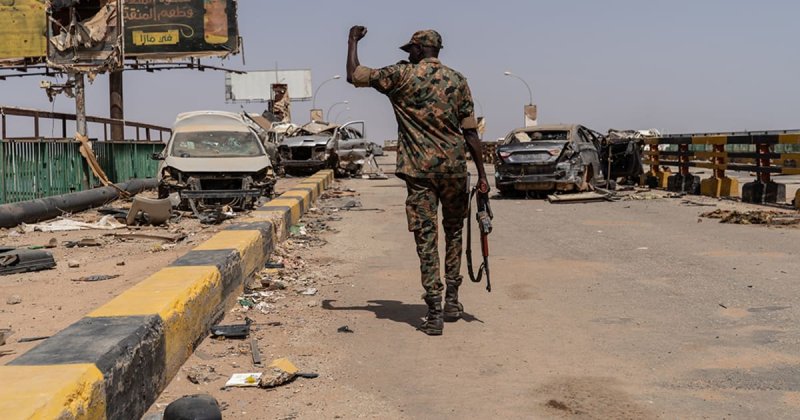
Sudan’s civil war is continuing to devastate the country’s fragile healthcare system and religious institutions, deepening what international organizations increasingly describe as one of the world’s worst humanitarian crises.
Hospitals, churches, clinics, schools, and civilian infrastructure across large parts of the country have either been damaged, forced to close, or transformed into shelters for displaced civilians as fighting between rival military factions escalates.
RECOMMENDED STORIES
The war, which erupted in April 2023 between the Sudanese Armed Forces and the paramilitary Rapid Support Forces, has already killed thousands of people and displaced millions. But beyond the direct violence, humanitarian agencies warn that the destruction of hospitals and religious institutions is accelerating the collapse of Sudan’s social fabric and placing civilians at even greater risk.
Doctors, aid workers, and church leaders say healthcare facilities are running out of medicine, electricity, fuel, medical staff, and basic equipment. At the same time churches and religious compounds that once provided refuge, education, and humanitarian support are increasingly being damaged by shelling, occupied by armed groups, or overwhelmed by displaced families fleeing violence.
The conflict has transformed entire urban areas into zones of destruction, particularly in Khartoum, Darfur, and other regions where heavy fighting continues.
For millions of Sudanese civilians, the collapse of hospitals and churches symbolizes not only a humanitarian emergency, but also the breakdown of institutions that once served as lifelines during previous periods of instability.
How did Sudan’s civil war begin?
The current conflict began after tensions between Sudan’s military leadership and the paramilitary Rapid Support Forces escalated into open warfare.
The Sudanese Armed Forces, led by General Abdel Fattah al Burhan, and the Rapid Support Forces, commanded by Mohamed Hamdan Dagalo, also known as Hemedti, had previously cooperated following the 2021 military coup that derailed Sudan’s democratic transition.
However, disagreements over power sharing, military integration, political control, and the future structure of Sudan’s security forces eventually triggered armed confrontation.
In April 2023 heavy fighting erupted in Khartoum and quickly spread to other parts of the country.
What initially appeared to be a political and military power struggle soon evolved into a nationwide humanitarian catastrophe involving air strikes, artillery bombardments, ethnic violence, mass displacement, and widespread destruction of civilian infrastructure.
The conflict has since become increasingly fragmented and difficult to contain.
Why are hospitals being devastated by the war?
Hospitals have become some of the most severely affected institutions in Sudan’s conflict.
There are several reasons for this.
First, many hospitals are located in densely populated urban areas where intense fighting has occurred. Air strikes, shelling, gun battles, and explosions have damaged or destroyed numerous medical facilities.
Second, armed groups have reportedly occupied some hospitals or used nearby areas for military operations, exposing healthcare facilities to attacks and crossfire.
Third, healthcare systems require stable electricity, water supplies, transportation, communications, and staffing. Sudan’s war has disrupted all of these essential components.
Doctors and medical workers have fled dangerous areas or become trapped themselves. Medical supply chains have collapsed in many regions. Fuel shortages have crippled hospital generators and ambulance operations.
In some areas hospitals have been forced to shut down completely because they no longer possess medicines, surgical equipment, oxygen, or staff.
Aid organizations warn that preventable illnesses and untreated injuries are now killing civilians in addition to direct war violence.
How serious is Sudan’s healthcare collapse?
The collapse of Sudan’s healthcare system is considered catastrophic by humanitarian agencies.
Large numbers of hospitals and clinics are reportedly no longer functioning, especially in conflict affected areas.
The consequences are severe:
wounded civilians cannot access emergency treatment,
pregnant women struggle to receive medical care,
children miss vaccinations,
patients with chronic diseases lose access to medication,
and outbreaks of infectious diseases become harder to control.
Sudan has also faced growing risks of:
cholera outbreaks,
malnutrition,
dengue fever,
measles,
and waterborne diseases.
Healthcare workers say many facilities now operate under impossible conditions with shortages of nearly everything needed for medical treatment.
In some cases doctors reportedly perform surgeries without reliable electricity or sufficient anesthesia.
International aid agencies warn that the collapse of healthcare infrastructure could produce long term public health consequences lasting years beyond the conflict itself.
Why are churches being affected so heavily?
Churches in Sudan have historically served multiple roles beyond religious worship.
Many churches function as:
community centers,
schools,
aid distribution points,
refuges for civilians,
and support networks for vulnerable populations.
As fighting intensified, churches increasingly became shelters for displaced families escaping violence.
However, the conflict has also exposed religious institutions to serious risks.
Some churches have reportedly been damaged by shelling or caught in urban combat zones. Others have been looted, occupied, or forced to suspend operations.
Religious leaders have expressed concern not only about physical destruction but also about the growing humanitarian pressures facing church communities.
Many churches now shelter displaced civilians despite lacking sufficient food, medicine, sanitation, or financial resources.
For Sudan’s Christian minority communities, the destruction or disruption of churches carries both humanitarian and symbolic significance.
How large is Sudan’s displacement crisis?
Sudan’s displacement crisis has become one of the largest in the world.
Millions of people have been forced to flee their homes since the war began.
Some civilians remain displaced inside Sudan while others have crossed into neighboring countries including:
Chad,
South Sudan,
Egypt,
Ethiopia,
and the Central African Republic.
Displaced families often live in overcrowded shelters, schools, religious compounds, unfinished buildings, or temporary camps.
Humanitarian agencies warn that many displaced people lack:
clean water,
food,
healthcare,
education,
and protection from violence.
The collapse of hospitals and churches has worsened conditions for displaced civilians because those institutions traditionally provided emergency support and community assistance.
What is happening in Khartoum?
Khartoum, Sudan’s capital, has become one of the central battlegrounds of the war.
Large sections of the city have experienced:
artillery bombardments,
street fighting,
air strikes,
looting,
and infrastructure destruction.
Hospitals in Khartoum have faced severe damage and repeated interruptions.
Entire neighborhoods have reportedly lost electricity and water access for extended periods.
Many civilians remain trapped in dangerous conditions with limited ability to evacuate.
Churches, schools, markets, and residential buildings have all been affected by the urban warfare.
The destruction of Khartoum has shocked many Sudanese because the capital was historically the country’s political, educational, and economic center.
The war has transformed major urban areas into zones of humanitarian collapse.
What is happening in Darfur?
Darfur has experienced some of the war’s worst violence.
The region already carried deep scars from earlier conflicts and accusations of ethnic cleansing in the 2000s.
Since the current war began, reports of:
mass killings,
ethnic targeting,
village burnings,
sexual violence,
and humanitarian abuses
have reemerged in several parts of Darfur.
Hospitals and clinics in the region have faced severe shortages and attacks.
Aid access remains extremely difficult due to insecurity and damaged infrastructure.
Human rights organizations have warned that ethnic violence in Darfur risks escalating further if armed groups continue operating with impunity.
The humanitarian crisis in Darfur is particularly alarming because many communities were already vulnerable before the current conflict erupted.
Why are aid agencies struggling to respond?
Humanitarian organizations face enormous operational challenges in Sudan.
These include:
active combat zones,
road insecurity,
bureaucratic restrictions,
fuel shortages,
damaged infrastructure,
communications disruptions,
and attacks on aid workers.
Convoys transporting food or medical supplies sometimes struggle to reach conflict affected areas safely.
Aid warehouses have reportedly been looted in some regions.
The scale of displacement and destruction has also overwhelmed available resources.
International agencies warn that funding shortages are limiting humanitarian operations even as civilian needs continue growing.
The destruction of hospitals further complicates relief efforts because medical infrastructure is essential for emergency response operations.
What role do churches play in humanitarian relief?
Churches often become critical humanitarian actors during crises.
Religious institutions may provide:
food distribution,
temporary shelter,
psychological support,
education,
medical assistance,
and protection for vulnerable families.
In Sudan many churches have reportedly opened their doors to displaced civilians despite facing severe shortages themselves.
Religious leaders say church compounds have become overcrowded with families seeking refuge from violence.
Some churches have coordinated with aid organizations to deliver emergency assistance.
However, the growing scale of the crisis has stretched these institutions far beyond their capacities.
The destruction or disruption of churches therefore affects not only religious communities but also broader humanitarian support networks.
Why is Sudan’s war attracting global concern?
International organizations increasingly describe Sudan as one of the world’s most severe humanitarian emergencies.
Several factors contribute to global concern:
mass displacement,
famine risks,
healthcare collapse,
ethnic violence,
regional instability,
and widespread civilian suffering.
Sudan occupies a strategically important position in Northeast Africa near the Red Sea and several conflict affected regions.
The war risks destabilizing neighboring countries already struggling with economic and political challenges.
There are also fears that prolonged instability could increase:
arms trafficking,
cross border militancy,
human trafficking,
and refugee pressures across the region.
At the same time the humanitarian disaster has raised concerns that international attention remains insufficient compared with the scale of the crisis.
Could famine become a larger threat?
Yes.
Aid agencies have repeatedly warned about growing famine risks in Sudan.
The war has disrupted:
agriculture,
food supply chains,
markets,
transportation,
and humanitarian distribution networks.
Many civilians can no longer access reliable food supplies.
Malnutrition rates among children have reportedly risen sharply in some areas.
The destruction of healthcare infrastructure further worsens famine risks because malnourished populations become more vulnerable to disease outbreaks and untreated illnesses.
Humanitarian experts warn that prolonged conflict combined with restricted aid access could produce catastrophic food insecurity conditions.
Why are civilians bearing the brunt of the war?
Modern urban warfare often affects civilian populations heavily, especially when fighting occurs in densely populated areas.
In Sudan both rival factions have been accused of actions contributing to civilian suffering.
Civilians face dangers including:
shelling,
air strikes,
crossfire,
looting,
sexual violence,
forced displacement,
and shortages of essential supplies.
The collapse of hospitals means many injured civilians cannot receive treatment.
The damage to churches and schools removes traditional community safe spaces.
Humanitarian organizations say civilians increasingly feel trapped between armed factions with limited protection.
Could Sudan’s institutions recover after the war?
Recovery will likely require enormous time and resources.
Rebuilding hospitals alone could take years given the scale of destruction and infrastructure collapse.
Sudan would also need:
medical personnel training,
medicine supplies,
equipment replacement,
electricity restoration,
and financial investment.
Religious institutions and schools would similarly require reconstruction and community support.
The longer the war continues, the more difficult recovery may become because social systems deteriorate further over time.
Experts warn that prolonged conflict risks creating long term generational damage affecting:
education,
public health,
economic stability,
and social cohesion.
What broader lessons emerge from Sudan’s crisis?
Sudan’s civil war illustrates how quickly political and military power struggles can evolve into nationwide humanitarian disasters.
The devastation of hospitals and churches demonstrates that modern conflicts increasingly destroy not only military targets but also the civilian institutions essential for social survival.
Healthcare systems, religious centers, schools, and humanitarian networks often become casualties of prolonged warfare.
The Sudan crisis also highlights the vulnerability of fragile states undergoing political transitions.
Without stable institutions and negotiated political frameworks, security rivalries can escalate rapidly into large scale violence.
For many observers, the destruction unfolding across Sudan represents more than a national tragedy. It reflects broader global concerns about state collapse, humanitarian protection, and the failure of international diplomacy to prevent escalating wars.
The collapse of hospitals and churches has therefore become symbolic of Sudan’s wider unraveling.
For millions of civilians trapped by conflict, the disappearance of medical care, community support, and places of refuge means the war is affecting nearly every aspect of daily life.
As fighting continues, humanitarian organizations warn that Sudan risks sliding even deeper into catastrophe unless violence decreases and large scale international relief efforts expand dramatically.
By Faig Mahmudov


Similar news