How did Maja Chwalinska make French Open history?


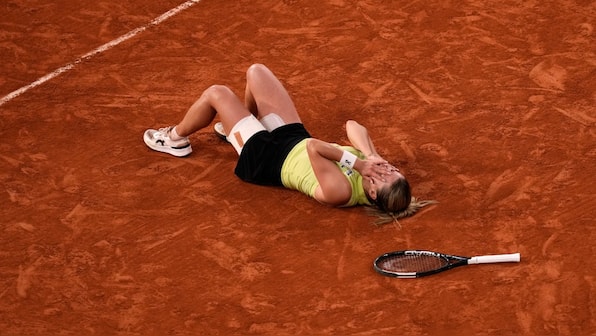
Maja Chwalinska is a 24 year old Polish tennis player who entered the French Open ranked No. 114 in the world. While respected within tennis circles for her talent and perseverance, she arrived in Paris far from the list of title favorites.
Before this year's tournament, Chwalinska had never competed in the French Open main draw despite several attempts. She had previously failed to come through qualifying on three occasions, making her breakthrough in Paris even more remarkable, News.az reports.
Her run to the final has transformed her from a relatively little known player into one of the biggest stories in world tennis.
What history did Chwalinska make at Roland Garros?
Chwalinska became the first qualifier in the professional era to reach the women's singles final at the French Open.
The achievement is particularly significant because players who come through qualifying must win multiple matches before even entering the main tournament draw.
Her journey required her to win nine matches across three weeks, a feat that highlights both her consistency and physical endurance.
By reaching the final, she achieved something no woman had previously accomplished at Roland Garros since the start of the Open Era in 1968.
What is a qualifier in tennis?
A qualifier is a player who does not automatically gain entry into a tournament's main draw based on ranking.
Instead, they must compete in a separate qualifying competition before the tournament begins.
Players typically need to win several matches to secure one of the limited places available in the main draw.
Qualifying events are often extremely competitive because many talented players are fighting for only a handful of spots.
For this reason, qualifiers usually enter tournaments having already played more matches than their higher ranked opponents.
Why is Chwalinska's achievement so rare?
Grand Slam tournaments are designed in a way that makes deep runs by qualifiers extremely difficult.
Qualifiers must overcome several disadvantages:
-
They play more matches than seeded players.
-
They often face fatigue by the later rounds.
-
They generally have lower rankings.
-
They frequently encounter top opponents early in the tournament.
-
They receive less attention and fewer expectations.
For a qualifier to reach a Grand Slam final requires exceptional consistency, fitness and mental strength.
That is why Chwalinska's run is being viewed as one of the most remarkable stories of the tournament.
Has any woman achieved something similar before?
Yes.
Before Chwalinska, the most famous example was Emma Raducanu's stunning victory at the 2021 US Open.
Raducanu not only qualified for the tournament but went on to win the title without dropping a set.
Chwalinska is now only the second woman in the Open Era to come through qualifying and reach a Grand Slam singles final.
While Raducanu completed the ultimate fairy tale by lifting the trophy, Chwalinska still has one more match to play before she can accomplish the same feat.
How did Chwalinska reach the final?
Her path to the final required victories in nine consecutive matches.
She first won her qualifying matches to enter the main draw.
Once in the tournament proper, she continued defeating increasingly difficult opponents, demonstrating an ability to adapt to different styles of play.
Her semifinal victory over Russian 25th seed Diana Shnaider was perhaps her most significant win of the tournament.
The match confirmed that her run was not simply the result of favorable circumstances but rather a reflection of high quality tennis.
How did she defeat Diana Shnaider?
Chwalinska defeated Shnaider 7-6 (7/4), 6-4 in straight sets.
The first set proved highly competitive and was ultimately decided in a tie break.
After falling behind 3-1 in the tie break, Chwalinska showed remarkable composure by winning six of the next seven points to claim the set.
In the second set, she maintained her discipline and tactical approach, eventually securing the decisive break of serve before closing out the match with a forehand winner.
The victory showcased her resilience, tactical intelligence and ability to perform under pressure.
Who is Diana Shnaider?
Diana Shnaider is one of the most promising young players on the women's tour.
The Russian entered the tournament as the 25th seed and was considered one of the stronger competitors remaining in the draw.
Known for her powerful baseline game and aggressive shot making, Shnaider represented a difficult challenge for Chwalinska.
Many observers expected her power to prove decisive, but Chwalinska's tactical variety ultimately made the difference.
What made the semifinal so interesting?
The match featured a fascinating contrast in playing styles.
Shnaider relied heavily on power and aggressive groundstrokes.
Chwalinska, by contrast, used:
-
Drop shots.
-
Slice backhands.
-
Variety in pace.
-
Tactical placement.
-
Defensive skills.
-
Court intelligence.
The clash highlighted one of tennis's enduring themes: power versus precision.
Throughout the contest, Chwalinska successfully disrupted her opponent's rhythm and forced her into uncomfortable positions on the court.
What tactical strengths did Chwalinska display?
Several aspects of her game stood out.
She consistently changed the pace of rallies, preventing Shnaider from settling into a rhythm.
Her use of drop shots forced her opponent forward.
Her slice backhand created awkward bounce patterns.
She demonstrated excellent court coverage and patience during long exchanges.
Most importantly, she appeared to understand exactly when to attack and when to defend.
This balance allowed her to neutralize much of Shnaider's power.
How important was mental strength in the victory?
Mental toughness played a crucial role.
At Grand Slam level, the difference between victory and defeat is often psychological as much as technical.
Chwalinska remained calm during key moments, particularly in the first set tie break.
Her ability to stay composed under pressure has become one of the defining characteristics of her tournament run.
After the match, she admitted that while she appears calm externally, intense emotions are often present beneath the surface.
This honesty offered insight into the mental challenges faced by elite athletes.
What did Chwalinska say after the match?
Immediately after her victory, Chwalinska struggled to find words.
She described the experience as "like a dream" and expressed disbelief at what she had achieved.
Her emotional reaction resonated with fans because it reflected the magnitude of the moment.
For a player who had previously failed three times to qualify for Roland Garros, reaching the final represented the realization of a long held ambition.
Her celebration captured both joy and relief.
Why has her story captured so much attention?
Sports fans are often drawn to underdog stories.
Chwalinska's journey contains many elements that make it compelling:
-
She entered as a qualifier.
-
She was ranked outside the top 100.
-
She had previously failed to qualify.
-
She defeated higher ranked opponents.
-
She reached a historic milestone.
-
She displayed humility throughout her run.
Such stories remind audiences that unexpected achievements remain possible even in highly competitive professional sports.
How unusual is it for lower ranked players to reach Grand Slam finals?
It is extremely uncommon.
Grand Slam tournaments generally reward consistency over a two week period.
Higher ranked players usually have greater experience, more refined games and better records against elite opponents.
Although surprises occur every year, reaching a final is far more difficult than winning a single upset.
A player must repeatedly defeat strong opponents while maintaining physical and mental performance.
This makes Chwalinska's achievement particularly impressive.
Who will she face in the final?
Chwalinska will face Russian eighth seed Mirra Andreeva in the championship match.
Andreeva is regarded as one of the brightest young talents in world tennis and entered the tournament among the favorites.
The final will therefore feature two players whose careers have attracted significant attention, though for different reasons.
Andreeva arrived as a highly rated contender, while Chwalinska emerged as the tournament's surprise package.
Who is Mirra Andreeva?
Mirra Andreeva is one of the most exciting young stars in women's tennis.
The Russian has rapidly climbed the rankings thanks to her maturity, athleticism and advanced all court game.
Despite her young age, she has already established herself as a major threat in Grand Slam competition.
Her appearance in the final further reinforces expectations that she could become one of the dominant players of her generation.
What challenges will Chwalinska face in the final?
Andreeva presents a different challenge from Shnaider.
She combines consistency with creativity and possesses fewer obvious weaknesses.
Chwalinska will need to:
-
Maintain her composure.
-
Serve effectively.
-
Extend rallies when necessary.
-
Use variety intelligently.
-
Take advantage of opportunities.
-
Manage the physical demands of another high pressure match.
The final will likely test every aspect of her game.
Could Chwalinska win the title?
Absolutely.
Reaching the final proves she has already defeated numerous strong opponents.
Confidence can be a powerful factor in tennis, and Chwalinska currently possesses significant momentum.
At the same time, Grand Slam finals present unique pressures.
The challenge will be balancing emotion with execution.
If she continues playing with the same tactical discipline and mental strength shown throughout the tournament, she will have a realistic opportunity to win.
What would a title mean for her career?
Winning the French Open would transform her career.
Potential benefits could include:
-
A dramatic rankings rise.
-
Increased sponsorship opportunities.
-
Greater international recognition.
-
Higher tournament seedings.
-
Enhanced confidence.
-
A permanent place in tennis history.
Grand Slam champions often see their careers change almost overnight.
For Chwalinska, the impact would be enormous.
How important is this achievement for Polish tennis?
Poland has enjoyed a golden period in women's tennis in recent years.
The country's success has inspired a new generation of players and increased interest in the sport.
Chwalinska's breakthrough adds another chapter to that story.
Her success demonstrates the depth of talent emerging from Poland and highlights the country's growing influence in international tennis.
Regardless of the final result, her run has already become a significant moment for Polish sport.
What lessons can young athletes learn from her journey?
Chwalinska's story offers several important lessons.
Persistence matters.
She failed to qualify for Roland Garros three times before finally breaking through.
Progress is not always immediate.
Athletic development often involves setbacks and disappointments.
Preparation creates opportunities.
When her chance arrived, she was ready to take advantage of it.
Mental resilience is essential.
Throughout the tournament, she repeatedly handled pressure situations with maturity and composure.
These qualities are valuable not only in sport but in many areas of life.
Why do underdog stories resonate so strongly?
Underdog stories appeal to audiences because they challenge expectations.
They remind people that rankings, reputations and predictions do not always determine outcomes.
Fans often identify with athletes who overcome obstacles because such journeys reflect broader human experiences involving perseverance and ambition.
Chwalinska's run embodies these themes perfectly.
She entered the tournament with limited expectations and now stands one victory away from achieving one of the most remarkable triumphs in Grand Slam history.
The bottom line
Maja Chwalinska's run to the French Open final is one of the most extraordinary stories in recent tennis history. Ranked No. 114 in the world and forced to come through qualifying, the Polish player has won nine consecutive matches to become the first qualifier in the professional era to reach a women's singles final at Roland Garros. Her victory over Diana Shnaider showcased tactical intelligence, composure and determination, while her emotional reaction afterward highlighted the significance of the achievement. Now preparing to face Mirra Andreeva for the title, Chwalinska stands on the verge of completing a journey that has already secured her place in French Open history.
By Faig Mahmudov


Similar news