What the C5/C6 format means for Central Asia-Azerbaijan cooperation


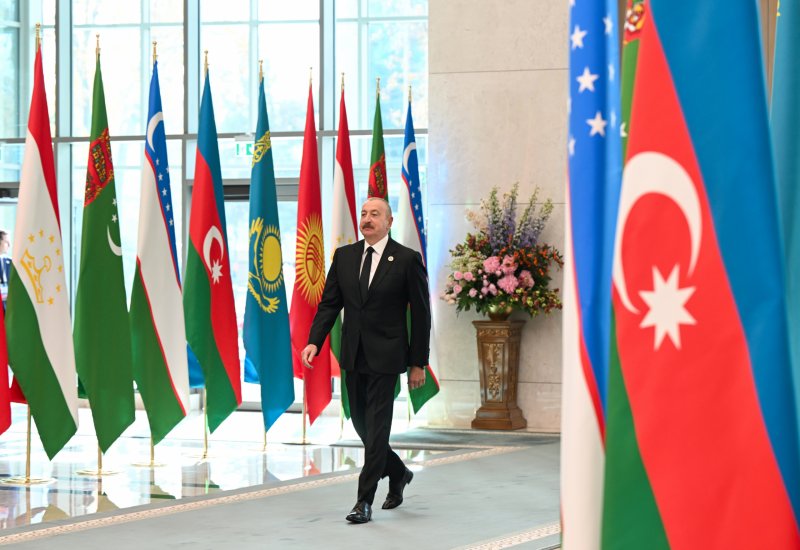
The growing use of the C5/C6 format marks one of the most important geopolitical shifts in Eurasia today. What began as a regional consultation framework among the five Central Asian states has gradually evolved into a broader platform that increasingly includes Azerbaijan as a strategic partner. This transformation reflects changing regional priorities, rising connectivity needs, and the emergence of a new geopolitical map stretching from the Caspian Sea to Europe.
What is the C5/C6 format?
The C5 format refers to cooperation among Kazakhstan, Uzbekistan, Kyrgyzstan, Turkmenistan, and Tajikistan. Initially established for dialogue and regional coordination, the platform has now taken on a more structured and strategic dimension with regular summits, ministerial consultations, and sectoral working groups.
As Azerbaijan’s involvement deepens and its role becomes indispensable in transport, energy, and diplomacy, many analysts describe the emerging structure as C6 – Central Asia’s five plus Azerbaijan. This reflects practical collaboration rather than formal enlargement, but the geopolitical significance is unmistakable.
Why is Azerbaijan considered an integral part of this expanded platform?
Azerbaijan’s inclusion is driven by both geography and geopolitics. While located in the South Caucasus, Azerbaijan shares deep cultural, linguistic, and economic ties with the Turkic core of Central Asia. Historically, Caspian Sea routes connected these regions long before modern borders existed.
In today’s strategic landscape, Azerbaijan offers:
– the shortest and most secure westward route for Central Asian goods
– advanced port and railway infrastructure that Central Asia lacks
– direct access to Türkiye and Europe
– energy corridors that diversify export routes
– a politically stable and economically dynamic partner
In short, Azerbaijan is the gateway that transforms Central Asia’s landlocked geography into global connectivity.
What strategic factors motivated Central Asia to expand cooperation with Azerbaijan?
Central Asian states are navigating a rapidly changing geopolitical environment. Their motivations include:
– the need for diversification away from traditional dependency on Russian transit routes
– opportunities created by Europe’s search for new energy and transport pathways
– China’s repositioning of Belt and Road initiatives
– the global weaponisation of supply chains
– growing pressure to find stable, predictable commercial routes
Azerbaijan, with its modernised transport ecosystem and balanced foreign policy, provides the region with an alternative that strengthens economic resilience and political autonomy.
How does the Middle Corridor influence the rise of C6 cooperation?
The Middle Corridor – running from China through Kazakhstan, across the Caspian Sea to Azerbaijan, then through Georgia and Türkiye to Europe – is the backbone of C6 logic.
Azerbaijan’s contribution to this route is essential:
– Port of Alat serves as the corridor’s logistical engine
– Baku–Tbilisi–Kars railway enables uninterrupted rail access to Türkiye
– modern customs digitalisation reduces transit time and costs
– new energy and fibre-optic projects enhance energy and data connectivity
With freight flows rising every year, the corridor is becoming a viable alternative to northern and southern routes. Simply put, without Azerbaijan, the Middle Corridor would be incomplete and non-competitive.
How does the C6 format reshape regional geopolitics?
The C6 framework strengthens regional agency in a way that did not exist a decade ago. It:
– enhances strategic autonomy from great-power pressure
– supports closer Turkic cooperation under the Organization of Turkic States
– boosts collective negotiation power vis-à-vis the EU, China, and the US
– increases the geopolitical weight of the Caspian Sea as a strategic basin
– encourages joint security and economic coordination
For Central Asia, this creates a more balanced foreign policy environment. For Azerbaijan, it cements its role as the central Eurasian connector.
Which sectors are expected to benefit the most under C6 cooperation?
The main beneficiaries include:
-
Transport and logistics – harmonised tariffs, unified digital systems, and upgraded port capacity.
-
Energy – cooperation in electricity grids, green energy corridors, and potential transit of Central Asian gas.
-
Trade – simplified border procedures, standardised regulations, and increased cargo turnover.
-
Security and cyber cooperation – combating terrorism, extremism, illegal migration, and cyber threats.
-
Education and cultural exchanges – boosting academic mobility and strengthening the Turkic identity.
These domains reflect long-term alignment rather than short-term projects.
How do global actors view the rise of the C6 platform?
– EU sees it as crucial for diversifying away from vulnerable supply chains and Russian-controlled energy routes.
– US considers it complementary to its C5+1 strategy and supportive of regional stability.
– China views C6 positively as long as it enhances Belt and Road efficiency.
– Türkiye strongly encourages the format, as it reinforces the westward connectivity of the Turkic world.
No major actor openly opposes the C6 dynamic, although some monitor it closely due to its increasing influence.
What does the C6 evolution mean for Azerbaijan’s long-term positioning?
Azerbaijan’s integration into the C6 framework transforms the country into:
– a decisive energy and transport hub
– a geopolitical mediator
– a critical link between Europe and Asia
– a regional leader in balancing great-power interests
This strengthens Baku’s international relevance and broadens its economic diplomacy.
Bottom line
The informal shift from C5 to C6 is more than a symbolic enlargement. It reflects a new Eurasian architecture where Central Asia and Azerbaijan coordinate more deeply to secure trade, energy, and geopolitical stability. As global competition intensifies, the C6 format positions Azerbaijan and Central Asia at the heart of the world’s most strategically important transport and energy corridors.


Similar news