What are the expectations from the Donald Trump and Xi Jinping summit?


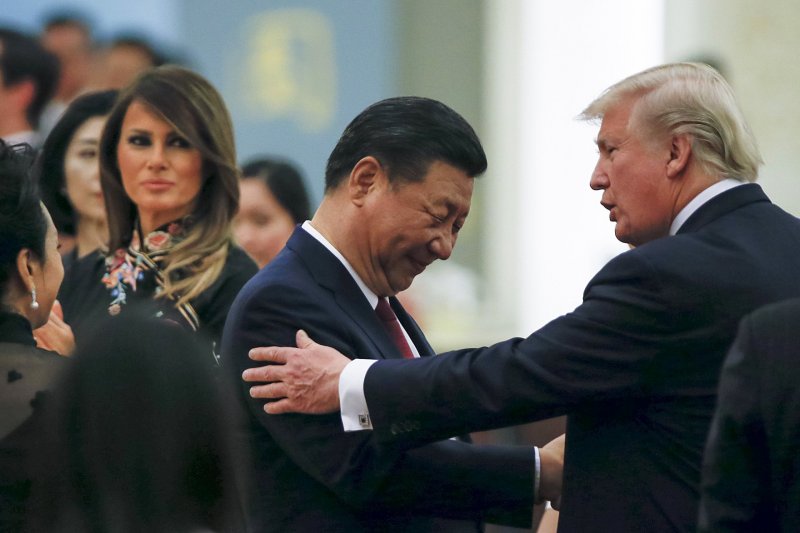
The upcoming summit between U.S. President Donald Trump and Chinese President Xi Jinping is being closely watched around the world because it comes at a time of deep geopolitical tension, economic uncertainty and strategic competition between the world’s two largest economies.
Although expectations for a dramatic breakthrough remain limited, analysts believe the meeting could shape the future direction of global trade, technology competition, supply chains, financial markets and international security.
RECOMMENDED STORIES
The summit is expected to focus on stabilizing relations between Washington and Beijing while addressing a wide range of disputes that have intensified in recent years.
At the same time, both leaders are expected to seek political and economic advantages for their own countries amid rising global instability.
Why is this summit so important?
The United States and China are not only the two biggest economies in the world but also the central powers shaping the global geopolitical order.
Relations between the two countries influence everything from energy prices and trade flows to artificial intelligence, military security, semiconductor production and global financial stability.
Over the last several years, tensions between Washington and Beijing have increased sharply over issues including tariffs, Taiwan, technology restrictions, cybersecurity, military activity in the Indo Pacific region and industrial competition.
The summit therefore represents an attempt to prevent relations from deteriorating further while also protecting critical economic interests on both sides.
Even limited progress could help calm financial markets and reduce uncertainty for multinational corporations operating across both economies.
What economic issues are expected to dominate the talks?
Trade and investment are expected to be at the center of the summit discussions.
Both countries remain economically interconnected despite years of tariffs and strategic rivalry.
American businesses continue relying heavily on Chinese manufacturing capacity, industrial materials and consumer markets. Meanwhile, China still depends on foreign investment, export demand and access to advanced international technologies.
The two leaders are expected to discuss:
- Trade imbalances
- Tariff disputes
- Market access for American companies
- Supply chain security
- Restrictions on technology exports
- Investment regulations
- Industrial cooperation
- Agricultural purchases
Washington is expected to push China to create a more predictable investment environment for American firms operating in the country.
At the same time, Beijing is likely to seek relief from U.S. export restrictions and efforts to limit Chinese access to advanced technologies.
Will technology and artificial intelligence be discussed?
Technology competition is expected to be one of the most sensitive subjects at the summit.
The United States has imposed increasingly strict restrictions on exports of advanced semiconductors, artificial intelligence chips and high performance computing technologies to China.
Washington argues that these technologies could strengthen China’s military and surveillance capabilities.
China, however, views these restrictions as attempts to slow its technological development and weaken its long term economic competitiveness.
Artificial intelligence is now one of the most strategically important sectors in global politics. Both countries are investing heavily in AI systems, quantum computing, biotechnology and advanced semiconductor production.
Discussions may include:
- Semiconductor export controls
- AI regulation
- Data security
- Cybersecurity
- Cloud computing
- Technology supply chains
- Industrial espionage concerns
Although a major agreement is unlikely, both sides may attempt to establish guardrails to prevent technological competition from escalating uncontrollably.
Could the summit affect global supply chains?
Yes. Supply chain security is expected to be one of the summit’s most important themes.
The COVID 19 pandemic, geopolitical tensions and export restrictions exposed how dependent many industries are on Chinese manufacturing and industrial materials.
The United States has increasingly sought to reduce strategic dependence on China in sectors such as semiconductors, batteries, pharmaceuticals and renewable energy technologies.
Meanwhile, China has used export controls on rare minerals and industrial materials as leverage during disputes with Washington.
Business leaders joining the summit reportedly hope the talks will reduce uncertainty and prevent further disruptions in manufacturing and logistics networks.
Industries watching the summit closely include:
- Electric vehicles
- Renewable energy
- Semiconductor manufacturing
- Pharmaceuticals
- Artificial intelligence
- Consumer electronics
- Financial services
What role will Taiwan play in the discussions?
Taiwan is expected to remain one of the most sensitive and dangerous topics at the summit.
China considers Taiwan part of its territory and has repeatedly warned against closer military or political cooperation between Taipei and Washington.
The United States officially recognizes the “One China” policy but continues supporting Taiwan through arms sales and strategic cooperation.
Military tensions around the Taiwan Strait have increased significantly in recent years, raising concerns about the possibility of future confrontation.
Analysts expect Xi Jinping to strongly oppose U.S. military activity and political engagement involving Taiwan.
Trump, meanwhile, may emphasize deterrence, regional security and freedom of navigation in the Indo Pacific region.
Even if no major announcements emerge, both leaders are likely to seek ways to avoid accidental military escalation.
Will the Russia Ukraine war be discussed?
The war in Ukraine is also expected to be part of the summit agenda.
Washington has repeatedly criticized Beijing for maintaining close political and economic ties with Russia following Moscow’s invasion of Ukraine.
The United States believes Chinese support has helped Russia withstand Western sanctions and economic pressure.
China, however, has presented itself as neutral while calling for negotiations and opposing what it describes as Western escalation.
Trump may seek greater Chinese cooperation in limiting support for Russia or encouraging diplomatic initiatives related to the conflict.
At the same time, Beijing may argue that NATO expansion and Western policies contributed to the crisis.
Although significant changes are unlikely, Ukraine remains an important geopolitical issue affecting overall U.S. China relations.
How could the summit impact financial markets?
Global markets are paying close attention to the meeting because U.S. China tensions directly affect investor confidence, trade flows and economic forecasts.
Any signals of improving communication between Washington and Beijing could help stabilize markets and reduce fears of further economic fragmentation.
Sectors particularly sensitive to summit outcomes include:
- Technology stocks
- Semiconductor companies
- Electric vehicle manufacturers
- Energy markets
- Shipping and logistics
- Banking and financial services
If the summit produces even limited agreements on trade or investment cooperation, markets may interpret this as a sign that both countries want to avoid deeper economic confrontation.
However, investors also remain cautious because strategic rivalry between the two powers is expected to continue long term.
What does China want from the summit?
China is expected to pursue several major objectives.
These include:
- Reducing pressure from U.S. technology restrictions
- Attracting foreign investment
- Stabilizing export markets
- Preventing further supply chain decoupling
- Improving global investor confidence
- Protecting access to advanced industrial technologies
China is also likely to present itself as a stable economic partner at a time when global markets remain uncertain.
Beijing wants multinational companies to continue investing in the Chinese economy despite geopolitical tensions.
What does Trump want from the summit?
Trump is expected to approach the summit from both economic and political perspectives.
Economically, the administration wants stronger protections for American businesses, better market access and more balanced trade arrangements.
Politically, Trump may seek to project strength toward China while also demonstrating that he can negotiate directly with Xi Jinping on critical international issues.
The summit also provides an opportunity for Trump to reassure American corporations that Washington remains engaged with China despite strategic competition.
In addition, the White House may seek cooperation on agricultural purchases, industrial exports and investment opportunities that could benefit U.S. industries.
Could the summit lead to a new trade deal?
A comprehensive trade agreement similar to earlier negotiations is considered unlikely in the short term.
The structural disputes between the United States and China are now much broader than tariffs alone.
The rivalry increasingly involves:
- Artificial intelligence
- Military power
- Supply chains
- Industrial dominance
- Financial influence
- Cybersecurity
- Global infrastructure
- Strategic technologies
However, smaller sector specific agreements remain possible.
Potential areas for limited cooperation could include agriculture, climate technologies, financial services or investment approvals.
Even modest agreements could help reduce tensions and improve business confidence.
What are analysts expecting overall?
Most analysts believe the summit’s primary goal is stabilization rather than transformation.
Neither side expects the underlying strategic rivalry to disappear.
Instead, the talks are aimed at managing competition responsibly while preventing economic and geopolitical tensions from escalating into direct confrontation.
The summit reflects a new reality in international politics: the United States and China remain deeply economically connected while simultaneously competing for technological, military and geopolitical influence.
As a result, the relationship is increasingly defined by both cooperation and confrontation at the same time.
By Faig Mahmudov


Similar news