What is behind the coup plot in Kyrgyzstan?


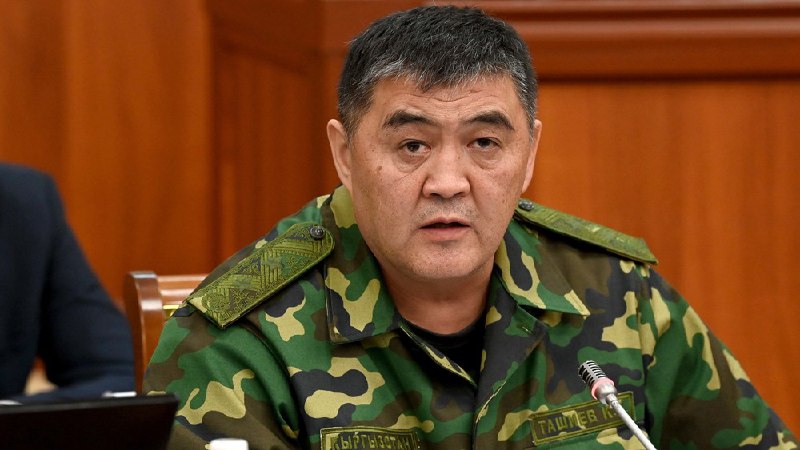
Kyrgyzstan has entered a new period of political uncertainty after authorities charged former security chief Kamchybek Tashiev and seven others with allegedly plotting to seize power from President Sadyr Japarov.
The development marks one of the most serious internal political crises in the country since the two leaders came to power together during the 2020 unrest.
RECOMMENDED STORIES
The case has drawn international attention because Tashiev was not only one of the most powerful figures in Kyrgyzstan, but also a longtime political ally of President Japarov. Analysts say the accusations could reshape the balance of power in the strategically important Central Asian country.
Who is Kamchybek Tashiev?
Kamchybek Tashiev is one of the most influential political figures in modern Kyrgyzstan. He served as head of the State Committee for National Security and was widely viewed as one of the key architects of the country’s security and political system after 2020.
Tashiev built a reputation as a hardline nationalist politician with strong influence in southern Kyrgyzstan. Over the years, he developed a loyal political network among security officials, regional elites and supporters in the country’s south.
His alliance with President Sadyr Japarov helped stabilize Kyrgyzstan after years of political turmoil and repeated anti government protests.
What are the authorities accusing him of?
Authorities say Tashiev and seven others are accused of plotting to seize power. According to reports, the charges could carry prison sentences of up to 20 years if convictions are secured.
The identities of several other suspects have not been publicly disclosed. However, reports indicate that some former officials considered close allies of Tashiev have recently been questioned by investigators.
The trial is expected to take place behind closed doors, and media coverage of proceedings has reportedly been restricted.
Why is this case politically significant?
The accusations are politically explosive because Tashiev and Japarov governed Kyrgyzstan in what many observers described as a de facto power sharing arrangement after the 2020 protests.
For several years, the two men were seen as inseparable political partners. Japarov served as the public face of the government and presidency, while Tashiev controlled much of the security apparatus.
Their alliance united powerful political and regional groups from northern and southern Kyrgyzstan, helping prevent factional conflict in a country historically divided by regional rivalries.
Tashiev’s sudden removal earlier this year raised questions about tensions within the ruling elite. The new criminal charges have intensified speculation about an internal power struggle.
Why is Kyrgyzstan considered politically unstable?
Kyrgyzstan has long been viewed as the most politically volatile country in Central Asia.
Unlike some neighboring states that maintained rigid authoritarian systems after the collapse of the Soviet Union, Kyrgyzstan experienced repeated revolutions and leadership changes driven by street protests.
Presidents were removed from power during major unrest in 2005, 2010 and 2020. Political rivalries between northern and southern elites have also contributed to instability over the years.
The country’s political system has often been shaped by shifting alliances among business groups, regional clans and security figures.
How did Japarov and Tashiev rise to power?
Japarov and Tashiev rose to prominence during the political unrest that followed disputed parliamentary elections in 2020.
Mass protests erupted across the country, leading to the collapse of the government and the resignation of then President Sooronbay Jeenbekov.
During the turmoil, protesters freed Japarov from prison. He quickly emerged as the dominant political figure and later became president.
Tashiev, a longtime ally, became head of the security services and helped consolidate the new administration’s authority.
Together, they introduced stronger central control and tightened pressure on opposition movements and independent media organizations.
What role did the economy play in strengthening their rule?
One factor behind the stability of the Japarov and Tashiev era was economic growth.
Kyrgyzstan benefited from increased trade activity linked to sanctions imposed on Russia after the Ukraine conflict. Some trade routes and business operations shifted through Central Asian countries, including Kyrgyzstan.
This helped boost economic activity in sectors such as logistics, trade and re exports.
Despite this growth, Kyrgyzstan remains economically vulnerable. The mountainous country has limited natural resources and depends heavily on remittances sent home by migrant workers employed mainly in Russia.
Economic difficulties have historically contributed to public dissatisfaction and political unrest.
Could the case trigger new instability?
Some analysts warn that the move against Tashiev could create fresh tensions, especially in southern Kyrgyzstan where he retains influence.
Because Tashiev is viewed as a major political powerbroker, any perception that his supporters are being sidelined could deepen divisions within the elite.
At the same time, supporters of President Japarov may see the case as part of an effort to eliminate potential political rivals and strengthen presidential control.
The situation is being closely watched across Central Asia because instability in Kyrgyzstan has historically affected regional security dynamics.
How does this affect Central Asia politically?
Central Asia has become increasingly important geopolitically due to its location between Russia, China, the Middle East and South Asia.
Political stability in Kyrgyzstan matters for regional trade routes, energy cooperation and security coordination.
The country also plays a role in regional organizations involving Russia and China.
Any major internal conflict or prolonged instability could complicate economic projects and security cooperation in the region.
What could happen next?
Several possible scenarios are being discussed by political observers.
If the authorities secure convictions and successfully marginalize Tashiev’s allies, President Japarov could emerge with even stronger centralized authority.
However, if political divisions widen or protests emerge, the country could face another period of instability similar to previous political crises.
The secrecy surrounding the case and restrictions on reporting mean that many details remain unclear, increasing speculation both inside Kyrgyzstan and internationally.
For now, the case represents the most serious sign yet that the political alliance that dominated Kyrgyzstan since 2020 has fully collapsed.
By Faig Mahmudov


Similar news