FAQ: Azerbaijan–Central Asia cooperation — What’s changing and Why it matters


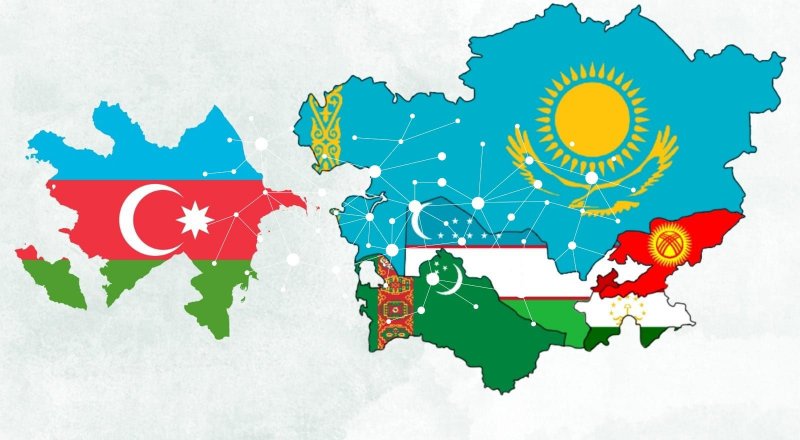
Interest in cooperation between Azerbaijan and the Central Asian region has grown significantly in recent years. What was once viewed as a limited partnership based mainly on cultural ties has gradually evolved into one of the most dynamic geopolitical and economic directions in Eurasia. Today, regional actors, analysts, and international institutions increasingly refer to this format as a strategic alignment that could reshape energy routes, logistics, and political relations across the continent.
This FAQ explores the key questions shaping Azerbaijan–Central Asia cooperation and explains why this partnership is attracting so much global attention.
Why is Azerbaijan’s cooperation with Central Asia now a priority?
Several parallel factors have accelerated cooperation: global supply chain disruption, changing energy markets, the growing role of middle-power diplomacy, and the need for alternative East–West trade corridors. Azerbaijan’s geographic position — connecting the Caspian Sea, the South Caucasus, Europe, and Türkiye — makes it a core transit hub and political bridge.
In short: geography became strategy, and strategy became opportunity.
How does the Middle Corridor impact this partnership?
The Trans-Caspian International Transport Route, widely known as the Middle Corridor, is now central to regional cooperation. This route connects China → Central Asia → Caspian Sea → Azerbaijan → Türkiye → Europe and is considered one of the most realistic and geopolitically secure alternatives to northern logistical routes passing through Russia.
For Central Asian states, the Middle Corridor offers diversification and global reach; for Azerbaijan, it strengthens its role as a critical transit and logistics power.
Which sectors are developing fastest?
While transport and energy remain the backbone of cooperation, several new strategic areas are rapidly emerging:
Digital infrastructure and fiber-optic corridors
Green energy (particularly wind and solar power)
Defense and security coordination
Education, tourism, and cultural initiatives
Trade in agricultural products and industrial equipment
The diversification marks a shift: the partnership is no longer transactional — it is multi-dimensional and long-term.
Is energy still the strongest link between Azerbaijan and Central Asia?
Yes — but with new dynamics. Historically, energy cooperation referred mainly to oil and gas. Today, Central Asian countries are increasingly interested in exporting green electricity via Azerbaijan to world markets. Baku’s participation in the Green Energy Corridor and its fiber-optic Caspian cable projects reflect a strategic technological shift.
Energy cooperation is moving from fossil-fuel logistics toward a broader transformation of energy security architecture.
How does Türkiye influence this cooperation?
Türkiye acts as both a strategic partner and a geopolitical accelerator. Many joint initiatives — transport, defense, cultural ties, and regional platforms — involve trilateral or multilateral cooperation with Ankara. Organizations such as the Organization of Turkic States (OTS) and the Trans-Caspian cooperation formats illustrate Türkiye’s active role in shaping a shared strategic ecosystem.
Does this cooperation challenge existing geopolitical balances?
Rather than challenging existing frameworks, Azerbaijan–Central Asia cooperation is creating an alternative network of connectivity designed around sovereignty, stability, and multipolar partnerships. The format does not position itself against other powers but prioritizes independent regional decision-making, diversified partnerships, and resilience.
For major global players, this region is becoming a corridor of opportunity rather than a sphere of rivalry.
What does this cooperation mean for the future?
The growing institutionalization of cooperation — including Azerbaijan’s participation in the Consultative Council of Central Asia — signals that this framework is transitioning toward a long-term regional platform. With new infrastructure, trade agreements, and energy projects under development, the partnership is likely to evolve into one of the key pillars of Eurasian integration.
The next decade will determine whether this cooperation becomes a full strategic bloc — and current trends suggest momentum is strongly in that direction.


Similar news