Why Are Meta, Tesla and BlackRock Joining Trump’s China Summit?


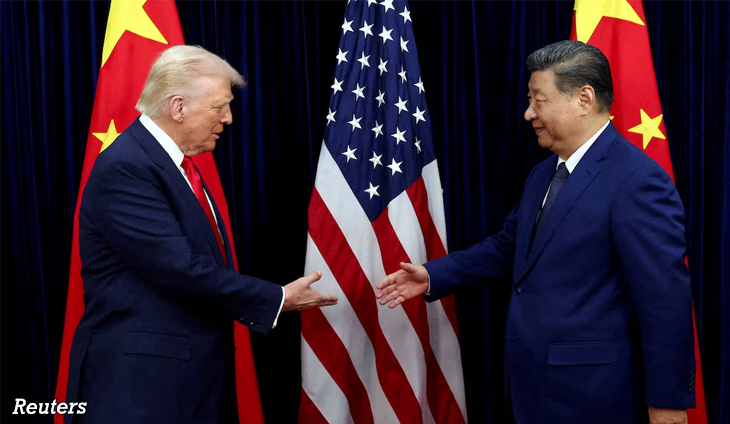
A major U.S. business delegation accompanying President Donald Trump to China this week signals that Washington and Beijing are trying to stabilize critical economic ties despite years of geopolitical confrontation, technology restrictions and trade disputes.
The delegation includes senior executives from major American corporations such as Meta, Tesla, BlackRock, Visa, Mastercard, Citigroup and Goldman Sachs.
RECOMMENDED STORIES
Unlike Trump’s 2017 visit to China, which focused heavily on large trade deals and symbolic diplomacy, this summit appears far more targeted toward solving specific commercial and regulatory problems facing American firms operating in China.
The summit comes at a time when the world’s two largest economies remain deeply interconnected economically while simultaneously competing over technology, supply chains, military influence and global investment networks.
Why is this summit important for U.S. companies?
For many American corporations, China remains one of the largest and most important markets in the world despite rising political tensions.
China is a critical source of manufacturing, industrial materials, consumer demand and supply chain infrastructure. Many U.S. companies depend on access to Chinese factories, Chinese consumers or Chinese approvals to continue expanding globally.
However, relations between Washington and Beijing have become increasingly difficult in recent years because of disputes involving tariffs, export controls, artificial intelligence, semiconductors, sanctions, cybersecurity and strategic competition.
As a result, many companies now face regulatory obstacles, delayed approvals or political scrutiny in both countries.
Executives joining Trump’s delegation reportedly hope the summit will help unlock stalled negotiations, accelerate regulatory approvals and create a more stable environment for business operations.
Why is Meta involved in the summit?
Meta is reportedly seeking relief from Chinese scrutiny surrounding its acquisition of artificial intelligence startup Manus.
Chinese authorities have recently increased oversight of foreign investment in domestic AI companies, particularly those involved in advanced or frontier technologies.
Beijing is becoming increasingly cautious about American involvement in sensitive technology sectors because Chinese officials fear foreign influence over strategic innovation areas such as artificial intelligence, semiconductors and advanced computing.
Meta’s participation in the delegation suggests the company hopes diplomatic engagement at the highest political level could improve the environment for negotiations with Chinese regulators.
The issue also reflects a broader trend in which AI development has become a major battleground between the United States and China.
Why is Tesla seeking closer cooperation with China?
Tesla has several major interests tied to China.
First, China is the world’s largest electric vehicle market and one of Tesla’s most important production hubs. The company already operates large manufacturing facilities in Shanghai and depends heavily on Chinese suppliers.
Second, Tesla is seeking approval to expand deployment of its Full Self Driving assistance system in China. Such approval would represent a major commercial opportunity for the company.
Third, Tesla reportedly plans to purchase billions of dollars worth of solar manufacturing equipment from Chinese suppliers for U.S. operations.
However, Beijing is considering new export restrictions on solar equipment and industrial technologies. If implemented, those restrictions could complicate Tesla’s manufacturing expansion plans.
Tesla CEO Elon Musk has repeatedly acknowledged that both U.S. and Chinese technology restrictions have created difficulties for the company.
Despite this, Musk has remained optimistic about achieving regulatory approvals in China.
Why are BlackRock and Wall Street firms attending?
BlackRock and several major financial institutions are seeking deeper access to China’s financial markets.
China’s banking and investment sectors remain heavily regulated, but Beijing has gradually opened parts of the market to foreign firms over the past decade.
BlackRock currently faces scrutiny related to a planned acquisition involving strategic ports near the Panama Canal. Chinese authorities criticized the transaction because of broader geopolitical concerns surrounding U.S. influence over global trade routes.
Meanwhile, Wall Street giants such as Citigroup and Goldman Sachs continue pursuing expanded investment licenses and securities operations in China.
Citigroup, for example, is still waiting for approval for a wholly owned securities brokerage license after leaving an earlier joint venture.
These firms see China as a long term growth opportunity because of the country’s enormous financial sector, expanding middle class and rising investment demand.
Why are Mastercard and Visa interested in the summit?
China’s domestic payments market is one of the largest in the world, but it has historically been difficult for foreign companies to enter.
Mastercard became the first foreign payments network approved to process domestic yuan denominated bank card transactions through a Chinese joint venture.
However, Mastercard reportedly wants permission to increase its ownership stake in its China venture.
At the same time, Visa is still trying to gain broader access to the Chinese market and reportedly hopes to secure a future arrangement allowing full ownership control.
The participation of both companies highlights how financial liberalization remains one of the key issues in U.S. China economic relations.
What role do supply chains play in the summit?
Supply chain security is one of the central themes behind the visit.
Many American companies depend on Chinese exports of industrial materials, manufacturing equipment and technological components.
China has increasingly used export controls as leverage during disputes with the United States, particularly in areas linked to semiconductors, rare minerals and renewable energy technologies.
For example, optical technology company Coherent is reportedly dealing with Chinese restrictions involving materials critical for advanced optical chips.
At the same time, Washington has imposed its own restrictions on advanced semiconductor exports to China.
This mutual use of export controls has intensified fears that global supply chains could become more fragmented and politicized.
Many companies participating in the summit appear focused on ensuring China remains a reliable supplier and investment partner.
How does biotechnology fit into the tensions?
Biotechnology has emerged as another major area of competition between the United States and China.
Illumina is participating in the delegation while attempting to rebuild operations in China after previously facing export restrictions.
Although Beijing lifted an export ban against Illumina, the company remains on China’s “unreliable entity” list. This means Chinese firms must still obtain government approval before purchasing Illumina products.
The dispute reflects growing concerns in both countries over biotech security, medical data, genetic research and supply chain dependence.
Precision medicine, genetic sequencing and biotechnology are increasingly viewed not only as commercial sectors but also as strategic national security industries.
Could the summit improve U.S. China relations?
The summit is unlikely to solve the broader strategic rivalry between Washington and Beijing.
The two powers continue competing over trade, military influence, artificial intelligence, semiconductor technology, cybersecurity and global infrastructure projects.
However, the visit could help stabilize certain aspects of the relationship by creating political momentum for negotiations and reducing uncertainty for businesses.
For companies participating in the delegation, even modest improvements in regulatory cooperation or market access could have significant financial implications.
Analysts also believe the summit may help both governments signal that economic engagement remains possible despite ongoing geopolitical competition.
What does this summit reveal about the global economy?
The delegation demonstrates how deeply interconnected the global economy remains despite increasing geopolitical fragmentation.
American companies continue relying on Chinese manufacturing, supply chains and consumer markets, while China still depends heavily on foreign investment, advanced technologies and global financial integration.
Even as both countries attempt to reduce strategic dependence on one another, complete economic separation remains extremely difficult.
The summit therefore reflects a broader reality of modern geopolitics: the United States and China are simultaneously economic partners, technological competitors and geopolitical rivals.
By Faig Mahmudov


Similar news