What the Ojai rollout signals for the next phase of autonomous mobility


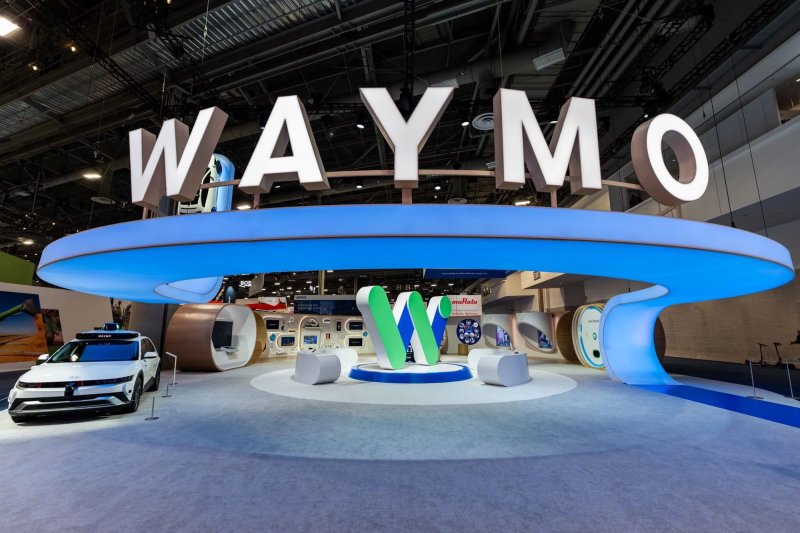
Waymo’s decision to roll out its new Ojai robotaxi marks a clear transition point in the evolution of autonomous transportation in the United States. For years, robotaxis have existed in a space between experimental technology and limited commercial service. With Ojai, Waymo is signaling that it is preparing for a phase defined less by proof of concept and more by scale, repetition, and industrial discipline. This rollout is not just about adding another vehicle model to the fleet, but about redefining how autonomous ride hailing can function as a national transportation service.
The U.S. autonomous vehicle landscape has been crowded with bold claims and ambitious timelines. Many companies have demonstrated impressive technical feats, but only a handful have managed to sustain a public, paid robotaxi service. Waymo’s strength has always been its cautious, systems driven approach. The Ojai rollout fits squarely within that philosophy. It reflects years of accumulated operational knowledge about what actually matters when autonomous vehicles leave controlled pilots and enter everyday urban life.
RECOMMENDED STORIES
Ojai represents a move away from adapting consumer vehicles for autonomous use and toward selecting and configuring vehicles with robotaxi economics and durability in mind. This shift acknowledges a core reality of the business: autonomy software may be the brain, but the vehicle platform is the body that determines how efficiently the service can operate day after day. In high frequency ride hailing, small inefficiencies compound quickly. A purpose oriented vehicle can make the difference between a scalable service and one that remains perpetually constrained.
At a strategic level, the Ojai rollout reinforces Waymo’s intent to consolidate its leadership position in the United States. Dominance in this context does not mean eliminating competitors, but establishing a durable lead in real world deployment, fleet size, geographic coverage, and public trust. As robotaxis move closer to mainstream adoption, these factors will matter more than early technical demonstrations.
Why purpose built robotaxis matter more than ever
The early era of robotaxis relied heavily on modified consumer vehicles. These platforms were sufficient to validate autonomy software and demonstrate safety under real traffic conditions. However, they were never designed for the relentless usage patterns of commercial ride hailing. Vehicles in robotaxi fleets operate for many hours a day, experience frequent passenger turnover, and require regular cleaning, charging, and maintenance. Consumer design priorities such as premium interiors or performance tuning offer little value in this context.
Ojai is positioned as a response to these operational realities. By focusing on durability, maintainability, and passenger flow, Waymo aims to reduce downtime and increase utilization. In a robotaxi business, utilization is everything. The more hours a vehicle can spend safely transporting passengers, the lower the cost per ride becomes. Purpose oriented design enables simpler interiors that withstand heavy use, easier access for passengers, and layouts that support fast turnaround between trips.
Another critical factor is standardization. Operating a fleet of thousands of vehicles requires consistent parts, predictable maintenance schedules, and uniform training for technicians. A diverse fleet of retrofitted consumer models complicates logistics and increases costs. Ojai allows Waymo to move toward a more standardized fleet architecture, where processes can be repeated across cities with minimal variation. This standardization is a prerequisite for national scale.
Passenger experience also benefits from a vehicle designed specifically for ride hailing. Comfort in this context is less about luxury and more about usability. Easy entry and exit, sufficient interior space, reliable climate control, and a sense of predictability all contribute to rider acceptance. As robotaxis compete not only with traditional ride hailing but also with personal vehicles and public transit, these details become increasingly important.
Ultimately, the move toward purpose built robotaxis reflects a maturation of the industry. The question is no longer whether autonomous vehicles can drive safely in complex environments. The question is whether they can do so efficiently, reliably, and at a cost structure that supports widespread adoption. Ojai is Waymo’s answer to that challenge.
How Ojai fits into Waymo’s long term scaling strategy
Scaling a robotaxi service is not simply a matter of adding more vehicles. It requires a carefully coordinated expansion across technology, operations, and regulatory engagement. Ojai is designed to integrate into this broader system rather than stand alone as a technical upgrade.
From a technology perspective, Ojai is paired with Waymo’s latest generation autonomous driving system. This includes improvements in perception, decision making, and system redundancy. Redundancy remains central to Waymo’s safety philosophy, ensuring that no single sensor or component failure can compromise safe operation. At the same time, Waymo is under pressure to reduce cost and complexity. The challenge is to maintain safety margins while streamlining the overall system. Ojai is intended to support that balance.
Operationally, Ojai is optimized for fleet workflows. Charging infrastructure, cleaning processes, software updates, and maintenance checks can all be standardized around a common vehicle platform. This reduces friction as Waymo expands into new markets. Lessons learned in one city can be applied more easily in another when the underlying hardware and procedures are consistent.
Geographic expansion also becomes more feasible with a scalable vehicle platform. Waymo typically enters new cities cautiously, beginning with mapping and validation before opening service to the public. Once the groundwork is laid, fleet availability becomes a limiting factor. Ojai’s higher volume production potential helps remove that bottleneck, allowing Waymo to add vehicles more quickly as new markets come online.
At the business level, Ojai supports Waymo’s effort to move toward sustainable unit economics. While robotaxi services remain capital intensive, reducing vehicle cost and increasing utilization are essential steps toward profitability. A vehicle designed for mass deployment and heavy use is far better suited to this goal than a limited supply of premium consumer models.
What U.S. dominance really means in the robotaxi race
The phrase “U.S. dominance” can be misleading if interpreted as market exclusivity. In reality, it refers to leadership across several practical dimensions that define success in autonomous ride hailing. These include fleet scale, consistency of service, geographic footprint, and the ability to operate reliably across diverse conditions.
In the United States, many companies can showcase autonomous driving in limited settings. Far fewer can operate a public robotaxi service at meaningful scale. Waymo’s advantage lies in its years of accumulated operational experience. Each completed ride generates data not only about driving behavior but also about customer interactions, edge cases, and system performance under real world constraints.
Dominance also involves trust. Regulators, city governments, and the public must have confidence that a robotaxi operator can manage safety risks responsibly. Waymo’s cautious expansion model has helped build that trust, even if it has sometimes appeared slower than more aggressive approaches. Ojai reinforces this strategy by prioritizing reliability and operational discipline over rapid but fragile growth.
Another dimension of dominance is resilience. A scaled operator must be able to absorb shocks, whether they come from unexpected incidents, regulatory scrutiny, or changing economic conditions. A standardized, purpose built fleet enhances resilience by simplifying responses and reducing dependencies on niche components or processes.
As the robotaxi market matures, leadership will likely consolidate around companies that can combine technical excellence with operational robustness. Ojai is a tangible expression of Waymo’s belief that it belongs in that category.
Challenges that still define the limits of robotaxi expansion
Despite progress, robotaxis continue to face formidable challenges. The most difficult problems are not everyday driving scenarios but rare, ambiguous situations that strain perception and decision making. Temporary construction zones, unconventional traffic control, unpredictable pedestrian behavior, and complex interactions with cyclists remain areas of active development.
Weather adds another layer of complexity. Rain, fog, glare, and low light conditions affect sensors differently, requiring sophisticated fusion and redundancy strategies. While Ojai and the latest autonomy stack aim to improve performance across conditions, no system can eliminate all risk. The goal is to manage risk conservatively and transparently.
Operational challenges are equally significant. Running a large robotaxi fleet involves coordinating depots, charging infrastructure, remote support teams, and customer service. Small inefficiencies can cascade quickly at scale. Ojai’s standardized design helps mitigate some of these issues, but execution remains critical.
Public perception also plays a role. Highly visible incidents can shape attitudes disproportionately, even if overall safety performance is strong. Waymo’s response protocols, transparency, and willingness to learn from mistakes will continue to influence how the rollout is received.
Finally, competition is intensifying. Other companies are pursuing different approaches to autonomy, some emphasizing lower cost sensor stacks or faster geographic expansion. The outcome of these competing strategies is still uncertain. Ojai does not eliminate competition, but it positions Waymo to compete from a position of operational strength.
What the Ojai rollout means for riders, cities, and the future
For riders, the impact of Ojai is likely to be gradual but meaningful. Increased fleet availability can reduce wait times and expand service coverage. Improved reliability in challenging conditions can make robotaxis feel less experimental and more dependable. Over time, these incremental improvements can shift perceptions from novelty to normalcy.
Cities stand to gain both opportunities and challenges. Robotaxis can complement public transit by addressing first mile and last mile gaps, particularly during off peak hours. However, they also raise questions about curb management, congestion, and equitable access. Waymo’s engagement with city planners and regulators will be essential as Ojai deployments expand.
Looking ahead, the significance of Ojai extends beyond a single vehicle rollout. It represents a broader shift toward industrializing autonomous mobility. The emphasis is moving from whether autonomy works to how it can be deployed repeatedly, safely, and economically across the country.
If Waymo executes successfully, Ojai may come to symbolize the moment when robotaxis transitioned from limited experiments to a scalable transportation service in the United States. It would not mark the end of innovation or competition, but it would set a benchmark for what mature autonomous ride hailing looks like. In that sense, Ojai is less about a nameplate and more about a statement of intent: that autonomous mobility is ready to operate at national scale, and that Waymo intends to lead that transition.
By Faig Mahmudov


Similar news