Who is Donald Tang and why is he reshaping the global fashion debate


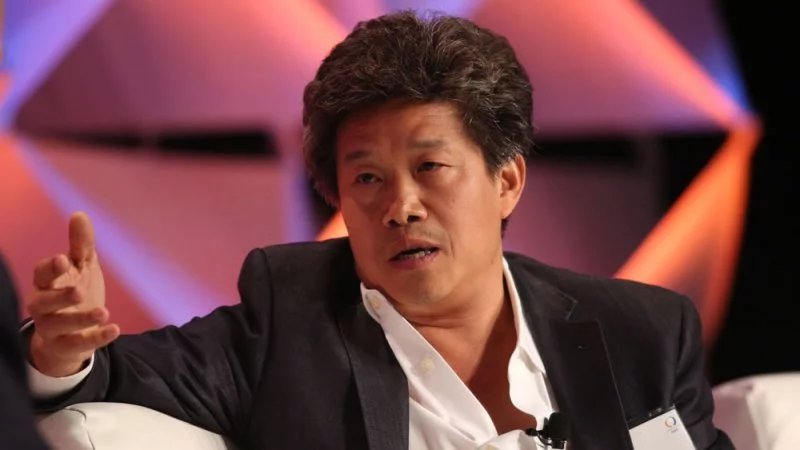
Donald Tang has emerged as one of the most closely watched business figures of the current decade, not because of flamboyant entrepreneurship or headline grabbing acquisitions, but because he operates at the intersection of global trade, geopolitics, technology, and regulation.
As executive chairman of Shein, Tang represents a new generation of corporate leadership shaped less by traditional Silicon Valley or Wall Street norms and more by cross cultural fluency, supply chain diplomacy, and regulatory navigation, News.Az reports.
RECOMMENDED STORIES
Tang’s profile stands out because he does not fit neatly into the stereotype of either a Western multinational executive or a Chinese corporate insider. His career spans decades of work across Asia, Europe, and the United States, including roles in investment banking, diplomacy adjacent institutions, and international advisory platforms. This background has positioned him as a translator between systems rather than a partisan of any single one.
In recent years, global commerce has become increasingly politicized. Trade policy, industrial subsidies, data sovereignty, labor standards, and environmental compliance now directly affect corporate strategy. Tang’s visibility has grown precisely because Shein sits at the center of many of these debates. Fast fashion, cross border e commerce, and digital supply chains are no longer niche sectors. They are structural components of the global economy. As the public face articulating Shein’s stance, Tang has become a proxy figure in broader arguments about globalization itself.
His public statements increasingly emphasize openness, compliance, and dialogue with regulators. Rather than framing business as a purely market driven activity, Tang presents it as an ecosystem that must align with social expectations, political realities, and consumer values. This positioning has made him influential, but also controversial, as critics and supporters project larger narratives onto his role.
What is Donald Tang’s leadership philosophy and how does it differ from traditional corporate models
Donald Tang’s leadership philosophy reflects a post crisis corporate mindset shaped by globalization fatigue, regulatory fragmentation, and public distrust of large companies. Unlike earlier generations of executives who emphasized scale, speed, and market dominance, Tang speaks consistently about legitimacy, trust, and institutional integration.
A defining feature of his approach is stakeholder balancing. He frames corporate success as dependent not only on shareholders but also on regulators, workers, suppliers, and host communities. This language is not accidental. It mirrors the evolving expectations placed on global firms, particularly those operating across sensitive political boundaries.
Tang also departs from the archetype of the charismatic founder CEO. He positions himself as a steward rather than a visionary disruptor. In public forums, he rarely highlights personal ambition or innovation mythology. Instead, he emphasizes governance structures, compliance mechanisms, and long term resilience. This reflects an understanding that in today’s environment, survival and credibility often matter more than rapid expansion.
Another key element is cultural translation. Tang frequently underscores the importance of understanding different regulatory and social frameworks without assuming convergence. He argues that global companies must adapt to local norms rather than expect uniform rules. This contrasts with earlier globalization models that assumed regulatory harmonization over time.
Critically, Tang’s philosophy is defensive as well as constructive. It acknowledges that corporations now operate under permanent scrutiny. Rather than resisting this scrutiny, he advocates engagement, disclosure, and adaptation. This mindset has shaped how Shein presents itself to governments and the public, even as debates over fast fashion intensify.
How has Donald Tang shaped Shein’s global strategy and public positioning
Since taking on a central leadership role at Shein, Donald Tang has been instrumental in redefining how the company communicates its identity and ambitions. Initially known primarily as a fast growing online fashion platform, Shein has gradually repositioned itself as a global enterprise seeking institutional acceptance.
Tang’s influence is visible in Shein’s emphasis on regulatory compliance and transparency. Under his watch, the company has expanded public discussion of labor practices, supply chain oversight, and sustainability initiatives. While critics question the depth and impact of these efforts, the shift in tone is unmistakable.
Strategically, Tang has steered Shein toward engagement with policymakers rather than avoidance. He has supported dialogue with governments in Europe and the United States, recognizing that political legitimacy is now as important as consumer demand. This approach reflects his belief that scale without acceptance creates long term vulnerability.
Another notable aspect is his role in preparing Shein for capital market scrutiny. Discussions around potential public listings have brought heightened attention to governance, auditing standards, and disclosure practices. Tang’s background in finance and international advisory roles has positioned him to navigate these expectations with a level of sophistication uncommon in fast growth consumer startups.
He has also worked to frame Shein as a technology driven platform rather than merely a fashion retailer. By emphasizing data analytics, logistics optimization, and supplier digitization, Tang seeks to align Shein with narratives of innovation and efficiency rather than disposable consumption alone. Whether this reframing succeeds remains contested, but it has clearly influenced how the company presents itself globally.
Why is Donald Tang frequently mentioned in discussions about geopolitics and global trade tensions
Donald Tang’s name appears regularly in geopolitical discussions because Shein operates across fault lines that define contemporary global trade. These include tensions between the United States and China, debates over supply chain resilience, and rising protectionism in key consumer markets.
As executive chairman, Tang has become a spokesperson navigating these sensitivities. He consistently avoids ideological framing, instead emphasizing rules based trade and mutual economic benefit. This positioning seeks to depoliticize Shein’s operations, even as critics argue that complete neutrality is impossible in the current environment.
Tang’s messaging reflects an awareness that companies can be caught in policy crossfire regardless of intent. Tariffs, import restrictions, and labor regulations can rapidly alter business models. His public comments often stress predictability and dialogue as prerequisites for sustainable trade. In doing so, he aligns corporate interests with broader calls for stability in the global system.
His personal background also contributes to this perception. Having worked extensively in international finance and advisory contexts, Tang understands how political narratives shape economic outcomes. He often frames Shein’s challenges as symptoms of systemic fragmentation rather than isolated controversies.
This geopolitical visibility is not without risk. By speaking on trade and regulation, Tang exposes himself and the company to scrutiny from multiple sides. Yet silence would likely be interpreted as evasion. His approach suggests a calculated belief that engagement, even when contentious, is preferable to withdrawal.
How does Donald Tang address criticism related to fast fashion and sustainability
Fast fashion remains one of the most criticized sectors in the global economy, and Donald Tang has become a central figure responding to these critiques on behalf of Shein. Environmental impact, labor conditions, and consumer culture are recurring themes in this criticism.
Tang’s responses typically follow a structured narrative. He acknowledges the legitimacy of concerns while emphasizing efforts toward improvement rather than denial. This includes references to supplier audits, environmental initiatives, and investments in compliance infrastructure. The emphasis is on progress rather than perfection.
A notable aspect of his rhetoric is the rejection of simplistic binaries. Tang argues that affordability and sustainability need not be mutually exclusive, and that technological innovation can reduce waste and inefficiency. This framing positions Shein as part of an evolving solution rather than an irredeemable problem.
However, Tang also avoids making absolute claims. He tends to speak in terms of commitments and trajectories rather than outcomes. This cautious language reflects both legal prudence and an understanding of public skepticism. Overpromising in sustainability discourse has become a reputational risk in itself.
By engaging directly with critics in interviews and public forums, Tang signals a willingness to participate in difficult conversations. Whether this approach leads to substantive change or primarily reputational management is debated, but it has undeniably shaped the public discourse around Shein.
What does Donald Tang represent in the changing relationship between corporations and regulators
Donald Tang’s prominence illustrates a broader transformation in how corporations interact with regulators. The era of minimal engagement and reactive compliance is giving way to proactive dialogue and institutional alignment. Tang embodies this shift.
He often describes regulation not as an obstacle but as a framework within which legitimacy is constructed. This perspective contrasts sharply with earlier narratives that framed regulation as inherently anti innovation. For Tang, predictability and clear rules are prerequisites for long term investment and growth.
This stance is particularly significant for companies operating across multiple jurisdictions. Divergent regulatory regimes create complexity that cannot be resolved through standardization alone. Tang advocates for mutual understanding and cooperation, even when harmonization is unrealistic.
His role also highlights the increasing expectation that corporate leaders personally engage with policymakers. Delegating regulation entirely to legal teams is no longer sufficient. Tang’s visibility suggests that executive level involvement is becoming a norm rather than an exception for globally exposed firms.
In this sense, Donald Tang represents a hybrid figure. He is neither a politician nor a technocrat, but he operates in a space where economic and political considerations overlap. This hybridization of roles may define corporate leadership in the coming decades.
How might Donald Tang’s influence shape the future of global e commerce and corporate governance
Looking forward, Donald Tang’s influence may be less about specific business outcomes and more about signaling new norms. His approach suggests that global e commerce companies must integrate governance, diplomacy, and communication into their core strategies.
One likely impact is the normalization of public accountability for digital platforms. Tang’s willingness to engage in public debate sets a precedent for transparency expectations. Future leaders may find it harder to remain behind the scenes when operating at global scale.
Another potential legacy is the reframing of globalization narratives. By emphasizing coexistence of different systems rather than convergence, Tang articulates a pragmatic vision of global commerce. This could influence how companies plan expansion and manage political risk.
In corporate governance, his stewardship oriented language may encourage a shift away from founder centric mythologies toward institutional leadership models. As companies grow larger and more exposed, continuity and compliance may outweigh individual charisma.
Ultimately, Donald Tang’s significance lies in what he represents rather than what he claims. He embodies a moment when global business is being renegotiated under pressure from politics, society, and the environment. Whether this leads to more responsible capitalism or simply more sophisticated management of risk remains an open question, but Tang’s role ensures that this negotiation is visible rather than hidden.
By Faig Mahmudov


Similar news