Why are Gaza aid flotilla activists on hunger strike after Israel intercepted their vessel?


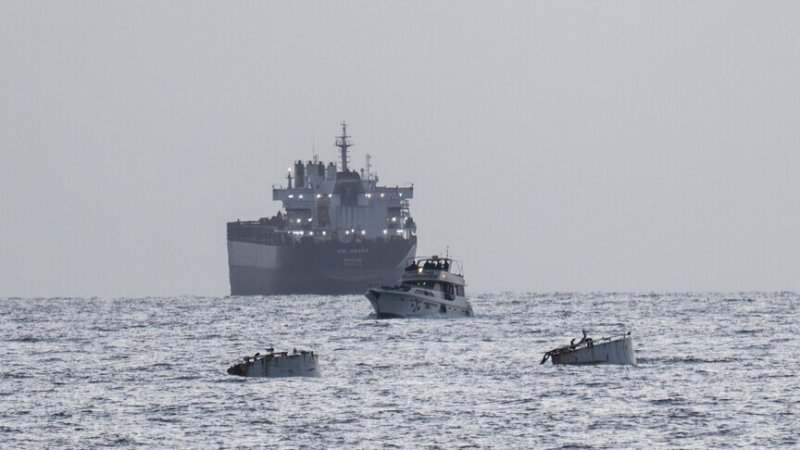
Activists detained by Israel after attempting to sail an aid flotilla toward Gaza have reportedly begun a hunger strike, escalating an already sensitive international dispute surrounding humanitarian access to the Palestinian enclave, maritime security, and the ongoing Israel–Hamas war.
The incident has drawn attention from governments, human rights groups, international organizations, and pro Palestinian solidarity movements, while reigniting debate over Israel’s blockade of Gaza and the legality of activist flotillas attempting to breach it, News.az reports.
Here is a detailed FAQ explainer on what happened and why it matters.
What happened?
A group of international activists traveling aboard a Gaza bound aid flotilla vessel were intercepted by Israeli forces before reaching the Gaza Strip.
Israeli authorities detained the activists and redirected the vessel, arguing that the operation was necessary to enforce maritime restrictions around Gaza.
Following their detention, several activists reportedly launched a hunger strike in protest against their arrest, the interception of the vessel, and Israel’s broader blockade policies.
The activists are demanding release, international attention to Gaza’s humanitarian crisis, and guarantees for humanitarian aid access.
What was the flotilla trying to do?
The flotilla was attempting to deliver humanitarian aid and demonstrate opposition to restrictions imposed on Gaza.
Such missions are usually organized by international solidarity groups, human rights activists, medical organizations, or political campaigners seeking to highlight conditions inside Gaza.
Typical aid shipments may include:
-
Food supplies
-
Medicine
-
Medical equipment
-
Hygiene products
-
Water purification materials
-
Educational supplies
Beyond the aid itself, flotillas are also symbolic political actions intended to attract global media attention.
Why did Israel intercept the vessel?
Israel says it enforces a naval blockade around Gaza for security reasons.
Israeli authorities argue that unrestricted maritime access could allow weapons, military equipment, or dual use materials to reach Hamas and other armed groups operating inside Gaza.
Israel maintains that humanitarian assistance can enter Gaza through approved inspection mechanisms and coordinated crossings rather than unauthorized maritime missions.
Israeli officials have repeatedly stated that flotillas attempting to bypass the blockade violate security arrangements and risk escalating tensions.
What is the hunger strike about?
The detained activists reportedly began a hunger strike to protest:
-
Their detention by Israeli authorities
-
The interception of the aid vessel
-
Israel’s Gaza blockade
-
Restrictions on humanitarian access
-
Conditions faced by Palestinians in Gaza
Hunger strikes are commonly used by political detainees and activists as a nonviolent protest method designed to attract international pressure and media attention.
The tactic carries symbolic power because participants place their own health at risk to amplify political demands.
What is the Gaza blockade?
Israel and Egypt have maintained varying levels of restrictions around Gaza since Hamas took control of the territory in 2007.
Israel says the blockade is necessary to prevent weapons smuggling and protect national security.
Critics argue that the restrictions have contributed to severe humanitarian and economic hardships for Gaza’s civilian population.
The blockade affects:
-
Imports and exports
-
Freedom of movement
-
Access to medical supplies
-
Fuel deliveries
-
Construction materials
-
Fishing zones
-
Infrastructure development
The issue has remained one of the most controversial aspects of the Israeli Palestinian conflict.
Why are flotillas so politically sensitive?
Gaza flotillas combine humanitarian activism with direct political confrontation.
Supporters view them as peaceful efforts to challenge restrictions they consider unjust or illegal.
Critics argue that flotillas are politically provocative and risk creating dangerous confrontations at sea.
Because the missions involve international activists, they often attract diplomatic attention and can create tensions between Israel and foreign governments whose citizens participate.
The symbolic nature of flotillas means even relatively small operations can generate major international headlines.
Have similar flotilla incidents happened before?
Yes. Several Gaza flotilla missions have occurred over the past two decades.
The most internationally significant incident happened in 2010 when Israeli forces boarded the Turkish linked vessel Mavi Marmara. The raid resulted in deadly clashes and triggered a major diplomatic crisis between Israel and Türkiye.
Since then, multiple flotilla attempts have been intercepted before reaching Gaza.
Some missions were stopped peacefully, while others generated legal disputes, detentions, and international criticism.
The issue remains highly sensitive because it touches on humanitarian law, maritime law, regional politics, and the broader Israeli Palestinian conflict.
What legal arguments are involved?
The legality of Gaza flotilla interceptions remains heavily disputed internationally.
Israel argues that naval blockades are permitted under international law during armed conflict if security conditions justify them.
Critics argue that the blockade and interceptions may violate humanitarian principles or collective punishment prohibitions.
Legal debates focus on questions such as:
-
Whether the blockade itself is lawful
-
Whether force used during interceptions is proportionate
-
Whether humanitarian missions should receive protected status
-
Whether international waters can be used for interdictions under these circumstances
Different governments, legal scholars, and organizations interpret these issues differently.
How has the international community reacted?
Reactions have varied significantly.
Human rights organizations and pro Palestinian groups condemned the interception and expressed concern for the detained activists.
Some governments called for restraint and respect for humanitarian access.
Israeli officials defended the operation as necessary for national security.
The incident has also renewed wider international debate over humanitarian conditions inside Gaza, especially amid ongoing conflict and reconstruction challenges.
Could the activists face criminal charges?
That depends on Israeli legal procedures and the specific circumstances of the interception.
In previous flotilla incidents, outcomes have varied:
-
Some activists were deported quickly
-
Some faced questioning or temporary detention
-
Some challenged Israeli actions in court
-
Some received travel restrictions
Governments whose citizens are involved may also seek consular access or diplomatic clarification.
Why is humanitarian access to Gaza such a major global issue?
Humanitarian conditions in Gaza have become a central international concern because of:
-
Repeated wars and military operations
-
Infrastructure destruction
-
Medical shortages
-
Food insecurity
-
Water and electricity problems
-
Large scale displacement
-
High civilian population density
International agencies have repeatedly warned about worsening humanitarian pressures in the territory.
As a result, aid delivery mechanisms are intensely scrutinized by governments, NGOs, and international organizations.
Could this incident increase regional tensions?
Potentially yes.
Any confrontation involving Gaza, international activists, and Israeli military operations can rapidly become politically sensitive across the Middle East and beyond.
The issue may affect:
-
Israel’s diplomatic relations
-
Regional public opinion
-
International protests
-
Humanitarian negotiations
-
Maritime security discussions
If the hunger strike continues or detainees’ health worsens, pressure on governments and international organizations could intensify.
What happens next?
Several developments are now being closely watched:
-
Whether Israel releases or deports the activists
-
Whether the hunger strike expands
-
Whether international mediation efforts emerge
-
Whether additional flotillas are organized
-
Whether diplomatic tensions escalate
The situation also places renewed focus on broader debates surrounding Gaza’s humanitarian crisis, regional security, and international law.
For now, the hunger strike has transformed the flotilla interception from a maritime security incident into a wider international political and humanitarian controversy.
By Faig Mahmudov


Similar news